
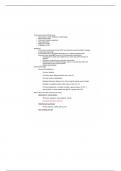
Community Acquired Pneumonia
• Introduction to CAP: definitions, epidemiology
• What causes CAP?
• Overview of specific organisms
• Risk stratification
• Diagnosis of CAP
• Treatment of CAP
definitions
• Community-acquired pneumonia (CAP) is pneumonia acquired outside a hospital
or long-term care facility.
• Occurs within 48 hrs of hospital admission or in a patient presenting with
pneumonia who does NOT have any of the following characteristics:
• Hospitalized in acute care hospital for 2 or more days within 90 days of
infection.
• Resides in nursing home or long-term care facility.
• Received recent IV antibiotic therapy, chemo, or wound care within the
past 30 days of the current infection.
• Attends hemodialysis.
CAP Epidemiology
◼ General Considerations
◼ Common disorder
◼ 4-5 million cases diagnosed each year in the US
◼ 25% will require hospitalization
◼ Deadliest infectious disease in the US and eighth leading cause of death
◼ Mortality in outpatient treated milder cases is less than 1%
◼ In those hospitalized, in hospital mortality is approximately 10-12%; 1-
year mortality in those greater than age 65 is greater than 40%
Who is at risk of a bad outcome from CAP?
◼ Alterations in mental status
◼ Alcoholics, epileptics, stroke patients, uremia
◼ Aspirated secretions, vomit etc
◼ Underlying lung disease
◼ Chronic hypoxia, COPD, asthma, ILD
◼ Cilia motility disorder
, ◼ Kartagener’s, cystic fibrosis
◼ Altered lung anatomy
◼ Lung cancer, bronchiectasis, obstructions
◼ Immunocompromised
Symptoms and signs
◼ Acute or subacute onset of fever, cough, dyspnea, +/- sputum production
◼ Other common sxs : sweats, chills, rigors, chest discomfort, pleurisy, hemoptysis,
fatigue, myalgias, anorexia, headache, abdominal pain
◼ PE findings : elevated temp (can have hypothermia or other atypical sxs in the
elderly), tachypnea, tachycardia, oxygen desats. Inspiratory crackles, bronchial
breath sounds, dullness to percussion if lobar pneumonia
What causes CAP?
There are >100 organisms, but those below are most common. 1, 2, 3.
Organism Overall rates Outpatient CAP Inpatient CAP
Unknown 51% 54% 60%
Streptococcus 17% 10% 18%
pneumoniae
Mycoplasma 10% 12% 2%
pneumoniae
Chlamydophila 9% 12% 2%
pneumoniae
Identified virus 5% 5% 5%
Haemophilus 5% 5% 5%
influenzae
Legionella 2% 1% 4%
pneumophila
Staph. aureus 1% 1% 4%
How often is an organism isolated?
◼ RARELY! ~10%
, ◼ But that’s OK. Empiric therapy usually works (as we will get to).
◼ It’s important to know what organisms are most common so that we can choose
APPROPRIATE empiric therapy, as it varies by patient and setting.
Outpatient CAP: atypicals, s. pneumo
Organism Overall rates Outpatient CAP Inpatient CAP
Unknown 51% 54% 60%
Streptococcus 17% 10% 18%
pneumoniae
Mycoplasma 10% 12% 2%
pneumoniae
Chlamydophila 9% 12% 2%
pneumoniae
Identified virus 5% 5% 5%
Haemophilus 5% 5% 5%
influenzae
Legionella 2% 1% 4%
pneumophila
Staph. aureus 1% 1% 4%
Less common in inpatient CAP
In outpatient settings, “atypicals” (mycoplasma and chlamydophilia pneumoniae) are
more prevalent (except legionella, an atypical seen in inpatients). Some of this is age
related, less likely to be hospitalized. Older pts will more likely be hospitalized
Inpatient CAP: s. pneumo>> s. aureus, legionella, h. flu
Organism Overall rates Outpatient CAP Inpatient CAP
Unknown 51% 54% 60%
Streptococcus 17% 10% 18%
pneumoniae
Mycoplasma 10% 12% 2%
pneumoniae
Chlamydophila 9% 12% 2%
pneumoniae

