
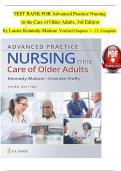
TEST BANK FOR Advanced Practice Nursing
in the Care of Older Adults, 3rd Edition
by Laurie Kennedy-Malone, Verified Chapters 1 - 23, Complete
,Answers at the end of the Chapter
BN BN BN BN BN BN BN
Chapter 1: Changes with Aging
BN BN BN BN
MultipleBNChoice
IdentifyBNtheBNchoiceBNthatBNbestBNcompletesBNtheBNstatementBNorBNanswersBNtheBNquestion.
1. TheBNmajorBNimpactBNofBNtheBNphysiologicalBNchangesBNthatBNoccurBNwithBNagingBNis:
A. ReducedBNphysiologicalBNreserve
B. ReducedBNhomeostaticBNmechanisms
C. ImpairedBNimmunologicalBNresponse
D. AllBNofBNtheBNabove
2. TheBNstrongestBNevidenceBNregardingBNnormalBNphysiologicalBNagingBNisBNavailableBNthrough:
,A. RandomizedBNcontrolledBNclinicalBNtrials
B. Cross-sectionalBNstudies
C. LongitudinalBNstudies
D. CaseBNcontrolBNstudies
BNBNB N 3.B N AllBNofBNtheBNfollowingBNstatementsBNareBNtrueBNaboutBNlaboratory
valuesBNinBNolderBNadultsexcept:
A. ReferenceBNrangesBNareBNpreferable
B. AbnormalBNfindingsBNareBNoftenBNdueBNtoBNphysiologicalBNaging
C. NormalBNrangesBNmayBNnotBNbeBNapplicableBNforBNolderBNadults
D. ReferenceBNvaluesBNareBNnotBNnecessarilyBNacceptableBNvalues
BNBNB N 4.B N BiochemicalBNindividualityBNisBNbestBNdescribedBNas:
A. EachBNindividual’sBNvariationBNisBNoftenBNmuchBNgreaterBNthanBNthatBNofBNaBNlargerBNgroup
B. TheBNuniqueBNbiochemicalBNprofileBNofBNaBNselectedBNpopulation
C. TheBNtrulyBN“normal”BNindividual—fallingBNwithinBNaverageBNrange
D. EachBNindividual’sBNvariationBNisBNoftenBNmuchBNsmallerBNthanBNthatBNofBNaBNlargerBNgroup
BNBNB N 5.B N PolypharmacyBNisBNbestBNdescribedBNasBNtaking:
A. MoreBNthanBNnineBNmedicationsBNperBNday
B. MoreBNthanBNfiveBNmedicationsBNperBNday
, C. EvenBNaBNsingleBNmedicationBNifBNthereBNisBNnotBNaBNclearBNindicationBNforBNitsBNuse
D. WhenBNaBNdrugBNisBNgivenBNtoBNtreatBNtheBNsideBNeffectBNofBNanotherBNdrug
BNBNB N 6.B N PharmacokineticBNchangesBNwithBNagingBNisBNreflectiveBNof:
A. WhatBNtheBNdrugBNdoesBNtoBNtheBNbody
B. WhatBNtheBNbodyBNdoesBNtoBNtheBNdrug
C. TheBNeffectBNatBNtheBNsiteBNofBNactionBNandBNtheBNtimeBNandBNintensityBNofBNtheBNdrug
D. TheBNsideBNeffectsBNcommonlyBNassociatedBNwithBNtheBNdrug
BNBNB N 7.B N AllBNtheBNfollowingBNstatementsBNareBNfalseBNaboutBNdrugBNabsorptionBNexcept:
A. AntacidsBNincreaseBNtheBNbioavailabilityBNofBNdigitalis
B. GastricBNacidityBNdecreasesBNwithBNage
C. AnticholinergicsBNincreaseBNcolonicBNmotility
D. UnderlyingBNchronicBNdiseaseBNhasBNlittleBNimpactBNonBNdrugBNabsorption
BNBNB N
8.B N AllBNofBNtheBNfollowingBNstatementsBNareBNtrueBNaboutBNdrugBNdistributionBNinBNt
he
elderlyBNexcept:
A. DrugsBNdistributedBNinBNwaterBNhaveBNlowerBNconcentration
B. DrugsBNdistributedBNinBNfatBNhaveBNlessBNintense,BNmoreBNprolongedBNeffect
C. DrugsBNhighlyBNproteinBNboundBNhaveBNgreaterBNpotentialBNtoBNcauseBNanBNadverseBNdrugBNreaction
in the Care of Older Adults, 3rd Edition
by Laurie Kennedy-Malone, Verified Chapters 1 - 23, Complete
,Answers at the end of the Chapter
BN BN BN BN BN BN BN
Chapter 1: Changes with Aging
BN BN BN BN
MultipleBNChoice
IdentifyBNtheBNchoiceBNthatBNbestBNcompletesBNtheBNstatementBNorBNanswersBNtheBNquestion.
1. TheBNmajorBNimpactBNofBNtheBNphysiologicalBNchangesBNthatBNoccurBNwithBNagingBNis:
A. ReducedBNphysiologicalBNreserve
B. ReducedBNhomeostaticBNmechanisms
C. ImpairedBNimmunologicalBNresponse
D. AllBNofBNtheBNabove
2. TheBNstrongestBNevidenceBNregardingBNnormalBNphysiologicalBNagingBNisBNavailableBNthrough:
,A. RandomizedBNcontrolledBNclinicalBNtrials
B. Cross-sectionalBNstudies
C. LongitudinalBNstudies
D. CaseBNcontrolBNstudies
BNBNB N 3.B N AllBNofBNtheBNfollowingBNstatementsBNareBNtrueBNaboutBNlaboratory
valuesBNinBNolderBNadultsexcept:
A. ReferenceBNrangesBNareBNpreferable
B. AbnormalBNfindingsBNareBNoftenBNdueBNtoBNphysiologicalBNaging
C. NormalBNrangesBNmayBNnotBNbeBNapplicableBNforBNolderBNadults
D. ReferenceBNvaluesBNareBNnotBNnecessarilyBNacceptableBNvalues
BNBNB N 4.B N BiochemicalBNindividualityBNisBNbestBNdescribedBNas:
A. EachBNindividual’sBNvariationBNisBNoftenBNmuchBNgreaterBNthanBNthatBNofBNaBNlargerBNgroup
B. TheBNuniqueBNbiochemicalBNprofileBNofBNaBNselectedBNpopulation
C. TheBNtrulyBN“normal”BNindividual—fallingBNwithinBNaverageBNrange
D. EachBNindividual’sBNvariationBNisBNoftenBNmuchBNsmallerBNthanBNthatBNofBNaBNlargerBNgroup
BNBNB N 5.B N PolypharmacyBNisBNbestBNdescribedBNasBNtaking:
A. MoreBNthanBNnineBNmedicationsBNperBNday
B. MoreBNthanBNfiveBNmedicationsBNperBNday
, C. EvenBNaBNsingleBNmedicationBNifBNthereBNisBNnotBNaBNclearBNindicationBNforBNitsBNuse
D. WhenBNaBNdrugBNisBNgivenBNtoBNtreatBNtheBNsideBNeffectBNofBNanotherBNdrug
BNBNB N 6.B N PharmacokineticBNchangesBNwithBNagingBNisBNreflectiveBNof:
A. WhatBNtheBNdrugBNdoesBNtoBNtheBNbody
B. WhatBNtheBNbodyBNdoesBNtoBNtheBNdrug
C. TheBNeffectBNatBNtheBNsiteBNofBNactionBNandBNtheBNtimeBNandBNintensityBNofBNtheBNdrug
D. TheBNsideBNeffectsBNcommonlyBNassociatedBNwithBNtheBNdrug
BNBNB N 7.B N AllBNtheBNfollowingBNstatementsBNareBNfalseBNaboutBNdrugBNabsorptionBNexcept:
A. AntacidsBNincreaseBNtheBNbioavailabilityBNofBNdigitalis
B. GastricBNacidityBNdecreasesBNwithBNage
C. AnticholinergicsBNincreaseBNcolonicBNmotility
D. UnderlyingBNchronicBNdiseaseBNhasBNlittleBNimpactBNonBNdrugBNabsorption
BNBNB N
8.B N AllBNofBNtheBNfollowingBNstatementsBNareBNtrueBNaboutBNdrugBNdistributionBNinBNt
he
elderlyBNexcept:
A. DrugsBNdistributedBNinBNwaterBNhaveBNlowerBNconcentration
B. DrugsBNdistributedBNinBNfatBNhaveBNlessBNintense,BNmoreBNprolongedBNeffect
C. DrugsBNhighlyBNproteinBNboundBNhaveBNgreaterBNpotentialBNtoBNcauseBNanBNadverseBNdrugBNreaction

