
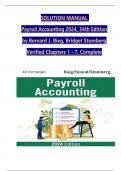
SOLUTION MANUAL
Payroll Accounting 2024, 34th Edition
by Bernard J. Bieg, Bridget Stomberg
Verified Chapters 1 - 7, Complete
, CONTENTS
Chapter 1: The Need for Payroll and Personnel Records
Chapter 2: Computing Wages and Salaries
Chapter 3: Social Security Taxes
Chapter 4: Income Tax Withholding
Chapter 5: Unemployment Compensation Taxes
Chapter 6: Analyzing and Journalizing Payroll
Chapter 7: Payroll Project
,Chapter 1
Which Law?
1. K
2. H
3. B
4. F
5. I
6. J
7. A
8. D
9. G
10. C
11. E
12. L
Which Payroll Law?
1. D
2. A
3. F
4. C
5. G
6. J
7. B
8. I
9. E
10. H
What’s Ethical?
1. Answers will vary. Some concerns include data privacy and integrity in the
software switchover, tax and employee pay integrity on the new software, and
employee pay methods.
,2. Answers will vary. Karsyn could choose to ignore her sorority sister’s request, claiming
Confidentiality. She could also discontinue active participation in the sorority. In any case,
Karsyn must not consent to her sorority sister’s request for confidential information.
Confidential Records
As the payroll clerk, your task is to protect the privacy and confidentiality of the information you
maintain for the company. If a student group—or any personnel aside from the company’s
payroll employees and officers—wishes to review confidential records, you should deny their
request. If needed, you should refer the group to your department’s manager to discuss the
matterin more depth. The laws that apply to this situation are the Privacy Act of 1974, U.S.
Departmentof Health and Human Services Privacy Act 09-40-0006, Common-Law Privacy Act,
Computer Fraud and Abuse Act, and potentially HIPAA.
Large vs. Small
1. Large companies face issues with multiple departments, employee access to
onlinepersonnel portals, employee data security, and timekeeping accuracy.
2. For small companies, payroll processing will involve fewer employees than for larger
companies. Smaller companies could maintain their payroll needs using company
personnel because of the lower volume of transactions. Larger companies need to
consider their available trained payroll accountants and other staff to determine if
they can reliably handle the volume of payroll needs in a timely and accurate manner.
What Is the Difference?
, a. Manual payroll systems involve the use of paper and pencil record-keeping or a
spreadsheet program, such as Microsoft Excel. This is most appropriate for very small
firms.
b. Computerized payroll systems can be used by any company, regardless of size. Examples
of computerized systems include QuickBooks, Sage 100, and Microsoft Dynamics 365
GP. These computer packages range in price, depending on the company size and
operational scope.
c. Outsourced payroll involves the engagement of a third party to manage a
company’spayroll data, issue employee compensation, and prepare tax forms.
d. Certified payroll pertains to companies with employees who work on federal
governmentcontracts. Certified payroll ensures that a company reports payroll
expenditures of contractually allocated money.
ANSWERS TO END-OF-CHAPTER MATERIALSREVIEW
QUESTIONS
1. What is the purpose of a payroll system?
a. Provide for internal and external reporting of employee wages and associated taxes,
payment of employee compensation, and monitoring of benefits to employees. It
alsoserves as a means of tracking labor costs that managers use for decision-
making, budgeting, and planning.
2. What are two differences between large- and small-company payroll practices?
a. Small companies would have fewer employees and reporting requirements and
wouldbe less likely to be required to have automated payroll systems.
, b. Large companies have more employees and greater departmentalization. This increase in
employees leads to a higher level of complexity in payroll accounting, disbursements, and
reporting. Larger companies may also provide Intranet portals foremployee self-service
options. Additionally, larger companies may need additional accuracy checks.
3. What is certified payroll? Which companies must use it?
a. Certified payroll is a reporting requirement for companies that work with federal
contracts that are subject to Davis-Bacon wages. Only those companies that have these
types of employees would be required to complete a certified payroll.
4. Why might it be a good idea to let employees manage their payroll records? What are some of the
pitfalls?
a. An advantage of allowing individuals to self-manage their payroll records would bethe
employee would be able to answer some simple questions on their own without having to
come to the payroll accountant for answers. If employees have access to their payroll
records, there would be the need to allow multiple access points to the confidential
information. These open channels would require security settings to ensure the
requirements of confidentiality are maintained.
5. What are two ways a payroll system may protect a company in the event of a visit from a
government auditor?
Answers may vary, but should contain:
a. The establishment and maintenance of an accurate payroll system. Timely and accurately
reporting wages and withholdings. Adherence to the legal framework ofpayroll.
Payroll Accounting 2024, 34th Edition
by Bernard J. Bieg, Bridget Stomberg
Verified Chapters 1 - 7, Complete
, CONTENTS
Chapter 1: The Need for Payroll and Personnel Records
Chapter 2: Computing Wages and Salaries
Chapter 3: Social Security Taxes
Chapter 4: Income Tax Withholding
Chapter 5: Unemployment Compensation Taxes
Chapter 6: Analyzing and Journalizing Payroll
Chapter 7: Payroll Project
,Chapter 1
Which Law?
1. K
2. H
3. B
4. F
5. I
6. J
7. A
8. D
9. G
10. C
11. E
12. L
Which Payroll Law?
1. D
2. A
3. F
4. C
5. G
6. J
7. B
8. I
9. E
10. H
What’s Ethical?
1. Answers will vary. Some concerns include data privacy and integrity in the
software switchover, tax and employee pay integrity on the new software, and
employee pay methods.
,2. Answers will vary. Karsyn could choose to ignore her sorority sister’s request, claiming
Confidentiality. She could also discontinue active participation in the sorority. In any case,
Karsyn must not consent to her sorority sister’s request for confidential information.
Confidential Records
As the payroll clerk, your task is to protect the privacy and confidentiality of the information you
maintain for the company. If a student group—or any personnel aside from the company’s
payroll employees and officers—wishes to review confidential records, you should deny their
request. If needed, you should refer the group to your department’s manager to discuss the
matterin more depth. The laws that apply to this situation are the Privacy Act of 1974, U.S.
Departmentof Health and Human Services Privacy Act 09-40-0006, Common-Law Privacy Act,
Computer Fraud and Abuse Act, and potentially HIPAA.
Large vs. Small
1. Large companies face issues with multiple departments, employee access to
onlinepersonnel portals, employee data security, and timekeeping accuracy.
2. For small companies, payroll processing will involve fewer employees than for larger
companies. Smaller companies could maintain their payroll needs using company
personnel because of the lower volume of transactions. Larger companies need to
consider their available trained payroll accountants and other staff to determine if
they can reliably handle the volume of payroll needs in a timely and accurate manner.
What Is the Difference?
, a. Manual payroll systems involve the use of paper and pencil record-keeping or a
spreadsheet program, such as Microsoft Excel. This is most appropriate for very small
firms.
b. Computerized payroll systems can be used by any company, regardless of size. Examples
of computerized systems include QuickBooks, Sage 100, and Microsoft Dynamics 365
GP. These computer packages range in price, depending on the company size and
operational scope.
c. Outsourced payroll involves the engagement of a third party to manage a
company’spayroll data, issue employee compensation, and prepare tax forms.
d. Certified payroll pertains to companies with employees who work on federal
governmentcontracts. Certified payroll ensures that a company reports payroll
expenditures of contractually allocated money.
ANSWERS TO END-OF-CHAPTER MATERIALSREVIEW
QUESTIONS
1. What is the purpose of a payroll system?
a. Provide for internal and external reporting of employee wages and associated taxes,
payment of employee compensation, and monitoring of benefits to employees. It
alsoserves as a means of tracking labor costs that managers use for decision-
making, budgeting, and planning.
2. What are two differences between large- and small-company payroll practices?
a. Small companies would have fewer employees and reporting requirements and
wouldbe less likely to be required to have automated payroll systems.
, b. Large companies have more employees and greater departmentalization. This increase in
employees leads to a higher level of complexity in payroll accounting, disbursements, and
reporting. Larger companies may also provide Intranet portals foremployee self-service
options. Additionally, larger companies may need additional accuracy checks.
3. What is certified payroll? Which companies must use it?
a. Certified payroll is a reporting requirement for companies that work with federal
contracts that are subject to Davis-Bacon wages. Only those companies that have these
types of employees would be required to complete a certified payroll.
4. Why might it be a good idea to let employees manage their payroll records? What are some of the
pitfalls?
a. An advantage of allowing individuals to self-manage their payroll records would bethe
employee would be able to answer some simple questions on their own without having to
come to the payroll accountant for answers. If employees have access to their payroll
records, there would be the need to allow multiple access points to the confidential
information. These open channels would require security settings to ensure the
requirements of confidentiality are maintained.
5. What are two ways a payroll system may protect a company in the event of a visit from a
government auditor?
Answers may vary, but should contain:
a. The establishment and maintenance of an accurate payroll system. Timely and accurately
reporting wages and withholdings. Adherence to the legal framework ofpayroll.

