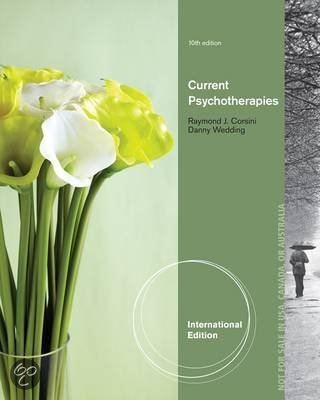
PSY ABNORMAL/Current Psychotherapies Key Points and Test B
k k k k k k k
nk 10th edition
k k
Table of Contents k k
Chapter Page
1 Introduction to 21st Century Psychotherapiesk k k k 1
2 Psychoanalytic Psychotherapies k 10
3 Adlerian Psychotherapy k 35
4 Client-Centered Therapy k 54
5 Rational Emotive Behavior Therapy
k k k 72
6 Behavior Therapy k 88
7 Cognitive Therapy k 107
8 Existential Psychotherapy k 127
9 Gestalt Therapyk 142
10 Interpersonal Psychotherapy k 160
11 Family Therapy k 181
12 Contemplative Psychotherapies k 201
13 Positive Psychotherapy
k 217
14 Integrative Psychotherapies k 238
15 Multicultural Theories of Psychotherapy k k k 257
16 Contemporary Challenges and Controversies k k k 278
Chapter 1
kkkkkkkkkkkkkkkkkkkkkkkkkkkkkkkkkkkkkkkkkkkkkkkkkkkkkkk k
Introduction to 21st- k k
Century PsychotherapiesAuthors: Frank Du
k k k k
mont
Key Points and Terms
k k k
Evolution of the Science and Profession of Psychology
k k k k k k k
Early attempts to address mental disorders include:
k k k k k k
► Pre-Christian, temple- k
PSY ABNORMAL/Current Psychotherapies Key Points and Test B
k k k k k k k
nk 10th edition
k k
, like asklepeia and other retreat centers, which used re
k k k k k k k k
ligio-
philosophical lectures, to assuage if not remedy psyc
k k k k k k k k
hological disorders. k
► Hellenist physicians understood that the brain was not o
k k k k k k k k
nly the seat of knowledge andlearning but also the sourc
k k k k k k k k k k
e of depression, delirium, and madness.
k k k k k
► Hippocrates insisted that his students address illnesses by natural means.
k k k k k k k k k
Psychotherapy in its present guise did not clearly emerge until t
k k k k k k k k k k
he 18th century. Below are somekey players:
k k k k k k k
► Scientific study of the unconscious attributed to renowne
k k k k k k k
d polymath Gottfried WilhelmLeibniz:
k k k k
▪ Investigated subliminal perceptions k k
▪ Coined the term “dynamic” k k k
► Johann Friedrich Herbart: k k
▪ Attempted to apply mathematics to dynamics k k k k k
▪ Suggested ideas struggle with one another to access consciousness k k k k k k k k
► Franz Anton Mesmer and his disciple the Marquis de Puy
k k k k k k k k k
segur are influential in currentunderstanding of:
k k k k k k
▪ hypnotherapy
▪ rapport between therapist and patient k k k k
▪ influence of the unconscious k k k
▪ importance of the qualities of the therapist k k k k k k
▪ spontaneous remission of disorders k k k
▪ hypnotic somnambulism k
▪ selective function of unconscious memory k k k k
▪ role of patient confidence k k k
▪ common factors across effective treatments k k k k
► Arthur Schopenhauer k
▪ Work strongly influenced Freud k k k
► Gustav T. Fechner k k
▪ Made distinction between waking and sleeping states k k k k k k
▪ Attempted to measure the intensity of psychic stimulation k k k k k k k
► Herman von Helmholtz k k
▪ Discovered the phenomenon of unconscious inference k k k k k
► Emil Kraepelin k
▪ Attention to classifying diseases k k k
► Carl Gustav Carus k k
Introduction to 21st-Century Psychotherapies k k k 1
, Developed one of the most sophisticated sche
▪ k k k k k k
mas the unconscious that exist, describing seve k k k k k k
ral levels to the unconscious k k k k
▪ Felt individuals were communicating at conscio k k k k k
us and unconscious levels with each other in para
k k k k k k k k
vocal, nonverbal, organic, and affective modes i k k k k k k
n ways individuals were largely unaware of
k k k k k k
► Carus Schopenhauer k
▪ Principal argument was that we are driven by b k k k k k k k k
lind, irrational forces ofwhich we are largely u k k k k k k k k
naware
► Friedrich Nietzsche k
▪ Viewed that humans lie to themselves more than they do to each other k k k k k k k k k k k k
► Moritz Benedikt k
▪ Developed concept of seeking out and clinica k k k k k k
lly purging “pathogenic secrets” k k k
The Impact of Biological Science on Psychotherapy
k k k k k k
Every encounter with our environment causes a change within u
k k k k k k k k k
s and in our neural functioning.One cannot unlearn knowledge u
k k k k k k k k k k
nless neuronal decay and lesions undo memory.
k k k k k k
Klaus Grawe has noted that “psychotherapy appears to achieve i
k k k k k k k k k
ts effect through changes in geneexpression at the neuronal leve
k k k k k k k k k k
l.” And research shows that therapy may be effective through tri
k k k k k k k k k k
ggering the expression of immediate-
k k k k
early genes (IEGs) through exposure to nurturant social events.
k k k k k k k k
Much of the plasticity in our neuro-emotional systems is achieved through epigenetic changes.
k k k k k k k k k k k k
In the current age of psychopharmacology, medicating patients
k k k k k k k
kfor psychological purposes should require clear, preset clinical
k k k k k k k k
PSY ABNORMAL/Current Psychotherapies Key Points and Test B
k k k k k k k
nk 10th edition k k
, objectives.
Future developments in molecular genetic analysis, cognitive n
k k k k k k k
europsychology, and social cognitive neuroscience will continue
k k k k k k
to inform psychotherapy.
k k k
Clashing Standpoints
k
• Gillath, Adams, and Kunkel (2012) provide a model for u
k k k k k k k k k
niting disparate approaches tostudy of human nature.
k k k k k k k
• Resolution can be achieved through systemic integratio
k k k k k k
n of many variables that are atplay at any moment.
k k k k k k k k k k
• For example, Pope and Wedding (2012) discuss the da
k k k k k k k k
nger inherent in neglecting tomonitor patients who are t
k k k k k k k k k
aking psychotropic medication.
k k
Evolutionary Biology and Behavioral Genetics
k k k k
• Anthropologists have discovered at least 400 universal behavioral traits.
k k k k k k k k
• Steven Pinker (2002) has further documented the principle
k k k k k k k k
that all humans share a uniquehuman nature.
k k k k k k k
k k k k k k k
nk 10th edition
k k
Table of Contents k k
Chapter Page
1 Introduction to 21st Century Psychotherapiesk k k k 1
2 Psychoanalytic Psychotherapies k 10
3 Adlerian Psychotherapy k 35
4 Client-Centered Therapy k 54
5 Rational Emotive Behavior Therapy
k k k 72
6 Behavior Therapy k 88
7 Cognitive Therapy k 107
8 Existential Psychotherapy k 127
9 Gestalt Therapyk 142
10 Interpersonal Psychotherapy k 160
11 Family Therapy k 181
12 Contemplative Psychotherapies k 201
13 Positive Psychotherapy
k 217
14 Integrative Psychotherapies k 238
15 Multicultural Theories of Psychotherapy k k k 257
16 Contemporary Challenges and Controversies k k k 278
Chapter 1
kkkkkkkkkkkkkkkkkkkkkkkkkkkkkkkkkkkkkkkkkkkkkkkkkkkkkkk k
Introduction to 21st- k k
Century PsychotherapiesAuthors: Frank Du
k k k k
mont
Key Points and Terms
k k k
Evolution of the Science and Profession of Psychology
k k k k k k k
Early attempts to address mental disorders include:
k k k k k k
► Pre-Christian, temple- k
PSY ABNORMAL/Current Psychotherapies Key Points and Test B
k k k k k k k
nk 10th edition
k k
, like asklepeia and other retreat centers, which used re
k k k k k k k k
ligio-
philosophical lectures, to assuage if not remedy psyc
k k k k k k k k
hological disorders. k
► Hellenist physicians understood that the brain was not o
k k k k k k k k
nly the seat of knowledge andlearning but also the sourc
k k k k k k k k k k
e of depression, delirium, and madness.
k k k k k
► Hippocrates insisted that his students address illnesses by natural means.
k k k k k k k k k
Psychotherapy in its present guise did not clearly emerge until t
k k k k k k k k k k
he 18th century. Below are somekey players:
k k k k k k k
► Scientific study of the unconscious attributed to renowne
k k k k k k k
d polymath Gottfried WilhelmLeibniz:
k k k k
▪ Investigated subliminal perceptions k k
▪ Coined the term “dynamic” k k k
► Johann Friedrich Herbart: k k
▪ Attempted to apply mathematics to dynamics k k k k k
▪ Suggested ideas struggle with one another to access consciousness k k k k k k k k
► Franz Anton Mesmer and his disciple the Marquis de Puy
k k k k k k k k k
segur are influential in currentunderstanding of:
k k k k k k
▪ hypnotherapy
▪ rapport between therapist and patient k k k k
▪ influence of the unconscious k k k
▪ importance of the qualities of the therapist k k k k k k
▪ spontaneous remission of disorders k k k
▪ hypnotic somnambulism k
▪ selective function of unconscious memory k k k k
▪ role of patient confidence k k k
▪ common factors across effective treatments k k k k
► Arthur Schopenhauer k
▪ Work strongly influenced Freud k k k
► Gustav T. Fechner k k
▪ Made distinction between waking and sleeping states k k k k k k
▪ Attempted to measure the intensity of psychic stimulation k k k k k k k
► Herman von Helmholtz k k
▪ Discovered the phenomenon of unconscious inference k k k k k
► Emil Kraepelin k
▪ Attention to classifying diseases k k k
► Carl Gustav Carus k k
Introduction to 21st-Century Psychotherapies k k k 1
, Developed one of the most sophisticated sche
▪ k k k k k k
mas the unconscious that exist, describing seve k k k k k k
ral levels to the unconscious k k k k
▪ Felt individuals were communicating at conscio k k k k k
us and unconscious levels with each other in para
k k k k k k k k
vocal, nonverbal, organic, and affective modes i k k k k k k
n ways individuals were largely unaware of
k k k k k k
► Carus Schopenhauer k
▪ Principal argument was that we are driven by b k k k k k k k k
lind, irrational forces ofwhich we are largely u k k k k k k k k
naware
► Friedrich Nietzsche k
▪ Viewed that humans lie to themselves more than they do to each other k k k k k k k k k k k k
► Moritz Benedikt k
▪ Developed concept of seeking out and clinica k k k k k k
lly purging “pathogenic secrets” k k k
The Impact of Biological Science on Psychotherapy
k k k k k k
Every encounter with our environment causes a change within u
k k k k k k k k k
s and in our neural functioning.One cannot unlearn knowledge u
k k k k k k k k k k
nless neuronal decay and lesions undo memory.
k k k k k k
Klaus Grawe has noted that “psychotherapy appears to achieve i
k k k k k k k k k
ts effect through changes in geneexpression at the neuronal leve
k k k k k k k k k k
l.” And research shows that therapy may be effective through tri
k k k k k k k k k k
ggering the expression of immediate-
k k k k
early genes (IEGs) through exposure to nurturant social events.
k k k k k k k k
Much of the plasticity in our neuro-emotional systems is achieved through epigenetic changes.
k k k k k k k k k k k k
In the current age of psychopharmacology, medicating patients
k k k k k k k
kfor psychological purposes should require clear, preset clinical
k k k k k k k k
PSY ABNORMAL/Current Psychotherapies Key Points and Test B
k k k k k k k
nk 10th edition k k
, objectives.
Future developments in molecular genetic analysis, cognitive n
k k k k k k k
europsychology, and social cognitive neuroscience will continue
k k k k k k
to inform psychotherapy.
k k k
Clashing Standpoints
k
• Gillath, Adams, and Kunkel (2012) provide a model for u
k k k k k k k k k
niting disparate approaches tostudy of human nature.
k k k k k k k
• Resolution can be achieved through systemic integratio
k k k k k k
n of many variables that are atplay at any moment.
k k k k k k k k k k
• For example, Pope and Wedding (2012) discuss the da
k k k k k k k k
nger inherent in neglecting tomonitor patients who are t
k k k k k k k k k
aking psychotropic medication.
k k
Evolutionary Biology and Behavioral Genetics
k k k k
• Anthropologists have discovered at least 400 universal behavioral traits.
k k k k k k k k
• Steven Pinker (2002) has further documented the principle
k k k k k k k k
that all humans share a uniquehuman nature.
k k k k k k k