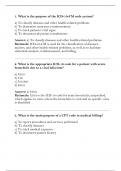
1. How does the ICD-10 system differ from ICD-9?
A. ICD-10 provides more specific codes for diagnoses
B. ICD-9 is used globally, while ICD-10 is limited to the U.S.
C. ICD-10 codes are shorter than ICD-9 codes
D. ICD-9 includes codes for procedures
Answer: a) ICD-10 provides more specific codes for diagnoses
Rationale: ICD-10 provides more detailed and specific codes
compared to ICD-9, allowing for more accurate diagnosis
classification.
2. What is the primary purpose of a modifier in medical coding?
A. To reduce insurance payments
B. To indicate special circumstances about a procedure or service
C. To change the primary diagnosis
D. To indicate a different physician performing the service
Answer: b) To indicate special circumstances about a procedure or
service
Rationale: Modifiers are used to provide additional information
about a procedure, such as whether it was performed under
unusual circumstances or in a modified form.
,3. In which scenario would you use an unlisted CPT code?
A. The procedure is experimental
B. The procedure is commonly performed
C. The procedure has a designated code
D. The procedure is not documented
Answer: a) The procedure is experimental
Rationale: Unlisted CPT codes are used when a procedure or
service is not specifically described by any other code.
4. Which of the following is considered an advanced modifier?
A. -25
B. -57
C. -50
D. -22
Answer: b) -57
Rationale: Modifier -57 is an advanced modifier used to indicate
that an evaluation and management service resulted in a decision
to perform surgery.
5. What ICD-10 code should be used for an encounter for a
routine prenatal visit?
A. Z34.00
, B. Z35.0
C. O80
D. O82
Answer: a) Z34.00
Rationale: Z34.00 is the ICD-10 code for an encounter for a
routine prenatal visit without complications.
6. Which of the following would be an appropriate ICD-10 code
for "abdominal pain"?
A. K57.9
B. R10.9
C. K35.8
D. R13.10
Answer: b) R10.9
Rationale: R10.9 is the appropriate code for unspecified abdominal
pain.
7. Which of the following is the correct ICD-10 code for obesity
due to excess calories?
A. E66.9
B. E66.0
C. E66.1
A. ICD-10 provides more specific codes for diagnoses
B. ICD-9 is used globally, while ICD-10 is limited to the U.S.
C. ICD-10 codes are shorter than ICD-9 codes
D. ICD-9 includes codes for procedures
Answer: a) ICD-10 provides more specific codes for diagnoses
Rationale: ICD-10 provides more detailed and specific codes
compared to ICD-9, allowing for more accurate diagnosis
classification.
2. What is the primary purpose of a modifier in medical coding?
A. To reduce insurance payments
B. To indicate special circumstances about a procedure or service
C. To change the primary diagnosis
D. To indicate a different physician performing the service
Answer: b) To indicate special circumstances about a procedure or
service
Rationale: Modifiers are used to provide additional information
about a procedure, such as whether it was performed under
unusual circumstances or in a modified form.
,3. In which scenario would you use an unlisted CPT code?
A. The procedure is experimental
B. The procedure is commonly performed
C. The procedure has a designated code
D. The procedure is not documented
Answer: a) The procedure is experimental
Rationale: Unlisted CPT codes are used when a procedure or
service is not specifically described by any other code.
4. Which of the following is considered an advanced modifier?
A. -25
B. -57
C. -50
D. -22
Answer: b) -57
Rationale: Modifier -57 is an advanced modifier used to indicate
that an evaluation and management service resulted in a decision
to perform surgery.
5. What ICD-10 code should be used for an encounter for a
routine prenatal visit?
A. Z34.00
, B. Z35.0
C. O80
D. O82
Answer: a) Z34.00
Rationale: Z34.00 is the ICD-10 code for an encounter for a
routine prenatal visit without complications.
6. Which of the following would be an appropriate ICD-10 code
for "abdominal pain"?
A. K57.9
B. R10.9
C. K35.8
D. R13.10
Answer: b) R10.9
Rationale: R10.9 is the appropriate code for unspecified abdominal
pain.
7. Which of the following is the correct ICD-10 code for obesity
due to excess calories?
A. E66.9
B. E66.0
C. E66.1