
⪛⪴⪴⪷⪱⪘ ⪞⪴⪸εΘΙΙμλΜιΙππππ ιΤΜΜτλμτΧ⪛⪴⪴⪷ ⪱⪘⪞⪴⪸ε ΘΙΙμλΜιΙππππ ιΤΜΜτλμτΧ
⪛⪴⪴⪷⪱⪘ ⪞⪴⪸εΘΙΙμλΜιΙππππ ιΤΜΜτλμτΧ⪛⪴⪴⪷ ⪱⪘⪞⪴⪸ε ΘΙΙμλΜιΙππππ ιΤΜΜτλμτΧ
⪛⪴⪴⪷⪱⪘ ⪞⪴⪸εΘΙΙμλΜιΙππππ ιΤΜΜτλμτΧ⪛⪴⪴⪷ ⪱⪘⪞⪴⪸ε ΘΙΙμλΜιΙππππ ιΤΜΜτλμτΧ
⪛⪴⪴⪷⪱⪘ ⪞⪴⪸εΘΙΙμλΜιΙππππ ιΤΜΜτλμτΧ⪛⪴⪴⪷ ⪱⪘⪞⪴⪸ε ΘΙΙμλΜιΙππππ ιΤΜΜτλμτΧ
⪛⪴⪴⪷⪱⪘ ⪞⪴⪸εΘΙΙμλΜιΙππππ ιΤΜΜτλμτΧ⪛⪴⪴⪷ ⪱⪘⪞⪴⪸ε ΘΙΙμλΜιΙππππ ιΤΜΜτλμτΧ
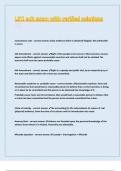
exclusionary rule - correct answer ✔Any evidence which is obtained illegally. Not admissible
in court.
4th Amendment - correct answer ✔Right of the people to be secure in their persons, houses,
papers and effects against unreasonable searches and seizures shall not be violated. No
warrant shall issue but upon probable cause.
6th Amendment - correct answer ✔Right to a speedy and public trial, by an impartial jury of
the state and district where the crime was committed.
Reasonable suspicion vs. probable cause - correct answer ✔Reasonable suspicion: facts and
circumstances that would lead a reasonable person to believe that a crime has been, is being,
or is about to be committed and the person to be detained has knowledge of it
Probable cause: facts and circumstances that would lead a reasonable person to believe that
a crime has been committed and the person to be arrested committed that crime.
chain of custody - correct answer ✔The accounting for the whereabouts of a piece of real
(physical) evidence, from the time of its seizure until its introduction into court.
Hearsay Rule - correct answer ✔Evidence not founded upon the personal knowledge of the
witness from whom it is elicited. Generally not admissible.
Miranda equation - correct answer ✔Custody + interrogation = Miranda
⪛⪴⪴⪷⪱⪘ ⪞⪴⪸εΘΙΙμλΜιΙππππ ιΤΜΜτλμτΧ⪛⪴⪴⪷ ⪱⪘⪞⪴⪸ε ΘΙΙμλΜιΙππππ ιΤΜΜτλμτΧ
⪛⪴⪴⪷⪱⪘ ⪞⪴⪸εΘΙΙμλΜιΙππππ ιΤΜΜτλμτΧ⪛⪴⪴⪷ ⪱⪘⪞⪴⪸ε ΘΙΙμλΜιΙππππ ιΤΜΜτλμτΧ
⪛⪴⪴⪷⪱⪘ ⪞⪴⪸εΘΙΙμλΜιΙππππ ιΤΜΜτλμτΧ⪛⪴⪴⪷ ⪱⪘⪞⪴⪸ε ΘΙΙμλΜιΙππππ ιΤΜΜτλμτΧ
⪛⪴⪴⪷⪱⪘ ⪞⪴⪸εΘΙΙμλΜιΙππππ ιΤΜΜτλμτΧ⪛⪴⪴⪷ ⪱⪘⪞⪴⪸ε ΘΙΙμλΜιΙππππ ιΤΜΜτλμτΧ
exclusionary rule - correct answer ✔Any evidence which is obtained illegally. Not admissible
in court.
4th Amendment - correct answer ✔Right of the people to be secure in their persons, houses,
papers and effects against unreasonable searches and seizures shall not be violated. No
warrant shall issue but upon probable cause.
6th Amendment - correct answer ✔Right to a speedy and public trial, by an impartial jury of
the state and district where the crime was committed.
Reasonable suspicion vs. probable cause - correct answer ✔Reasonable suspicion: facts and
circumstances that would lead a reasonable person to believe that a crime has been, is being,
or is about to be committed and the person to be detained has knowledge of it
Probable cause: facts and circumstances that would lead a reasonable person to believe that
a crime has been committed and the person to be arrested committed that crime.
chain of custody - correct answer ✔The accounting for the whereabouts of a piece of real
(physical) evidence, from the time of its seizure until its introduction into court.
Hearsay Rule - correct answer ✔Evidence not founded upon the personal knowledge of the
witness from whom it is elicited. Generally not admissible.
Miranda equation - correct answer ✔Custody + interrogation = Miranda

