

ATLS |ADVANCED TRAUMA LIFE SUPPORT |TRAUMA MANAGEMENT| ACTUAL
EXAM 2025|122 QUESTIONS WITH VERIFIED CORRECT RATIONALES
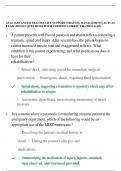
1. A patient presents with flaccid paralysis and absent reflexes following a
traumatic spinal cord injury. After several days, the patient begins to
exhibit increased muscle tone and exaggerated reflexes. What
condition is this patient experiencing, and what implications does it
have for their
rehabilitation?
Spinal shock, indicating a need for immediate surgical
intervention Neurogenic shock, requiring fluid resuscitation
Spinal shock, suggesting a transition to spasticity which may affect
rehabilitation strategies
Autonomic dysreflexia, necessitating monitoring of blood
pressure
2. In a scenario where a paramedic is transferring a trauma patient to the
emergency department, which of the following would be an
appropriate use of the MIST mnemonic?
Describing the patient's medical history in
detail. Listing the patient's allergies and
medications.
Summarizing the mechanism of injury, injuries sustained,
signs observed, and treatment provided.
, Providing a full account of the patient's family history.
3. A patient presents with signs of hemoptysis and cervical
subcutaneous emphysema after a blunt chest trauma. What is the
most appropriate
immediate management step?
Administer intravenous fluids and monitor vital
signs. Perform a bronchoscopy to confirm the
diagnosis.
Consult a surgeon and prepare for possible surgical intervention.
Start high-flow oxygen therapy and observe.
,4. A patient presents with weakness in their arms but normal strength in
their legs following a fall where they hit their face. Considering the
symptoms, what condition might this patient be experiencing, and
what initial
management steps should be taken?
Peripheral nerve injury; immediate surgery to repair the nerve
Central cord syndrome; perform a thorough
neurological assessment and consider imaging
Spinal shock; initiate fluid resuscitation and monitor vital
signs Cervical fracture; immobilize the spine and prepare
for surgical
intervention
5. Explain why motor vehicle crashes are considered the leading
cause of blunt cardiac injuries in trauma cases.
They involve high-speed impacts that can cause significant
internal damage.
They are more frequent than other types of
accidents. They typically result in less severe
injuries than falls.
They are easier to manage in emergency situations.
6. Explain the fluid resuscitation protocol for pediatric patients
weighing less than 40 kg in trauma management.
10 ml/kg
, 15 ml/kg
20 ml/kg
25 ml/kg
7. What is the usual initial fluid therapy dose for adults in
trauma management?
500 ml
EXAM 2025|122 QUESTIONS WITH VERIFIED CORRECT RATIONALES
1. A patient presents with flaccid paralysis and absent reflexes following a
traumatic spinal cord injury. After several days, the patient begins to
exhibit increased muscle tone and exaggerated reflexes. What
condition is this patient experiencing, and what implications does it
have for their
rehabilitation?
Spinal shock, indicating a need for immediate surgical
intervention Neurogenic shock, requiring fluid resuscitation
Spinal shock, suggesting a transition to spasticity which may affect
rehabilitation strategies
Autonomic dysreflexia, necessitating monitoring of blood
pressure
2. In a scenario where a paramedic is transferring a trauma patient to the
emergency department, which of the following would be an
appropriate use of the MIST mnemonic?
Describing the patient's medical history in
detail. Listing the patient's allergies and
medications.
Summarizing the mechanism of injury, injuries sustained,
signs observed, and treatment provided.
, Providing a full account of the patient's family history.
3. A patient presents with signs of hemoptysis and cervical
subcutaneous emphysema after a blunt chest trauma. What is the
most appropriate
immediate management step?
Administer intravenous fluids and monitor vital
signs. Perform a bronchoscopy to confirm the
diagnosis.
Consult a surgeon and prepare for possible surgical intervention.
Start high-flow oxygen therapy and observe.
,4. A patient presents with weakness in their arms but normal strength in
their legs following a fall where they hit their face. Considering the
symptoms, what condition might this patient be experiencing, and
what initial
management steps should be taken?
Peripheral nerve injury; immediate surgery to repair the nerve
Central cord syndrome; perform a thorough
neurological assessment and consider imaging
Spinal shock; initiate fluid resuscitation and monitor vital
signs Cervical fracture; immobilize the spine and prepare
for surgical
intervention
5. Explain why motor vehicle crashes are considered the leading
cause of blunt cardiac injuries in trauma cases.
They involve high-speed impacts that can cause significant
internal damage.
They are more frequent than other types of
accidents. They typically result in less severe
injuries than falls.
They are easier to manage in emergency situations.
6. Explain the fluid resuscitation protocol for pediatric patients
weighing less than 40 kg in trauma management.
10 ml/kg
, 15 ml/kg
20 ml/kg
25 ml/kg
7. What is the usual initial fluid therapy dose for adults in
trauma management?
500 ml

