
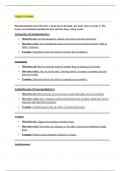
Chapter 6 extended
Pharmacokinetics describes how a drug moves through your body after you take it. The
terms you mentioned explain how fast and how long a drug works.
Adrenergics (Sympathomimetics)
• What they do: Act like adrenaline, making your body more alert and active.
• How they work: They stimulate the part of your nervous system that controls "fight or
flight" responses.
• Example: Epinephrine (used for allergic reactions like in EpiPens).
Antagonists
• What they do: Block or stop the action of another drug or chemical in the body.
• How they work: They sit on the same "docking station" (receptor) as another drug but
don't let it work.
• Example: Naloxone (blocks the effects of opioids in an overdose).
Anticholinergics (Parasympatholytics)
• What they do: Block the part of your nervous system that helps you rest and digest.
• How they work: Stop a chemical called acetylcholine from working, which slows down
digestion and other body functions.
• Example: Atropine (used to dry up saliva or increase heart rate).
Antigens
• What they do: Trigger your immune system to react.
• How they work: Your body sees antigens as "invaders" and creates antibodies to fight
them.
• Example: Pollen (causes allergies), bacteria, or viruses.
Antihistamines
, • What they do: Stop allergic reactions like sneezing, runny nose, and itching.
• How they work: Block histamine, a chemical your body releases during allergies.
• Example: Diphenhydramine (Benadryl).
Antitussives
• What they do: Stop or reduce coughing.
• How they work: Calm the brain's cough center.
• Example: Codeine (for dry, irritating coughs).
Corticosteroids
• What they do: Reduce inflammation (swelling) in the body.
• How they work: Mimic hormones your body naturally makes to reduce immune system
activity.
• Example: Prednisone (used for asthma, allergies, and autoimmune diseases).
Decongestants
• What they do: Reduce stuffy nose and swelling in nasal passages.
• How they work: Shrink blood vessels in the nose so air flows better.
• Example: Oxymetazoline (Afrin nasal spray).
Empirical Therapy
• What it means: Treating an illness based on what usually works without knowing the
exact cause yet.
• Example: Giving antibiotics for a fever before lab tests confirm the infection.
Expectorants
• What they do: Help clear mucus from the lungs by making it thinner.
• How they work: Loosen mucus so you can cough it out easier.

