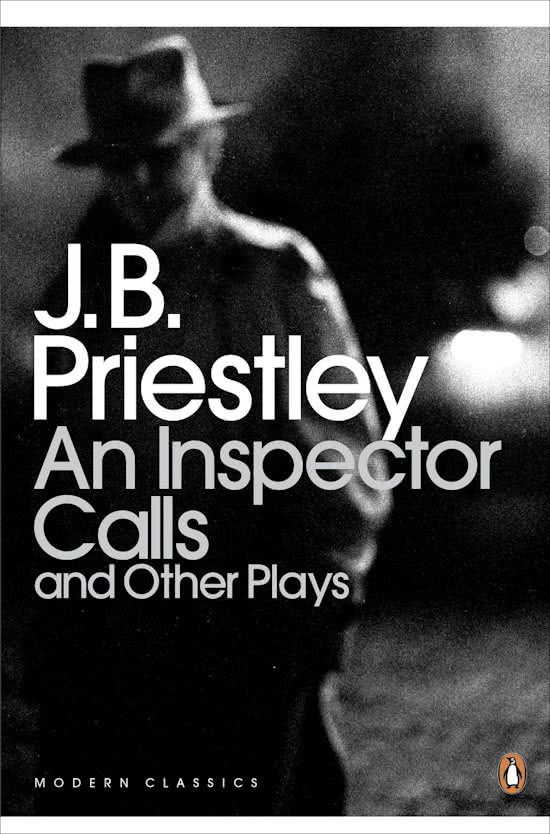
Describe the significance of Dramatic Irony at the beginning of the play. How does Priestley use it to
express his political views about Capitalism and Socialism?
Priestley uses Mr Birling as a construct for capitalism and the selfish/aristocratic. Dramatic irony is
used 4 times in Mr Birling’s speeches. This is used to dismiss Mr Birling’s views on socialism and
question his credibility. Priestley intentionally did this so the audience would develop an interest in
Mr Birling’s insecurities and recognise aspects of Mr Birling in themselves, to find their own path to
redemption and social responsibility. As Priestley was surrounded by socialists as a child (like his
father), this led him to attempt to reform society through the use of the extensive allegory of Mr
Birling and his inability to empathise.
The first prediction was, ‘War’s inevitable.’ Mr Birling (speaking ‘as a hard-headed business man’)
dismisses war, implying his poor foresight. As the play was first performed in 1945, the audience had
experienced 2 tragic wars. From 1912 (play set) and 1945 (play written), there had been significant
events, all of which Mr Birling predicted wrong. WW1 (1914-18) and WW2 (1939-45) both affected
the UKs economic, social and political reputation. He dismisses war as ‘agitations’ and ‘silly little war
scares’. Mr Birling’s insensitivity reflects the attitudes of the aristocratic and this makes the audience
dislike him to due to his ignorance. WW2 was caused as society chose not to learn the lessons of
WW1. This is mirrored when the Birlings choose not to learn the lessons of their first treatment
towards Eva and dismiss the Inspector as a ‘crank’. He also dismisses the power of the ‘Kaiser’ and
‘Germans’, who in fact decide to go to war. Mr Birling seems pompous as he overrides Eric and
suggests ‘he has a lot to learn’, presenting Mr Birling as foolish. Alternatively, the war brought
unification and dismantled the class system (everyone experienced the same suffering). Priestley
destroys capitalism as a credible alternative to socialism.
The second prediction was, ‘Just because the miners came out on strike…We’ve passed the worst of
it.’ Mr Birling is optimistic and engages in self-praise as he comments on his expertise as a ‘business
man’. Mr Birling has just experienced the Strike of 1912 and believes ‘we’ve passed the worst it.’ The
working conditions in the 20th century were extremely poor and as a result workers formed trade
unions to gain rights. Child exploitation, long hours, poor housing all contributed to the un-
satisfaction of workers.‘The General Strike of 1926’ (4 th-12th May 1926) was the largest industrial
dispute in Britain, to prevent wage reductions and worser conditions for miners. As a consequence
of WW1, there was mass unemployment and many strikes/riots. The audience were aware of the
many strikes and poor conditions of workers. This further angers and annoys the audience,
considering they hadn’t ‘passed the worst of it’ as more strikes and tragedies occurred.
The third prediction was, ‘the titanic..unsinkable, absolutely unsinkable.’ The use of the repetition
‘unsinkable’ highlights Mr Birling’s misconfidence in an industrial, promising future. It increases the
anticipation felt by the audience, who are aware that the ‘titanic’ sank in 1912 (2 years after the play
was set). This portrays Mr Birling to be foolish as Priestley belittles the views of capitalists. The
Titanic reflects the cross section of society. There were passengers of 3 classes- the aristocratic at
the top of the ship and working class at the bottom. It sailed on the 15 th September 1912 and sank
on its maiden voyage after striking an iceberg in the Atlantic Ocean. Capitalism goes down like the
titanic along with Mr Birling’s credibility, throughout the play. Priestley uses this event to discredit
and undermine the audience’s faith in Mr Birling’s opinions about society.
The final prediction was, ‘There’ll be peace and prosperity and rapid progress everywhere.’ The use
of the plosive ‘Ps’ emphasises Mr Birling’s excitement for the future. From 1939-45 there was
poverty, death and suffering. In 1940 was the Blitz whereby the first air raid occurred on the 7 th
September 1940. On the first night of the Blitz (Black Saturday), 448 innocent individuals were killed
and thousands were injured. Suffering continued for 8 more months and this led to the rationing of
express his political views about Capitalism and Socialism?
Priestley uses Mr Birling as a construct for capitalism and the selfish/aristocratic. Dramatic irony is
used 4 times in Mr Birling’s speeches. This is used to dismiss Mr Birling’s views on socialism and
question his credibility. Priestley intentionally did this so the audience would develop an interest in
Mr Birling’s insecurities and recognise aspects of Mr Birling in themselves, to find their own path to
redemption and social responsibility. As Priestley was surrounded by socialists as a child (like his
father), this led him to attempt to reform society through the use of the extensive allegory of Mr
Birling and his inability to empathise.
The first prediction was, ‘War’s inevitable.’ Mr Birling (speaking ‘as a hard-headed business man’)
dismisses war, implying his poor foresight. As the play was first performed in 1945, the audience had
experienced 2 tragic wars. From 1912 (play set) and 1945 (play written), there had been significant
events, all of which Mr Birling predicted wrong. WW1 (1914-18) and WW2 (1939-45) both affected
the UKs economic, social and political reputation. He dismisses war as ‘agitations’ and ‘silly little war
scares’. Mr Birling’s insensitivity reflects the attitudes of the aristocratic and this makes the audience
dislike him to due to his ignorance. WW2 was caused as society chose not to learn the lessons of
WW1. This is mirrored when the Birlings choose not to learn the lessons of their first treatment
towards Eva and dismiss the Inspector as a ‘crank’. He also dismisses the power of the ‘Kaiser’ and
‘Germans’, who in fact decide to go to war. Mr Birling seems pompous as he overrides Eric and
suggests ‘he has a lot to learn’, presenting Mr Birling as foolish. Alternatively, the war brought
unification and dismantled the class system (everyone experienced the same suffering). Priestley
destroys capitalism as a credible alternative to socialism.
The second prediction was, ‘Just because the miners came out on strike…We’ve passed the worst of
it.’ Mr Birling is optimistic and engages in self-praise as he comments on his expertise as a ‘business
man’. Mr Birling has just experienced the Strike of 1912 and believes ‘we’ve passed the worst it.’ The
working conditions in the 20th century were extremely poor and as a result workers formed trade
unions to gain rights. Child exploitation, long hours, poor housing all contributed to the un-
satisfaction of workers.‘The General Strike of 1926’ (4 th-12th May 1926) was the largest industrial
dispute in Britain, to prevent wage reductions and worser conditions for miners. As a consequence
of WW1, there was mass unemployment and many strikes/riots. The audience were aware of the
many strikes and poor conditions of workers. This further angers and annoys the audience,
considering they hadn’t ‘passed the worst of it’ as more strikes and tragedies occurred.
The third prediction was, ‘the titanic..unsinkable, absolutely unsinkable.’ The use of the repetition
‘unsinkable’ highlights Mr Birling’s misconfidence in an industrial, promising future. It increases the
anticipation felt by the audience, who are aware that the ‘titanic’ sank in 1912 (2 years after the play
was set). This portrays Mr Birling to be foolish as Priestley belittles the views of capitalists. The
Titanic reflects the cross section of society. There were passengers of 3 classes- the aristocratic at
the top of the ship and working class at the bottom. It sailed on the 15 th September 1912 and sank
on its maiden voyage after striking an iceberg in the Atlantic Ocean. Capitalism goes down like the
titanic along with Mr Birling’s credibility, throughout the play. Priestley uses this event to discredit
and undermine the audience’s faith in Mr Birling’s opinions about society.
The final prediction was, ‘There’ll be peace and prosperity and rapid progress everywhere.’ The use
of the plosive ‘Ps’ emphasises Mr Birling’s excitement for the future. From 1939-45 there was
poverty, death and suffering. In 1940 was the Blitz whereby the first air raid occurred on the 7 th
September 1940. On the first night of the Blitz (Black Saturday), 448 innocent individuals were killed
and thousands were injured. Suffering continued for 8 more months and this led to the rationing of