
Name: Score:
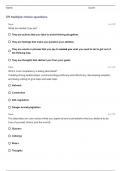
179 Multiple choice questions
Term 1 of 179
What do Mental Cues do?
They are actions that you take to avoid thinking altogether.
They are feelings that make you question your abilities.
They are words or phrases that you say to remind you what you need to do to get out of
the thinking trap
They are thoughts that distract you from your goals.
Term 2 of 179
Which core competency is being described?
Creating strong relationships; communicating positively and effectively; developing empathy
and being willing to give help and seek help.
Network
Connection
Self-regulation
Danger Anxiety/agitation
Term 3 of 179
This describes our core values (what you aspire to) and core beliefs (what you believe to be
true of yourself, others, and the world).
Glaciers
Icebergs
Rivers
Thoughts
,Term 4 of 179
Which portion of ATC "drives" another portion?
Emotions
Positive emotion and gratitude
Thoughts drive Consequences
Mental games
Term 5 of 179
Which thinking trap is described as believing one is certain about a situation despite having
little or no evidence to support it?
Always, Always, Always and
Everything, Everything, Everything
Them, Them, Them
(Playing the blame game, having the victim mentality)
Positive Contribution
Pride/Sharing, planning future achievements
Jumping to Conclusions
It is considered the "Mother of all thinking traps" and is impulsive.
,Term 6 of 179
Would you use the skill of Problem Solving for speedy thinking and quick decisions?
- Must require you full attention
- Must be hard and fun
- Must be games or techniques you can do within a few minutes.
- Dismissing the grain of truth
- Minimizing the situation
- Rationalizing or excusing one's contribution to a problem
- Having weak responses
Indicate what work you need to start doing to achieve your goal. They should be SMART
Specific
Measurable
Action-focused
Realistic
Time-bound
No.
Use it when you are confronted with a situation that requires a thorough understanding
of its causes in order to most effectively solve the problem.
Term 7 of 179
Which core competency is being described?
The ability to identify your thoughts, emotions, behaviors and physiology, particularly
counterproductive patterns; remaining open and curious.
Self-awareness
Optimism
Self-regulation
Self-concept
, Term 8 of 179
What type of responding is being used if you are ignoring the event, or changing the topic of
conversation? What is the "name" of the type of person who uses this response?
Fight or Flight
Assertive Communication
Passive Destructive
Conversation Hijacker or One-Upper
- Identify why a Problem Happened - Identify the Contributing Factors with Critical
Questions and Evidence - Evaluate which Factors are Controllable - Develop Solution
Strategies that will Bring about Positive Change
Term 9 of 179
What type of motivation would you be using if the task at hand is enjoyable?
Intrinsic
Instrumental
Evidence
Internal
Term 10 of 179
What are 2 main things we want to do when we use Active Constructive Responding?
- Use Authentic Interest
- Ask questions to elaborate on the experience
- Must require you full attention
- Must be hard and fun
- Must be games or techniques you can do within a few minutes.
- Increases energy efficiency
- Speeds healing
- Helps manage pain
- Reduces insomnia
1) In Challenges
2) As a Leader
3) In Teams
179 Multiple choice questions
Term 1 of 179
What do Mental Cues do?
They are actions that you take to avoid thinking altogether.
They are feelings that make you question your abilities.
They are words or phrases that you say to remind you what you need to do to get out of
the thinking trap
They are thoughts that distract you from your goals.
Term 2 of 179
Which core competency is being described?
Creating strong relationships; communicating positively and effectively; developing empathy
and being willing to give help and seek help.
Network
Connection
Self-regulation
Danger Anxiety/agitation
Term 3 of 179
This describes our core values (what you aspire to) and core beliefs (what you believe to be
true of yourself, others, and the world).
Glaciers
Icebergs
Rivers
Thoughts
,Term 4 of 179
Which portion of ATC "drives" another portion?
Emotions
Positive emotion and gratitude
Thoughts drive Consequences
Mental games
Term 5 of 179
Which thinking trap is described as believing one is certain about a situation despite having
little or no evidence to support it?
Always, Always, Always and
Everything, Everything, Everything
Them, Them, Them
(Playing the blame game, having the victim mentality)
Positive Contribution
Pride/Sharing, planning future achievements
Jumping to Conclusions
It is considered the "Mother of all thinking traps" and is impulsive.
,Term 6 of 179
Would you use the skill of Problem Solving for speedy thinking and quick decisions?
- Must require you full attention
- Must be hard and fun
- Must be games or techniques you can do within a few minutes.
- Dismissing the grain of truth
- Minimizing the situation
- Rationalizing or excusing one's contribution to a problem
- Having weak responses
Indicate what work you need to start doing to achieve your goal. They should be SMART
Specific
Measurable
Action-focused
Realistic
Time-bound
No.
Use it when you are confronted with a situation that requires a thorough understanding
of its causes in order to most effectively solve the problem.
Term 7 of 179
Which core competency is being described?
The ability to identify your thoughts, emotions, behaviors and physiology, particularly
counterproductive patterns; remaining open and curious.
Self-awareness
Optimism
Self-regulation
Self-concept
, Term 8 of 179
What type of responding is being used if you are ignoring the event, or changing the topic of
conversation? What is the "name" of the type of person who uses this response?
Fight or Flight
Assertive Communication
Passive Destructive
Conversation Hijacker or One-Upper
- Identify why a Problem Happened - Identify the Contributing Factors with Critical
Questions and Evidence - Evaluate which Factors are Controllable - Develop Solution
Strategies that will Bring about Positive Change
Term 9 of 179
What type of motivation would you be using if the task at hand is enjoyable?
Intrinsic
Instrumental
Evidence
Internal
Term 10 of 179
What are 2 main things we want to do when we use Active Constructive Responding?
- Use Authentic Interest
- Ask questions to elaborate on the experience
- Must require you full attention
- Must be hard and fun
- Must be games or techniques you can do within a few minutes.
- Increases energy efficiency
- Speeds healing
- Helps manage pain
- Reduces insomnia
1) In Challenges
2) As a Leader
3) In Teams

