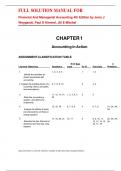
FULL SOLUTION MANUAL FOR
Financial And Managerial Accounting 4th Edition by Jerry J
Weygandt, Paul D Kimmel, Jill E Mitchel
CHAPTER 1 DK
Accounting in Action DK DK
ASSIGNMENT CLASSIFICATION TABLE DK DK
Brief Exer DK A
Learning Objectives DK Questions cises Do It! DK Exercises Problems
1. 1, 2, 3, 4, 5
DK DK DK DK 1 1, 2DK
Identify the activities anDK DK DK
dusers associated with
K
D DK DK DK
accounting.
2. Explain the building blocks of a
DK DK DK DK DK DK 6, 7, 8, 9, 10
DK DK DK DK 2 3, 4DK
ccounting: ethics, principles, DK DK K
D
and assumptions.
DK
3. 11, 12, 13, 14.
DK DK DK 1, 2, 3, 4, 5
DK DK DK DK 3 5
State the accounting e
DK DK DK 22
quation, and define itsc DK DK DK K
D
omponents.
4. 15, 16, 18
DK DK 6, 7, 8, 9
DK DK DK 4 6, 7, 8
DK DK 1A, 2A, 4A,
DK DK
Analyze the effects of busin DK DK DK DK 5A
ess transactions on theacco
DK DK DK K
D
unting equation. DK
5. 17, 19, 20, 21,
DK DK DK 10, 11 DK 5 8, 9, 10, 11,
DK DK2A, 3A, 4A,
DK DK DK
Describe the four financial st DK DK DK DK
12, 13, 14, 15, 5A
DK DK DK
atements and how they arep DK DK DK DK K
D 16, 17, 18
DK DK
repared.
obtain permission to reuse this material is available at http://www.wiley.com/go/permissions
DK DK DK DK DK DK DK DK DK
.
, © 2021 John Wiley & Sons, Inc. All rights reserved. No part of this publication may be reproduced, stored in a retrieval system, or transmitt
DK DK DK DK DK DK DK DK DK DK DK DK DK DK DK DK DK DK DK DK DK DK DK DK
ed,in any form or by any means, electronic, mechanical, photocopying, recording or otherwise, except as permitted by law. Advice on how
K
D DK DK DK DK DK DK DK DK DK DK DK DK DK DK DK DK DK DK D K DK DK
to
1-2 © 2021 John Wiley & Sons, Inc. All rights reserved.
DK DK DK DK DK DK DK DK DK D K Weygandt, Financial & Managerial Accounting 4e, Solutions Manual
DK DK DK DK DK DK DK D KDKD K (For Instructor Us
DK DK
e Only)
DK
, ANSWERS TO QUESTIONS DK DK
1. True. Virtually every organization and person in our society uses accounting information. Busines
DK DK DK DK DK DK DK DK DK DK DK DK
ses, investors, creditors, government agencies, and not-for-
DK DK DK DK DK DK
profit organizations must use accounting information to operate effectively.
DK DK DK DK DK DK DK DK
LO 1, BT: K, Difficulty: Easy, TOT: 2 min., AACSB: None, AICPA FC: Reporting, IMA: Reporting
D K D K D K D K D K D K D K D K D K D K D K D K D K D K D K
2. Accounting is the process of identifying, recording, and communicating the economic events of
DK DK DK DK DK DK DK D K D K DK DK DK DK
an organization to interested users of the information. The first activity of the accounting process i
DK DK DK DK DK DK DK DK DK DK DK DK DK DK DK
s to identify economic events that are relevant to a particular business. Once identified and measu
DK DK DK DK DK DK DK DK DK DK DK DK DK DK DK
red, the events are recorded to provide a history of the financial activities of the organization. Rec
DK DK DK DK DK DK DK DK DK DK DK DK DK DK DK DK
ording consists of keeping a chronological diary of these measured events in anorderly and syste
DK DK DK DK DK DK DK DK DK DK DK DK K
D DK DK
matic manner. The information is communicated through the preparation and distribution of accou
DK DK DK DK DK DK DK DK DK DK DK DK
nting reports, the most common of which are called financial statements.A vital element in
D K D K D K D K D K D K DK D K DK DK K
D DK DK DK
the communication process is the accountant’s ability and responsibility to analyze and interpret t
DK DK DK DK DK DK DK DK DK DK DK DK DK DK
he reported information.
DK DK
LO 1, BT: K, Difficulty: Easy, TOT: 2 min., AACSB: None, AICPA FC: Reporting, IMA: Reporting
D K D K D K D K D K D K D K D K D K D K D K D K D K D K D K
3. (a) Internal users are those who plan, organize, and run the business and therefore are officers an
DK DK DK DK DK DK DK DK DK DK DK DK DK DK DK DK
d other decision makers. DK DK DK
(b) To assist management, accounting provides internal reports. Examples include financial com
DK DK DK DK DK DK DK DK DK DK
parisons of operating alternatives, projections of income from new sales campaigns, and for
DK DK DK DK DK D K DK DK DK DK DK DK
ecasts of cash needs for the next year. DK DK DK DK DK DK DK
LO 1, BT: K, Difficulty: Easy, TOT: 2 min., AACSB: None, AICPA FC: Reporting, IMA: Reporting
D K D K D K D K D K D K D K D K D K D K D K D K D K D K D K
4. (a) Investors (owners) use accounting information to make decisions to buy, hold, or sell stock.
DK DK DK DK DK DK DK DK DK DK DK DK DK
(b) Creditors use accounting information to evaluate the risks of granting credit or lending money.
DK DK DK DK DK DK DK DK DK DK DK DK DK
LO 1, BT: K, Difficulty: Easy, TOT: 2 min., AACSB: None, AICPA FC: Reporting, IMA: Reporting
D K D K D K D K D K D K D K D K D K D K D K D K D K D K D K
5. False. Bookkeeping usually involves only the recording of economic events and therefore is just o
DK DK DK DK DK DK DK DK DK DK DK DK DK DK
ne part of the entire accounting process. Accounting, on the other hand, involves the entire proces
DK DK DK DK DK DK DK DK DK DK DK DK DK DK DK
s of identifying, recording, and communicating economic events.
DK DK DK DK DK DK DK
LO 1, BT: C, Difficulty: Easy, TOT: 2 min., AACSB: None, AICPA FC: Reporting, IMA: Reporting
D K D K D K D K D K D K D K D K D K D K D K D K D K D K D K
6. Harper Travel Agency should report the land at $85,000 on its December 31, 2022 balance she
DK DK DK DK DK DK DK DK DK DK DK DK D K D K DK
et. This is true not only at the time the land is purchased, but also over the time the land is held. In
DK DK DK DK DK DK DK DK DK DK DK DK DK DK DK DK DK DK DK DK DK DK DK
determining which measurement principle to use (historical cost or fair value) companies weigh th
DK DK DK DK DK DK DK DK DK DK DK DK DK
e factual nature of cost figures versus the relevance of fair value. In general, companies use histor
DK DK DK DK DK DK DK DK DK DK DK DK DK DK DK DK
ical cost. Only in situations where assets are actively traded do companies apply the fair value pr
DK DK DK DK DK DK DK DK DK DK D K DK DK DK DK DK
inciple.
LO 2, BT: C, Difficulty: Easy, TOT: 2 min., AACSB: None, AICPA FC: Measurement, Analysis and Interpretation IM
D K D K D K D K D K D K D K D K D K D K D K D K D K D K D K D K D K
A: Reporting DK
7. The monetary unit assumption requires that only transaction data capable of being expressed in t
DK DK DK DK DK DK DK DK DK DK DK DK DK DK
erms of money be included in the accounting records. This assumption enables accounting to qua
DK DK DK DK DK DK DK DK DK DK DK DK DK DK
ntify (measure) economic events.
DK DK DK
LO 2, BT: K, Difficulty: Easy, TOT: 2 min., AACSB: None, AICPA FC: Measurement, Analysis and Interpretation IMA:Rep
DK DK DK DK DK DK DK DK DK DK DK DK DK DK DK DK D K K
D
orting
obtain permission to reuse this material is available at http://www.wiley.com/go/permissions
DK DK DK DK DK DK DK DK DK
.
,
Financial And Managerial Accounting 4th Edition by Jerry J
Weygandt, Paul D Kimmel, Jill E Mitchel
CHAPTER 1 DK
Accounting in Action DK DK
ASSIGNMENT CLASSIFICATION TABLE DK DK
Brief Exer DK A
Learning Objectives DK Questions cises Do It! DK Exercises Problems
1. 1, 2, 3, 4, 5
DK DK DK DK 1 1, 2DK
Identify the activities anDK DK DK
dusers associated with
K
D DK DK DK
accounting.
2. Explain the building blocks of a
DK DK DK DK DK DK 6, 7, 8, 9, 10
DK DK DK DK 2 3, 4DK
ccounting: ethics, principles, DK DK K
D
and assumptions.
DK
3. 11, 12, 13, 14.
DK DK DK 1, 2, 3, 4, 5
DK DK DK DK 3 5
State the accounting e
DK DK DK 22
quation, and define itsc DK DK DK K
D
omponents.
4. 15, 16, 18
DK DK 6, 7, 8, 9
DK DK DK 4 6, 7, 8
DK DK 1A, 2A, 4A,
DK DK
Analyze the effects of busin DK DK DK DK 5A
ess transactions on theacco
DK DK DK K
D
unting equation. DK
5. 17, 19, 20, 21,
DK DK DK 10, 11 DK 5 8, 9, 10, 11,
DK DK2A, 3A, 4A,
DK DK DK
Describe the four financial st DK DK DK DK
12, 13, 14, 15, 5A
DK DK DK
atements and how they arep DK DK DK DK K
D 16, 17, 18
DK DK
repared.
obtain permission to reuse this material is available at http://www.wiley.com/go/permissions
DK DK DK DK DK DK DK DK DK
.
, © 2021 John Wiley & Sons, Inc. All rights reserved. No part of this publication may be reproduced, stored in a retrieval system, or transmitt
DK DK DK DK DK DK DK DK DK DK DK DK DK DK DK DK DK DK DK DK DK DK DK DK
ed,in any form or by any means, electronic, mechanical, photocopying, recording or otherwise, except as permitted by law. Advice on how
K
D DK DK DK DK DK DK DK DK DK DK DK DK DK DK DK DK DK DK D K DK DK
to
1-2 © 2021 John Wiley & Sons, Inc. All rights reserved.
DK DK DK DK DK DK DK DK DK D K Weygandt, Financial & Managerial Accounting 4e, Solutions Manual
DK DK DK DK DK DK DK D KDKD K (For Instructor Us
DK DK
e Only)
DK
, ANSWERS TO QUESTIONS DK DK
1. True. Virtually every organization and person in our society uses accounting information. Busines
DK DK DK DK DK DK DK DK DK DK DK DK
ses, investors, creditors, government agencies, and not-for-
DK DK DK DK DK DK
profit organizations must use accounting information to operate effectively.
DK DK DK DK DK DK DK DK
LO 1, BT: K, Difficulty: Easy, TOT: 2 min., AACSB: None, AICPA FC: Reporting, IMA: Reporting
D K D K D K D K D K D K D K D K D K D K D K D K D K D K D K
2. Accounting is the process of identifying, recording, and communicating the economic events of
DK DK DK DK DK DK DK D K D K DK DK DK DK
an organization to interested users of the information. The first activity of the accounting process i
DK DK DK DK DK DK DK DK DK DK DK DK DK DK DK
s to identify economic events that are relevant to a particular business. Once identified and measu
DK DK DK DK DK DK DK DK DK DK DK DK DK DK DK
red, the events are recorded to provide a history of the financial activities of the organization. Rec
DK DK DK DK DK DK DK DK DK DK DK DK DK DK DK DK
ording consists of keeping a chronological diary of these measured events in anorderly and syste
DK DK DK DK DK DK DK DK DK DK DK DK K
D DK DK
matic manner. The information is communicated through the preparation and distribution of accou
DK DK DK DK DK DK DK DK DK DK DK DK
nting reports, the most common of which are called financial statements.A vital element in
D K D K D K D K D K D K DK D K DK DK K
D DK DK DK
the communication process is the accountant’s ability and responsibility to analyze and interpret t
DK DK DK DK DK DK DK DK DK DK DK DK DK DK
he reported information.
DK DK
LO 1, BT: K, Difficulty: Easy, TOT: 2 min., AACSB: None, AICPA FC: Reporting, IMA: Reporting
D K D K D K D K D K D K D K D K D K D K D K D K D K D K D K
3. (a) Internal users are those who plan, organize, and run the business and therefore are officers an
DK DK DK DK DK DK DK DK DK DK DK DK DK DK DK DK
d other decision makers. DK DK DK
(b) To assist management, accounting provides internal reports. Examples include financial com
DK DK DK DK DK DK DK DK DK DK
parisons of operating alternatives, projections of income from new sales campaigns, and for
DK DK DK DK DK D K DK DK DK DK DK DK
ecasts of cash needs for the next year. DK DK DK DK DK DK DK
LO 1, BT: K, Difficulty: Easy, TOT: 2 min., AACSB: None, AICPA FC: Reporting, IMA: Reporting
D K D K D K D K D K D K D K D K D K D K D K D K D K D K D K
4. (a) Investors (owners) use accounting information to make decisions to buy, hold, or sell stock.
DK DK DK DK DK DK DK DK DK DK DK DK DK
(b) Creditors use accounting information to evaluate the risks of granting credit or lending money.
DK DK DK DK DK DK DK DK DK DK DK DK DK
LO 1, BT: K, Difficulty: Easy, TOT: 2 min., AACSB: None, AICPA FC: Reporting, IMA: Reporting
D K D K D K D K D K D K D K D K D K D K D K D K D K D K D K
5. False. Bookkeeping usually involves only the recording of economic events and therefore is just o
DK DK DK DK DK DK DK DK DK DK DK DK DK DK
ne part of the entire accounting process. Accounting, on the other hand, involves the entire proces
DK DK DK DK DK DK DK DK DK DK DK DK DK DK DK
s of identifying, recording, and communicating economic events.
DK DK DK DK DK DK DK
LO 1, BT: C, Difficulty: Easy, TOT: 2 min., AACSB: None, AICPA FC: Reporting, IMA: Reporting
D K D K D K D K D K D K D K D K D K D K D K D K D K D K D K
6. Harper Travel Agency should report the land at $85,000 on its December 31, 2022 balance she
DK DK DK DK DK DK DK DK DK DK DK DK D K D K DK
et. This is true not only at the time the land is purchased, but also over the time the land is held. In
DK DK DK DK DK DK DK DK DK DK DK DK DK DK DK DK DK DK DK DK DK DK DK
determining which measurement principle to use (historical cost or fair value) companies weigh th
DK DK DK DK DK DK DK DK DK DK DK DK DK
e factual nature of cost figures versus the relevance of fair value. In general, companies use histor
DK DK DK DK DK DK DK DK DK DK DK DK DK DK DK DK
ical cost. Only in situations where assets are actively traded do companies apply the fair value pr
DK DK DK DK DK DK DK DK DK DK D K DK DK DK DK DK
inciple.
LO 2, BT: C, Difficulty: Easy, TOT: 2 min., AACSB: None, AICPA FC: Measurement, Analysis and Interpretation IM
D K D K D K D K D K D K D K D K D K D K D K D K D K D K D K D K D K
A: Reporting DK
7. The monetary unit assumption requires that only transaction data capable of being expressed in t
DK DK DK DK DK DK DK DK DK DK DK DK DK DK
erms of money be included in the accounting records. This assumption enables accounting to qua
DK DK DK DK DK DK DK DK DK DK DK DK DK DK
ntify (measure) economic events.
DK DK DK
LO 2, BT: K, Difficulty: Easy, TOT: 2 min., AACSB: None, AICPA FC: Measurement, Analysis and Interpretation IMA:Rep
DK DK DK DK DK DK DK DK DK DK DK DK DK DK DK DK D K K
D
orting
obtain permission to reuse this material is available at http://www.wiley.com/go/permissions
DK DK DK DK DK DK DK DK DK
.
,