

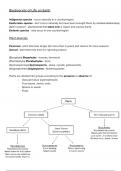
Biodiversity of Life on Earth
Indigenous species - occur naturally in a country/region
Exotic/alien species - don’t occur naturally but have been brought there by mistake/deliberately
(Alien invasive - plant/animal that takes over a region and causes harm)
Endemic species - only occur in one country/region
Plant diversity
Perennial - plant that lives longer (for more than 2 years) and returns for more seasons
Annual - plant that only lives for 1 growing season
(Bryophyta) Bryophytes - mosses, liverworts
(Pteridophyta) Pteridophytes - ferns
(Gymnospermae) Gymnosperms - pines, cycads, yellowwoods
(Angiospermae) Angiosperms - flowering plants
Plants are divided into groups according to the presence or absence of:
- Vascular tissue (xylem/phloem)
- True leaves, stems, roots
- Spores or seeds
- Fruits
, Gametophyte generation - sexual (gametes)
Sporophyte generation - asexual (spores)
Bryophytes (Mosses)
Gametophyte generation is dominant
Leaf-like and stem-like structures and rhizoids
Sperm requires water to move to the ovum (fertilisation)
Sporophytes develop on the gametophyte and are dependent on it.
Small leaves, cannot grow big because of the absence of xylem/phloem
Spores are dispersed by wind
BRYOPHYTES Structure of Vascular Spores/seeds Fruits Dependency on
gametophyte tissue water for
reproduction
Mosses, Thallus Absent Spores None Need water for
liverworts, (no true roots, fertilisation
hornworts stems, leaves)
Pteridophytes (Ferns)
Occur in moist, shady environments
Sporophyte generation is dominant (adult ferns)
Stem is horizontal underground rhizome
Clusters of sporangia are under the leaves (sori/spore capsules)
Released sperm needs water to move to the ovum
PTERIDOPHYTE Structure of Vascular Spores/seeds Fruits Dependency on
sporophyte tissue water for
reproduction
Ferns True roots, Xylem and Spores None Need water for
underground phloem fertilisation
stem present
, Gymnosperms (Naked seeds)
Sporophyte generation is dominant
Male cones bear pollen sacs contain pollen grains (male spores)
Female cones bear the ovules (female spores)
Pollen grains are released during spring and dispersed by wind
Seed is not enclosed in a fruit and are therefore naked seed
Needle like leaves to resist drying out in dry environments
GYMNOSPERMS Structure of Vascular Spores/seeds Fruits Dependency
sporophyte tissue on water for
reproduction
Conifers, cycad, Taproot Xylem and Spores give rise to None No (relies on
pine, biloba tree system with phloem male & female wind)
lateral roots, present gametophytes.
small leaves
Seeds are
produced
Angiosperms (Flowering plants)
Monocotyledonous (Monocots) - adventitious roots,
parallel leaf veins
Dicotyledonous (Dicots) - tap root, net veins
3 main parts:
- Perianth (corolla & calyx)
- Stamen
- Pistil
Modified leaves present as flowers (sexual reproductive organs) for reproduction
Female sex organ (Pistil) Male sex organ (Stamen)
- Stigma - Anther
- Style - Filament
- Ovary
, Pollen grains (male spores) are produced in pollen sacs in the stamen.
Pistil consists of a sticky stigma, long thin style and an ovary.
The ovule (containing female spores) is inside the ovary.
Pollination - transfer of pollen grain
(wind/pollinator) from anther to stigma
of pistil
- During pollination, a ripe pollen grain
lands on a receptive stigma.
- After pollination, pollen grain germinates
and develops a pollen tube with 2 male gametes.
- Pollen grain containing two male gametes represents the male gametophyte.
- One of the female spore (ovule of the ovary) forms the embryo sac (female gametophyte)
- Embryo sac contains an ovum and 2 polar nuclei.
- Pollen tube grows down the style into the ovary and penetrates the ovule and embryo sac to
release the 2 male gametes.
- During fertilisation, one of the male gametes fuses with the ovum to form a diploid zygote
The other male gamete fuses with the 2 polar nuclei in the embryo sac to form the triploid
endosperm, which serves as food for the developing embryo.
Double fertilisation has taken place (Both male gametes participated in fertilisation)
Fertilised ovule develops into a seed that contains embryo, endosperm, testa (hard seed coat)
Testa ruptures when water is present and the seed germinates to form a new plant.
Ovary wall becomes flesh of fruit after fertilisation.
Indigenous species - occur naturally in a country/region
Exotic/alien species - don’t occur naturally but have been brought there by mistake/deliberately
(Alien invasive - plant/animal that takes over a region and causes harm)
Endemic species - only occur in one country/region
Plant diversity
Perennial - plant that lives longer (for more than 2 years) and returns for more seasons
Annual - plant that only lives for 1 growing season
(Bryophyta) Bryophytes - mosses, liverworts
(Pteridophyta) Pteridophytes - ferns
(Gymnospermae) Gymnosperms - pines, cycads, yellowwoods
(Angiospermae) Angiosperms - flowering plants
Plants are divided into groups according to the presence or absence of:
- Vascular tissue (xylem/phloem)
- True leaves, stems, roots
- Spores or seeds
- Fruits
, Gametophyte generation - sexual (gametes)
Sporophyte generation - asexual (spores)
Bryophytes (Mosses)
Gametophyte generation is dominant
Leaf-like and stem-like structures and rhizoids
Sperm requires water to move to the ovum (fertilisation)
Sporophytes develop on the gametophyte and are dependent on it.
Small leaves, cannot grow big because of the absence of xylem/phloem
Spores are dispersed by wind
BRYOPHYTES Structure of Vascular Spores/seeds Fruits Dependency on
gametophyte tissue water for
reproduction
Mosses, Thallus Absent Spores None Need water for
liverworts, (no true roots, fertilisation
hornworts stems, leaves)
Pteridophytes (Ferns)
Occur in moist, shady environments
Sporophyte generation is dominant (adult ferns)
Stem is horizontal underground rhizome
Clusters of sporangia are under the leaves (sori/spore capsules)
Released sperm needs water to move to the ovum
PTERIDOPHYTE Structure of Vascular Spores/seeds Fruits Dependency on
sporophyte tissue water for
reproduction
Ferns True roots, Xylem and Spores None Need water for
underground phloem fertilisation
stem present
, Gymnosperms (Naked seeds)
Sporophyte generation is dominant
Male cones bear pollen sacs contain pollen grains (male spores)
Female cones bear the ovules (female spores)
Pollen grains are released during spring and dispersed by wind
Seed is not enclosed in a fruit and are therefore naked seed
Needle like leaves to resist drying out in dry environments
GYMNOSPERMS Structure of Vascular Spores/seeds Fruits Dependency
sporophyte tissue on water for
reproduction
Conifers, cycad, Taproot Xylem and Spores give rise to None No (relies on
pine, biloba tree system with phloem male & female wind)
lateral roots, present gametophytes.
small leaves
Seeds are
produced
Angiosperms (Flowering plants)
Monocotyledonous (Monocots) - adventitious roots,
parallel leaf veins
Dicotyledonous (Dicots) - tap root, net veins
3 main parts:
- Perianth (corolla & calyx)
- Stamen
- Pistil
Modified leaves present as flowers (sexual reproductive organs) for reproduction
Female sex organ (Pistil) Male sex organ (Stamen)
- Stigma - Anther
- Style - Filament
- Ovary
, Pollen grains (male spores) are produced in pollen sacs in the stamen.
Pistil consists of a sticky stigma, long thin style and an ovary.
The ovule (containing female spores) is inside the ovary.
Pollination - transfer of pollen grain
(wind/pollinator) from anther to stigma
of pistil
- During pollination, a ripe pollen grain
lands on a receptive stigma.
- After pollination, pollen grain germinates
and develops a pollen tube with 2 male gametes.
- Pollen grain containing two male gametes represents the male gametophyte.
- One of the female spore (ovule of the ovary) forms the embryo sac (female gametophyte)
- Embryo sac contains an ovum and 2 polar nuclei.
- Pollen tube grows down the style into the ovary and penetrates the ovule and embryo sac to
release the 2 male gametes.
- During fertilisation, one of the male gametes fuses with the ovum to form a diploid zygote
The other male gamete fuses with the 2 polar nuclei in the embryo sac to form the triploid
endosperm, which serves as food for the developing embryo.
Double fertilisation has taken place (Both male gametes participated in fertilisation)
Fertilised ovule develops into a seed that contains embryo, endosperm, testa (hard seed coat)
Testa ruptures when water is present and the seed germinates to form a new plant.
Ovary wall becomes flesh of fruit after fertilisation.


