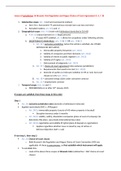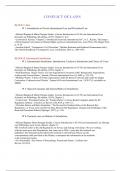
Chapter 1- Introducing the landscapes of criminology
Chapter 1.1 Introducing the text
Chapter 1.2 Structure of the text
Chapter 1.3 What is ‘criminology’?
Criminology: the study of crime, justice, and law and order issues, and the broader
dynamics of societies in terms of informing how those things exist and are experienced.
Chapter 1.4 Skills and competencies of a criminologist
Chapter 1.5 Key topics in criminology
Criminal justice systems: the process through which the state responds to behaviour that it
deems unacceptable. Criminal Justice is delivered through a series of stages: charge,
prosecution, trial , sentence, appeal, punishment, these processes and the agencies which
carry them out are referred to collectively as the criminal justice system.
Chapter 1.6 What is ‘crime’?
Crime: an intentional act which breaks or goes against a law of some sort.
The definition of crime is fluid, because of the laws that can be changed.
The decision to criminalise certain behaviour has to be influenced by something, there has to
be enough of a reason for the State to react to it. Some behaviours might be slowed down or
blocked by powerful actors with vested interests.
Many damaging behaviours are not criminalised, while some groups in society are
seemingly disadvantaged by the needless criminalisation of certain behaviours. There is
often a moral component to how we understand behaviours and whether they are viewed as
being problematic (e.g. criminalisation of homosexuality or abortion).
This can work in the other direction also, whereby certain behaviours were not previously
defined as illegal, but become criminalised as the public begin to see them as problematic or
immoral (e.g. rape within marriage or smoking in public buildings).
,Another way to think about offending, is to utilise a harm-based approach: the more harm
done, the greater the severity of the response required.
Chapter 1.7 Types of crime
Types of crime:
- Acquisitive crimes: acts that involve the acquisition or gain of property or damage
to property, money or anything else that is a tangible reward.
- Theft
- Robbery
- Burglary
- Fraud
- Expressive crimes: acts that do not, seemingly, involve the acquisition of goods, but
instead are linked to emotions and emotional release: anger, frustration etc., where
the act itself is the goal. They are often violent or sexual in nature.
- Property crimes: acts involving the acquisition of property or damage to property.
So, in addition to acts such as theft and robbery, this includes:
- Criminal damage
- Vandalism
- Crimes against the person: crimes that directly involve an act against an individual,
or group of people.
- Violent act
- Sexual act
- Sexual offences: acts covering all manner of unwanted or inappropriate sexual
behaviours against a person, or group, physical or otherwise.
- White-collar crime: acts committed by people usually in a work context, for their
own personal gain
- Theft
- Fraud
- Corporate crime: acts committed by or on behalf of a company that in some way
benefits company goals.
- Financial transactions
- Negligence
- Industrial espionage
- Not adhering to health and safety
- Environmental regulations
, - Crimes of the powerful: acts committed by those in positions of power, where they
abuse their position of power and act with some form of corruption and impunity,
- State crimes: acts committed, commissioned or advocated in some way by States to
achieve their goals.
- Peace crimes, including crimes against humanity: acts that are so abhorrent or
terrible that they go against humanity, and thus have their own label.
- Social harms: linked to the harms-based definition of crime. Acts that harm
communities or specific groups of people and are often not dealt with by formal laws.
- War crimes: acts committed during conflicts and wars, when State actors breach
domestic or usually international laws regarding warfare, and involve a disregard for
human rights.
- Status offences/crimes: acts that are prohibited usually only for certain groups or in
the context of certain conditions. Often, this is in the instance of young people having
their behaviours regulated.
- Hate crimes: acts committed where victims are targeted because of their personal
characteristics: age, gender, religion, ethnicity, culture, sexuality and so on.
- Cybercrime: acts committed using or facilitated by information and communication
technologies, typically the Internet.
Chapter 1.8 Summary and implications
, Chapter 2 - ‘Theory’ and its uses
Chapter 2.1 What is theory
Theory: an explanation, or a model, or framework for understanding particular events or
processes.
- Aetiological theories of crime: theories about how crime comes about, focussing
on the causes of crime.
Theories within criminology are developed and used extensively in relation to a range of
different issues and concerns, particularly in relation to offering understanding or
explanation. They also afford the opportunity for policy-making.
Chapter 2.2 The ‘problems’ with theory
Theories in criminology can be referred to as heuristic tools: there are mental shortcuts for
simplifications for making sense of something.
Chapter 2.3. Key examples of theories in criminology
Classicism and positivism are foundational schools of thought within criminology; they are
not only significant terms of the formation of criminology, but also the origin of many more
recent theories can be traced back to them in terms of how they approach issues of crime
and justice.
- Classicism: positions offending as a consequence of people choosing to commit
crime, based on them weighing-up situations and likely outcomes. Individuals are
viewed as rational actors who are self-interested/selfish in their actions.
- Positivism: people engage in offending because they are influenced by forces
outside their own control:
- Internal forces of biology or psychology
- External forces of social conditions and culture
Chapter 1.1 Introducing the text
Chapter 1.2 Structure of the text
Chapter 1.3 What is ‘criminology’?
Criminology: the study of crime, justice, and law and order issues, and the broader
dynamics of societies in terms of informing how those things exist and are experienced.
Chapter 1.4 Skills and competencies of a criminologist
Chapter 1.5 Key topics in criminology
Criminal justice systems: the process through which the state responds to behaviour that it
deems unacceptable. Criminal Justice is delivered through a series of stages: charge,
prosecution, trial , sentence, appeal, punishment, these processes and the agencies which
carry them out are referred to collectively as the criminal justice system.
Chapter 1.6 What is ‘crime’?
Crime: an intentional act which breaks or goes against a law of some sort.
The definition of crime is fluid, because of the laws that can be changed.
The decision to criminalise certain behaviour has to be influenced by something, there has to
be enough of a reason for the State to react to it. Some behaviours might be slowed down or
blocked by powerful actors with vested interests.
Many damaging behaviours are not criminalised, while some groups in society are
seemingly disadvantaged by the needless criminalisation of certain behaviours. There is
often a moral component to how we understand behaviours and whether they are viewed as
being problematic (e.g. criminalisation of homosexuality or abortion).
This can work in the other direction also, whereby certain behaviours were not previously
defined as illegal, but become criminalised as the public begin to see them as problematic or
immoral (e.g. rape within marriage or smoking in public buildings).
,Another way to think about offending, is to utilise a harm-based approach: the more harm
done, the greater the severity of the response required.
Chapter 1.7 Types of crime
Types of crime:
- Acquisitive crimes: acts that involve the acquisition or gain of property or damage
to property, money or anything else that is a tangible reward.
- Theft
- Robbery
- Burglary
- Fraud
- Expressive crimes: acts that do not, seemingly, involve the acquisition of goods, but
instead are linked to emotions and emotional release: anger, frustration etc., where
the act itself is the goal. They are often violent or sexual in nature.
- Property crimes: acts involving the acquisition of property or damage to property.
So, in addition to acts such as theft and robbery, this includes:
- Criminal damage
- Vandalism
- Crimes against the person: crimes that directly involve an act against an individual,
or group of people.
- Violent act
- Sexual act
- Sexual offences: acts covering all manner of unwanted or inappropriate sexual
behaviours against a person, or group, physical or otherwise.
- White-collar crime: acts committed by people usually in a work context, for their
own personal gain
- Theft
- Fraud
- Corporate crime: acts committed by or on behalf of a company that in some way
benefits company goals.
- Financial transactions
- Negligence
- Industrial espionage
- Not adhering to health and safety
- Environmental regulations
, - Crimes of the powerful: acts committed by those in positions of power, where they
abuse their position of power and act with some form of corruption and impunity,
- State crimes: acts committed, commissioned or advocated in some way by States to
achieve their goals.
- Peace crimes, including crimes against humanity: acts that are so abhorrent or
terrible that they go against humanity, and thus have their own label.
- Social harms: linked to the harms-based definition of crime. Acts that harm
communities or specific groups of people and are often not dealt with by formal laws.
- War crimes: acts committed during conflicts and wars, when State actors breach
domestic or usually international laws regarding warfare, and involve a disregard for
human rights.
- Status offences/crimes: acts that are prohibited usually only for certain groups or in
the context of certain conditions. Often, this is in the instance of young people having
their behaviours regulated.
- Hate crimes: acts committed where victims are targeted because of their personal
characteristics: age, gender, religion, ethnicity, culture, sexuality and so on.
- Cybercrime: acts committed using or facilitated by information and communication
technologies, typically the Internet.
Chapter 1.8 Summary and implications
, Chapter 2 - ‘Theory’ and its uses
Chapter 2.1 What is theory
Theory: an explanation, or a model, or framework for understanding particular events or
processes.
- Aetiological theories of crime: theories about how crime comes about, focussing
on the causes of crime.
Theories within criminology are developed and used extensively in relation to a range of
different issues and concerns, particularly in relation to offering understanding or
explanation. They also afford the opportunity for policy-making.
Chapter 2.2 The ‘problems’ with theory
Theories in criminology can be referred to as heuristic tools: there are mental shortcuts for
simplifications for making sense of something.
Chapter 2.3. Key examples of theories in criminology
Classicism and positivism are foundational schools of thought within criminology; they are
not only significant terms of the formation of criminology, but also the origin of many more
recent theories can be traced back to them in terms of how they approach issues of crime
and justice.
- Classicism: positions offending as a consequence of people choosing to commit
crime, based on them weighing-up situations and likely outcomes. Individuals are
viewed as rational actors who are self-interested/selfish in their actions.
- Positivism: people engage in offending because they are influenced by forces
outside their own control:
- Internal forces of biology or psychology
- External forces of social conditions and culture