
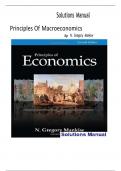
Solutions Manual
Principles Of Macroeconomics
By: N. Gregory Mankiw
,Contents
Chapter 1 Ten Principles Of Economics 1
Chapter 2 Thinking Like An Economist 17
Chapter 3 Interdependence And The Gains From Trade 37
Chapter 4 The Market Forces Of Supply And Demand 53
Chapter 5 Elasticity And Its Application 91
Chapter 6 Supply, Demand, And Government Policies 111
Chapter 7 Consumers, Producers, And The Efficiency Of Markets 131
Chapter 8 Application: The Costs Of Taxation 155
Chapter 9 Application: International Trade 175
Chapter 10 Measuring A Nation’s Income 197
Chapter 11 Measuring The Cost Of Living 213
Chapter 12 Production And Growth 225
Chapter 13 Saving, Investment, And The Financial System 239
Chapter 14 The Basic Tools Of Finance 257
Chapter 15 Unemployment 269
Chapter 16 The Monetary System 287
Chapter 17 Money Growth And Inflation 305
Chapter 18 Open-Economy Macroeconomics: Basic Concepts 323
Chapter 19 A Macroeconomic Theory Of The Open Economy 341
Chapter 20 Aggregate Demand And Aggregate Supply 367
Chapter 21 The Influence Of Monetary And Fiscal Policy
On Aggregate Demand 399
Chapter 22 The Short-Run Trade-Off Between Inflation
And Unemployment 421
Chapter 23 Five Debates Over Macroeconomic Policy 445
,1 Ten Principles Of Economics
What’s New In The Seventh Edition:
The Discussion Of Principle #3, “Rational People Think At The Margin,” Is More Thorough And Has A
NewExample. The Discussions Of Principle #4, “People Respond To Incentives,” Principle #7,
“Governments Can Sometimes Improve Market Outcomes,” And Principle #10, “Society Faces A Short-
Run Trade-Off Between Inflation And Unemployment” Have Been Clarified. Definitions For The Terms
“Rational,” “Incentives,” And “Property Rights” Have Been Added.
Learning Objectives:
By The End Of This Chapter, Students Should Understand:
That Economics Is About The Allocation Of Scarce Resources.
That Individuals Face Trade-Offs.
The Meaning Of Opportunity Cost.
How To Use Marginal Reasoning When Making Decisions.
How Incentives Affect People’s Behavior.
Why Trade Among People Or Nations Can Be Good For Everyone.
Why Markets Are A Good, But Not Perfect, Way To Allocate Resources.
What Determines Some Trends In The Overall Economy.
Context And Purpose:
Chapter 1 Is The First Chapter In A Three-Chapter Section That Serves As The Introduction To The
Text. Chapter 1 Introduces Ten Fundamental Principles On Which The Study Of Economics Is Based. In
A BroadSense, The Rest Of The Text Is An Elaboration On These Ten Principles. Chapter 2 Will Develop
How Economists Approach Problems While Chapter 3 Will Explain How Individuals And Countries Gain
From Trade.
The Purpose Of Chapter 1 Is To Lay Out Ten Economic Principles That Will Serve As Building
BlocksFor The Rest Of The Text. The Ten Principles Can Be Grouped Into Three Categories: How People
Make
, 2 G Chapter 1/Ten Principles of Economics
Decisions, How People Interact, And How The Economy Works As A Whole. Throughout The Text,
ReferencesWill Be Made Repeatedly To These Ten Principles.
Key Points:
1. The Fundamental Lessons About Individual Decisionmaking Are That People Face Trade-Offs
Among Alternative Goals, That The Cost Of Any Action Is Measured In Terms Of Forgone
Opportunities, That Rational People Make Decisions By Comparing Marginal Costs And Marginal
Benefits, And That PeopleChange Their Behavior In Response To The Incentives They Face.
2. The Fundamental Lessons About Interactions Among People Are That Trade Can Be Mutually
Beneficial,That Markets Are Usually A Good Way Of Coordinating Trades Among People, And That
The GovernmentCan Potentially Improve Market Outcomes If There Is Some Sort Of Market Failure
Or If The Market Outcome Is Inequitable.
3. The Fundamental Lessons About The Economy As A Whole Are That Productivity Is The Ultimate
SourceOf Living Standards, That Money Growth Is The Ultimate Source Of Inflation, And That
Society Faces A Short-Run Trade-Off Between Inflation And Unemployment.
Chapter Outline:
I. Introduction
Begin by pointing out that economics is a subject that students must confront in their
daily lives. Point out that they already spend a great deal of their time thinking about
economic issues: prices, buying decisions, use of their time, etc.
A. The Word “Economy” Comes From The Greek Word Oikonomos Meaning “One
WhoManages A Household.”
B. This Makes Some Sense Because In The Economy We Are Faced With Many Decisions
(JustAs A Household Is).
C. Fundamental Economic Problem: Resources Are Scarce.
You will want to start the semester by explaining to students that part of learning
economics is understanding a new vocabulary. Economists generally use very precise
(and sometimes different) definitions for words that are commonly used outside of
the economics discipline. Therefore, it will be helpful to students if you follow the
definitions provided in the text as much as possible.
D. Definition Of Scarcity: The Limited Nature Of Society’s Resources.
E. Definition Of Economics: The Study Of How Society Manages Its Scarce Resources.
Principles Of Macroeconomics
By: N. Gregory Mankiw
,Contents
Chapter 1 Ten Principles Of Economics 1
Chapter 2 Thinking Like An Economist 17
Chapter 3 Interdependence And The Gains From Trade 37
Chapter 4 The Market Forces Of Supply And Demand 53
Chapter 5 Elasticity And Its Application 91
Chapter 6 Supply, Demand, And Government Policies 111
Chapter 7 Consumers, Producers, And The Efficiency Of Markets 131
Chapter 8 Application: The Costs Of Taxation 155
Chapter 9 Application: International Trade 175
Chapter 10 Measuring A Nation’s Income 197
Chapter 11 Measuring The Cost Of Living 213
Chapter 12 Production And Growth 225
Chapter 13 Saving, Investment, And The Financial System 239
Chapter 14 The Basic Tools Of Finance 257
Chapter 15 Unemployment 269
Chapter 16 The Monetary System 287
Chapter 17 Money Growth And Inflation 305
Chapter 18 Open-Economy Macroeconomics: Basic Concepts 323
Chapter 19 A Macroeconomic Theory Of The Open Economy 341
Chapter 20 Aggregate Demand And Aggregate Supply 367
Chapter 21 The Influence Of Monetary And Fiscal Policy
On Aggregate Demand 399
Chapter 22 The Short-Run Trade-Off Between Inflation
And Unemployment 421
Chapter 23 Five Debates Over Macroeconomic Policy 445
,1 Ten Principles Of Economics
What’s New In The Seventh Edition:
The Discussion Of Principle #3, “Rational People Think At The Margin,” Is More Thorough And Has A
NewExample. The Discussions Of Principle #4, “People Respond To Incentives,” Principle #7,
“Governments Can Sometimes Improve Market Outcomes,” And Principle #10, “Society Faces A Short-
Run Trade-Off Between Inflation And Unemployment” Have Been Clarified. Definitions For The Terms
“Rational,” “Incentives,” And “Property Rights” Have Been Added.
Learning Objectives:
By The End Of This Chapter, Students Should Understand:
That Economics Is About The Allocation Of Scarce Resources.
That Individuals Face Trade-Offs.
The Meaning Of Opportunity Cost.
How To Use Marginal Reasoning When Making Decisions.
How Incentives Affect People’s Behavior.
Why Trade Among People Or Nations Can Be Good For Everyone.
Why Markets Are A Good, But Not Perfect, Way To Allocate Resources.
What Determines Some Trends In The Overall Economy.
Context And Purpose:
Chapter 1 Is The First Chapter In A Three-Chapter Section That Serves As The Introduction To The
Text. Chapter 1 Introduces Ten Fundamental Principles On Which The Study Of Economics Is Based. In
A BroadSense, The Rest Of The Text Is An Elaboration On These Ten Principles. Chapter 2 Will Develop
How Economists Approach Problems While Chapter 3 Will Explain How Individuals And Countries Gain
From Trade.
The Purpose Of Chapter 1 Is To Lay Out Ten Economic Principles That Will Serve As Building
BlocksFor The Rest Of The Text. The Ten Principles Can Be Grouped Into Three Categories: How People
Make
, 2 G Chapter 1/Ten Principles of Economics
Decisions, How People Interact, And How The Economy Works As A Whole. Throughout The Text,
ReferencesWill Be Made Repeatedly To These Ten Principles.
Key Points:
1. The Fundamental Lessons About Individual Decisionmaking Are That People Face Trade-Offs
Among Alternative Goals, That The Cost Of Any Action Is Measured In Terms Of Forgone
Opportunities, That Rational People Make Decisions By Comparing Marginal Costs And Marginal
Benefits, And That PeopleChange Their Behavior In Response To The Incentives They Face.
2. The Fundamental Lessons About Interactions Among People Are That Trade Can Be Mutually
Beneficial,That Markets Are Usually A Good Way Of Coordinating Trades Among People, And That
The GovernmentCan Potentially Improve Market Outcomes If There Is Some Sort Of Market Failure
Or If The Market Outcome Is Inequitable.
3. The Fundamental Lessons About The Economy As A Whole Are That Productivity Is The Ultimate
SourceOf Living Standards, That Money Growth Is The Ultimate Source Of Inflation, And That
Society Faces A Short-Run Trade-Off Between Inflation And Unemployment.
Chapter Outline:
I. Introduction
Begin by pointing out that economics is a subject that students must confront in their
daily lives. Point out that they already spend a great deal of their time thinking about
economic issues: prices, buying decisions, use of their time, etc.
A. The Word “Economy” Comes From The Greek Word Oikonomos Meaning “One
WhoManages A Household.”
B. This Makes Some Sense Because In The Economy We Are Faced With Many Decisions
(JustAs A Household Is).
C. Fundamental Economic Problem: Resources Are Scarce.
You will want to start the semester by explaining to students that part of learning
economics is understanding a new vocabulary. Economists generally use very precise
(and sometimes different) definitions for words that are commonly used outside of
the economics discipline. Therefore, it will be helpful to students if you follow the
definitions provided in the text as much as possible.
D. Definition Of Scarcity: The Limited Nature Of Society’s Resources.
E. Definition Of Economics: The Study Of How Society Manages Its Scarce Resources.


