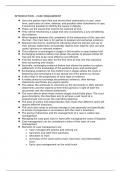
INTRODUCTION – CASE MANAGEMENT
Once the parties have filed and served their statements of case, claim
form, particulars of claim, defense, and possibly other statements of case,
it should be possible to identify the issues in dispute.
These are the issues that need to be resolved at trial.
They will be resolved by a judge and very occasionally a jury considering
the evidence.
What happens between the completion of the statements of the case and
the trial – the main task is for parties to prepare and exchange evidence.
Relevant documents, statements indicating what the witness will say at
trial; witness statements and possibly reports from experts; who can give
useful opinions on relevant matters.
This evidence is exchanged in stages in the months or years before trial.
Exchanging evidence before trial allows the parties to prepare better for
trial and for trial to be more effective and efficient.
If all the evidence was seen for the first time at trial, the trial would be
time-consuming and chaotic.
Secondly, exchanging evidence before trial allows the parties to explore
settlement in the knowledge of the evidence given and exchanged.
Exchanging evidence not only before trial in stages allows the costs or
preparing and exchanging it to be spread out if the parties so choose.
It also helps in the preparation of each type of evidence.
It makes sense to exchange documentary evidence, then witness
statements and finally any expert reports.
This allows the witnesses to comment on the documents in their witness
statements and the experts to form their opinions in light of both the
documents and the witness statements.
The court directs when these various stages should take place. The court
gives directions, the directions aim to achieve a just result at a
proportionate cost as per the overriding objective.
The aims of justice and proportionate costs mean that different cases will
require different directions.
The court also needs to actively manage a case generally and specifically
to ensure it progresses in accordance with the court’s directions.
The giving of directions and the management of a case is called case
management
Managing the case goes hand in hand with managing the costs of litigation
Cost management can be considered a sister of this topic of case
management
Elements of case management are:
o Case management powers and striking out
o Sanctions and relief from sanctions
o Allocation to track
o Overview of the small claims track, fast track, and intermediate
track
o Early case management on the multi-track
Once the parties have filed and served their statements of case, claim
form, particulars of claim, defense, and possibly other statements of case,
it should be possible to identify the issues in dispute.
These are the issues that need to be resolved at trial.
They will be resolved by a judge and very occasionally a jury considering
the evidence.
What happens between the completion of the statements of the case and
the trial – the main task is for parties to prepare and exchange evidence.
Relevant documents, statements indicating what the witness will say at
trial; witness statements and possibly reports from experts; who can give
useful opinions on relevant matters.
This evidence is exchanged in stages in the months or years before trial.
Exchanging evidence before trial allows the parties to prepare better for
trial and for trial to be more effective and efficient.
If all the evidence was seen for the first time at trial, the trial would be
time-consuming and chaotic.
Secondly, exchanging evidence before trial allows the parties to explore
settlement in the knowledge of the evidence given and exchanged.
Exchanging evidence not only before trial in stages allows the costs or
preparing and exchanging it to be spread out if the parties so choose.
It also helps in the preparation of each type of evidence.
It makes sense to exchange documentary evidence, then witness
statements and finally any expert reports.
This allows the witnesses to comment on the documents in their witness
statements and the experts to form their opinions in light of both the
documents and the witness statements.
The court directs when these various stages should take place. The court
gives directions, the directions aim to achieve a just result at a
proportionate cost as per the overriding objective.
The aims of justice and proportionate costs mean that different cases will
require different directions.
The court also needs to actively manage a case generally and specifically
to ensure it progresses in accordance with the court’s directions.
The giving of directions and the management of a case is called case
management
Managing the case goes hand in hand with managing the costs of litigation
Cost management can be considered a sister of this topic of case
management
Elements of case management are:
o Case management powers and striking out
o Sanctions and relief from sanctions
o Allocation to track
o Overview of the small claims track, fast track, and intermediate
track
o Early case management on the multi-track