NURS 8022 Exam 3 Study Guide Latest.
NURS 8022 Exam 3 Study Guide Latest.
Acyanotic Defects (increased pulmonary blood flow)
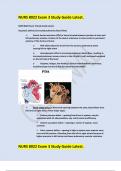
Patent ductus arteriosus (PDA) o Vessel located between junction of main and
left pulmonary arteries o Failure of the ductus arteriosus to close results in persistent
patency of the ductus arterisus
o PDA allows blood to shunt from the aorta to pulmonary artery
causing left-to-right shunt
o Hemodynamic effect is increased pulmonary blood flow, resulting in
increased pulmonary venous return to the LA and LV with increased workload
on the left side of the heart
o Dyspnea, fatigue, low feeding o Clinical manifestation Continuous,
machinery-type murmur Risk for bacterial endocarditis
Atrial septal defect o Abnormal opening between the atria; blood flows from
left atria to right atria o Three major types:
▪ Ostium primum defect – opening found low in septum, may be
associated with AV abnormalities, esp. mitral valve insufficiency
▪ Ostium secundum defect – opening in center of septum, most
common
▪ Sinus venosus defect – opening is high in septum near superior vena
cava and RA junction o Shunting from the left to right atrium because of
higher pressure in left atrium and lower pulmonary vascular resistance
NURS 8022 Exam 3 Study Guide Latest.
,NURS 8022 Exam 3 Study Guide Latest.
▪
▪ Right atrial and ventricular enlargement o Clinical manifestations:
Often asymptomatic; diagnosed by murmur; pulmonary symptoms on
exertion at later age
Ventricular septal defect (VSD) o Abnormal communication between
ventricles
NURS 8022 Exam 3 Study Guide Latest.
,▪ NURS 8022 Exam 3 Study Guide Latest.
Shunting from the high-pressure left side to the low-pressure right side
▪ Amount of shunting dependent of size of defect and degree of
pulmonary vascular resistance
▪ Small VSDs limit blood flow through defect therefore degree of
pulmonary congestion is low, leading to minimal ventricular enlargement
o Common congenital heart lesion (25% to 33%)
o Pulmonary overcirculation accounts for symptoms associated with a
large VSD
o Clinical Manifestations
▪ Heart failure
▪ Poor weight gain
▪ Murmur and systolic thrill
Defects Decreasing Pulmonary Blood Flow – Cyanotic
Involve obstruction to pulmonary flow and septal communications
Right to left shunting o Because RV outflow is obstructed causing increased
right sided pressures that then exceed left sided pressures
Right shunting because the right ventricular forward flow is obstructed which
causes increased right sided pressures that can exceed left sided obstruction
Manifest with hypoxemia and cyanosis
Cyanotic Defects
Clinical manifestations o Mild hypoxemia
▪ Cyanosis only occasionally when stressed o Severe hypoxemia
NURS 8022 Exam 3 Study Guide Latest.
, ▪
▪ Feeding intolerance, poor weight gain, tachypnea, and dyspnea o
Chronic hypoxemia
▪ Small for their age, may display cognitive and motor skill delays
Polycythemia, shortness of breath with exertion, easily fatigued, and exercise intolerance
▪ Clubbing of the nail beds
Tetralogy of Fallot o Syndrome represented by four defects
▪ VSD
▪ Overriding aorta straddles the VSD
▪ Pulmonary valve stenosis
▪ Right ventricle hypertrophy
Cyanosis and clubbing, feeding difficulty, squatting
Hypercyanotic spell or a “tet spell” that generally occurs with crying and
exertion
Obstructive Defects
Presence of anatomic stenosis in either the right or left outflow tract
Causes obstruction to blood flow Results in pressure load on the ventricles
Gradient reflects the severity of the narrowing o The higher the gradient the
more obstruction to flow and increased afterload in the ventricle
Symptoms depend on location of stenosis and severity
Coarctation of the aorta o Narrowing of the lumen of the aorta that impedes blood flow (8%
to 10% of defects)
NURS 8022 Exam 3 Study Guide Latest.
NURS 8022 Exam 3 Study Guide Latest.
Acyanotic Defects (increased pulmonary blood flow)
Patent ductus arteriosus (PDA) o Vessel located between junction of main and
left pulmonary arteries o Failure of the ductus arteriosus to close results in persistent
patency of the ductus arterisus
o PDA allows blood to shunt from the aorta to pulmonary artery
causing left-to-right shunt
o Hemodynamic effect is increased pulmonary blood flow, resulting in
increased pulmonary venous return to the LA and LV with increased workload
on the left side of the heart
o Dyspnea, fatigue, low feeding o Clinical manifestation Continuous,
machinery-type murmur Risk for bacterial endocarditis
Atrial septal defect o Abnormal opening between the atria; blood flows from
left atria to right atria o Three major types:
▪ Ostium primum defect – opening found low in septum, may be
associated with AV abnormalities, esp. mitral valve insufficiency
▪ Ostium secundum defect – opening in center of septum, most
common
▪ Sinus venosus defect – opening is high in septum near superior vena
cava and RA junction o Shunting from the left to right atrium because of
higher pressure in left atrium and lower pulmonary vascular resistance
NURS 8022 Exam 3 Study Guide Latest.
,NURS 8022 Exam 3 Study Guide Latest.
▪
▪ Right atrial and ventricular enlargement o Clinical manifestations:
Often asymptomatic; diagnosed by murmur; pulmonary symptoms on
exertion at later age
Ventricular septal defect (VSD) o Abnormal communication between
ventricles
NURS 8022 Exam 3 Study Guide Latest.
,▪ NURS 8022 Exam 3 Study Guide Latest.
Shunting from the high-pressure left side to the low-pressure right side
▪ Amount of shunting dependent of size of defect and degree of
pulmonary vascular resistance
▪ Small VSDs limit blood flow through defect therefore degree of
pulmonary congestion is low, leading to minimal ventricular enlargement
o Common congenital heart lesion (25% to 33%)
o Pulmonary overcirculation accounts for symptoms associated with a
large VSD
o Clinical Manifestations
▪ Heart failure
▪ Poor weight gain
▪ Murmur and systolic thrill
Defects Decreasing Pulmonary Blood Flow – Cyanotic
Involve obstruction to pulmonary flow and septal communications
Right to left shunting o Because RV outflow is obstructed causing increased
right sided pressures that then exceed left sided pressures
Right shunting because the right ventricular forward flow is obstructed which
causes increased right sided pressures that can exceed left sided obstruction
Manifest with hypoxemia and cyanosis
Cyanotic Defects
Clinical manifestations o Mild hypoxemia
▪ Cyanosis only occasionally when stressed o Severe hypoxemia
NURS 8022 Exam 3 Study Guide Latest.
, ▪
▪ Feeding intolerance, poor weight gain, tachypnea, and dyspnea o
Chronic hypoxemia
▪ Small for their age, may display cognitive and motor skill delays
Polycythemia, shortness of breath with exertion, easily fatigued, and exercise intolerance
▪ Clubbing of the nail beds
Tetralogy of Fallot o Syndrome represented by four defects
▪ VSD
▪ Overriding aorta straddles the VSD
▪ Pulmonary valve stenosis
▪ Right ventricle hypertrophy
Cyanosis and clubbing, feeding difficulty, squatting
Hypercyanotic spell or a “tet spell” that generally occurs with crying and
exertion
Obstructive Defects
Presence of anatomic stenosis in either the right or left outflow tract
Causes obstruction to blood flow Results in pressure load on the ventricles
Gradient reflects the severity of the narrowing o The higher the gradient the
more obstruction to flow and increased afterload in the ventricle
Symptoms depend on location of stenosis and severity
Coarctation of the aorta o Narrowing of the lumen of the aorta that impedes blood flow (8%
to 10% of defects)
NURS 8022 Exam 3 Study Guide Latest.