Nu 414 Exam 2 Practice Test
With Solution
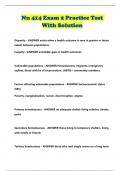
Disparity - ANSWER exists when a health outcome is seen in greater or lesser
extent between populations
inequity - ANSWER avoidable gaps in health outcomes
Vulnerable populations - ANSWER Homelessness, migrants, immigrants,
asylees, those with hx of incarceration, LGBTQ+ community members.
Factors affecting vulnerable populations - ANSWER Socioeconomic status
(SES)
Poverty, marginalization, racism, discrimination, stigma
Primary homelessness - ANSWER no adequate shelter-living vehicles, streets,
parks
Secondary homelessness - ANSWER those living in temporary shelters, living
with family or friends
Tertiary homlessness - ANSWER those who rent single rooms on a long-term
, basis.
Diabetes, HIV/AIDS, Cardiac issues, substance use - ANSWER Diseases
homeless are more likely to have (3-6 times)
Problems LGBTQ face - ANSWER stigma, discrimination, and social exclusion
- decreased access to health care, increased violence towards this population
Factors raising vulnerability to environmental hazards - ANSWER Behavioral
factors such as developmental age appropriate behavior, activities, hobbies
and occupational exposures
Social factors such as where a person lives, works or spends a great deal of
time
Exposure to toxins via mom - ANSWER Fetal environmental risk factors
Respiratory, GI, and Immune systems underdeveloped.
Products in hospitals, cribs - ANSWER Infant environmental risk factors
With Solution
Disparity - ANSWER exists when a health outcome is seen in greater or lesser
extent between populations
inequity - ANSWER avoidable gaps in health outcomes
Vulnerable populations - ANSWER Homelessness, migrants, immigrants,
asylees, those with hx of incarceration, LGBTQ+ community members.
Factors affecting vulnerable populations - ANSWER Socioeconomic status
(SES)
Poverty, marginalization, racism, discrimination, stigma
Primary homelessness - ANSWER no adequate shelter-living vehicles, streets,
parks
Secondary homelessness - ANSWER those living in temporary shelters, living
with family or friends
Tertiary homlessness - ANSWER those who rent single rooms on a long-term
, basis.
Diabetes, HIV/AIDS, Cardiac issues, substance use - ANSWER Diseases
homeless are more likely to have (3-6 times)
Problems LGBTQ face - ANSWER stigma, discrimination, and social exclusion
- decreased access to health care, increased violence towards this population
Factors raising vulnerability to environmental hazards - ANSWER Behavioral
factors such as developmental age appropriate behavior, activities, hobbies
and occupational exposures
Social factors such as where a person lives, works or spends a great deal of
time
Exposure to toxins via mom - ANSWER Fetal environmental risk factors
Respiratory, GI, and Immune systems underdeveloped.
Products in hospitals, cribs - ANSWER Infant environmental risk factors