

2026 QUIZ SERIES #ictfromabc
ishÆ u ysñlï weúßKs /All Rights Reserved ]
Bandaranayake - ictfromabc Ravindu Bandaranayake - ictfromabc Ravindu Bandaranayake - ictfromabc Ravindu Bandaranayake - ictfromabc Ravindu Bandaranayake - ictfromabc Ravindu
Bandaranayake -
Bandaranayake -
ictfromabc
ictfromabc
Information
Ravinduand
Ravindu Bandaranayake - ictfromabc
Ravindu Bandaranayake - ictfromabc
Communication
Bandaranayake Technology
- ictfromabc Ravindu Bandaranayake - ictfromabc Ravindu Bandaranayake - ictfromabc Ravindu
Ravindu Bandaranayake - ictfromabc Ravindu Bandaranayake - ictfromabc Ravindu Bandaranayake - ictfromabc Ravindu
Bandaranayake -
Bandaranayake -
ictfromabc
ictfromabc
f;dr;=
Ravindu r
Ravindu Bandaranayake - ictfromabc
Ravindu Bandaranayake - ictfromabc
e yd ika
Bandaranayake k f
s õok
- ictfromabc ;dla
Ravindu I Kh
Bandaranayake - ictfromabc Ravindu Bandaranayake - ictfromabc Ravindu
Ravindu Bandaranayake - ictfromabc Ravindu Bandaranayake - ictfromabc Ravindu Bandaranayake - ictfromabc Ravindu
eeeeee
2024/09/02
2026 QUIZ NO 04 ictfromabc
Ravindu Bandaranayake
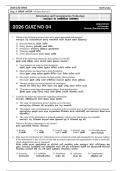
1. Which of the following answers does not contain appropriate information?
f;dr;=re j, fhda.H;djhla wvx.= fkdjkafka my; i|yka l=uk ms,s;=frao@
1) Decision Making ;SrK .ekSu
2) Policy Making m%;sm;a;s ilia lsÍu
3) Predictions wkd.;h ms,sn|j mqfrdal;kh
4) Planning ie,iqï lsÍu
5) Errors Identification jerÈ y÷kd .ekSu
2. Which of the following statements about printers is FALSE?
uqøK hka;% ms<sn| my; i|yka l=uk m%ldYh wi;Ho@
1) Laser printers use toner to print documents.
f,ai¾ uqøK hka;% f,aLk uqøKh lsÍug fgdak¾ Ndú;d lrhs'
2) Inkjet printers use liquid ink to print documents.
Inkjet uqøK hka;% f,aLk uqøKh lsÍug Èhr ;Ska; Ndú;d lrhs'
3) Dot matrix printers are known for high-quality photo printing.
Dot matrix uqøK hka;% Wiia ;;a;ajfha PdhdrEm uqøKh i|yd m%isoaOh'
4) Thermal printers use heat to transfer ink onto paper.
lvodis u; ;Ska; udre lsÍu i|yd ;dm uqøK hka;% ;dmh Ndú;d lrhs'
5) 3D printers create three-dimensional objects from digital models.
;%sudK uqøK hka;% äðg,a udÈ,s j,ska ;%sudK jia;+ka ks¾udKh lrhs'
3. Consider the following statements regarding information.
f;dr;=re iïnkaOfhka my; m%ldY i,ld n,kak'
A. The value of information doesn’t depend on its relevance.
f;dr;=rej, jákdlu tys wod<;ajh u; r|d fkdmj;S'
B. The highest value of information is considered to be at creation time or time information is released.
f;dr;=rej, by<u w.h f,i ie,flkafka ks¾udKh lrk wjia:dfõ§ fyda f;dr;=re ksl=;a lrk
fõ,dfõ§h'
C. The value of the information is reduced gradually with the time and become less valuable.
f;dr;=re j, jákdlu ld,h;a iuÕ l%ufhka wvq ù jákdlu wvq fõ'
Which of the above statements is/ are correct?
by; m%ldYj,ska ksjerÈ$ ksjerÈo@
1) B only. 2) C only. 3) A and C only. 4) B and C only. 5) All of the above.
B muKs. C muKs. A yd C muKs. B yd C muKs. by; ish,a,u.
4. Data must be transformed into information to be considered useful and meaningful for decision making.
If the information is free of error or bias and accurately represents the organization's events or activities,
which characteristic does it represent?
;SrK .ekSu i|yd m%fhdackj;a yd w¾:j;a hehs ie,lSug o;a; f;dr;=re njg mßj¾;kh l<
hq;=h' f;dr;=re fodaIhlska fyda mlaI.%dySj f;dr kï iy ixúOdkfha isÿùï fyda l%shdldrlï ksjerÈj
ksrEmKh lrkafka kï" th tys l=uk ,laIKh ksfhdackh lrhso@
1) Accuracy 2) Credibility 3) Timeliness. 4) relevance 5) Completeness.
ksrjoH;dj úYajdikSh;ajh ld,Sk nj' wod< nj iïmQ¾K nj'
ishÆ u ysñlï weúßKs /All Rights Reserved ]
Bandaranayake - ictfromabc Ravindu Bandaranayake - ictfromabc Ravindu Bandaranayake - ictfromabc Ravindu Bandaranayake - ictfromabc Ravindu Bandaranayake - ictfromabc Ravindu
Bandaranayake -
Bandaranayake -
ictfromabc
ictfromabc
Information
Ravinduand
Ravindu Bandaranayake - ictfromabc
Ravindu Bandaranayake - ictfromabc
Communication
Bandaranayake Technology
- ictfromabc Ravindu Bandaranayake - ictfromabc Ravindu Bandaranayake - ictfromabc Ravindu
Ravindu Bandaranayake - ictfromabc Ravindu Bandaranayake - ictfromabc Ravindu Bandaranayake - ictfromabc Ravindu
Bandaranayake -
Bandaranayake -
ictfromabc
ictfromabc
f;dr;=
Ravindu r
Ravindu Bandaranayake - ictfromabc
Ravindu Bandaranayake - ictfromabc
e yd ika
Bandaranayake k f
s õok
- ictfromabc ;dla
Ravindu I Kh
Bandaranayake - ictfromabc Ravindu Bandaranayake - ictfromabc Ravindu
Ravindu Bandaranayake - ictfromabc Ravindu Bandaranayake - ictfromabc Ravindu Bandaranayake - ictfromabc Ravindu
eeeeee
2024/09/02
2026 QUIZ NO 04 ictfromabc
Ravindu Bandaranayake
1. Which of the following answers does not contain appropriate information?
f;dr;=re j, fhda.H;djhla wvx.= fkdjkafka my; i|yka l=uk ms,s;=frao@
1) Decision Making ;SrK .ekSu
2) Policy Making m%;sm;a;s ilia lsÍu
3) Predictions wkd.;h ms,sn|j mqfrdal;kh
4) Planning ie,iqï lsÍu
5) Errors Identification jerÈ y÷kd .ekSu
2. Which of the following statements about printers is FALSE?
uqøK hka;% ms<sn| my; i|yka l=uk m%ldYh wi;Ho@
1) Laser printers use toner to print documents.
f,ai¾ uqøK hka;% f,aLk uqøKh lsÍug fgdak¾ Ndú;d lrhs'
2) Inkjet printers use liquid ink to print documents.
Inkjet uqøK hka;% f,aLk uqøKh lsÍug Èhr ;Ska; Ndú;d lrhs'
3) Dot matrix printers are known for high-quality photo printing.
Dot matrix uqøK hka;% Wiia ;;a;ajfha PdhdrEm uqøKh i|yd m%isoaOh'
4) Thermal printers use heat to transfer ink onto paper.
lvodis u; ;Ska; udre lsÍu i|yd ;dm uqøK hka;% ;dmh Ndú;d lrhs'
5) 3D printers create three-dimensional objects from digital models.
;%sudK uqøK hka;% äðg,a udÈ,s j,ska ;%sudK jia;+ka ks¾udKh lrhs'
3. Consider the following statements regarding information.
f;dr;=re iïnkaOfhka my; m%ldY i,ld n,kak'
A. The value of information doesn’t depend on its relevance.
f;dr;=rej, jákdlu tys wod<;ajh u; r|d fkdmj;S'
B. The highest value of information is considered to be at creation time or time information is released.
f;dr;=rej, by<u w.h f,i ie,flkafka ks¾udKh lrk wjia:dfõ§ fyda f;dr;=re ksl=;a lrk
fõ,dfõ§h'
C. The value of the information is reduced gradually with the time and become less valuable.
f;dr;=re j, jákdlu ld,h;a iuÕ l%ufhka wvq ù jákdlu wvq fõ'
Which of the above statements is/ are correct?
by; m%ldYj,ska ksjerÈ$ ksjerÈo@
1) B only. 2) C only. 3) A and C only. 4) B and C only. 5) All of the above.
B muKs. C muKs. A yd C muKs. B yd C muKs. by; ish,a,u.
4. Data must be transformed into information to be considered useful and meaningful for decision making.
If the information is free of error or bias and accurately represents the organization's events or activities,
which characteristic does it represent?
;SrK .ekSu i|yd m%fhdackj;a yd w¾:j;a hehs ie,lSug o;a; f;dr;=re njg mßj¾;kh l<
hq;=h' f;dr;=re fodaIhlska fyda mlaI.%dySj f;dr kï iy ixúOdkfha isÿùï fyda l%shdldrlï ksjerÈj
ksrEmKh lrkafka kï" th tys l=uk ,laIKh ksfhdackh lrhso@
1) Accuracy 2) Credibility 3) Timeliness. 4) relevance 5) Completeness.
ksrjoH;dj úYajdikSh;ajh ld,Sk nj' wod< nj iïmQ¾K nj'

