Electrical Power Systems
Week 1: Introduction to Electric Circuits
Charge
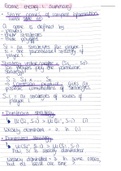
Fundamental particles are composed of positive (protons) and negative (electrons) electric charges.
The elementary charge is measured in coulombs (C):
𝑒 = 1,6 ∙ 10()* 𝐶
Electric charge (𝑞):
𝑞 = 𝑛𝑒
Where 𝑛 is negative or positive integer.
Current
Electric current (𝑖) is the amount of charges moving per unit of time. Measured in Amperes (𝐴):
𝐶
1𝐴 = 1
𝑠
For a constant current:
𝑞
𝑖=
𝑡
For a time-varying current:
d𝑞
𝑖(𝑡) =
d𝑡
Positive direction (current flows from high potential to low potential):
- Passive element (consumes power – voltage drop).
- Active element (supplies power).
Voltage
Potential energy forces electrons to move. This is measured in Volts (𝑉):
𝐽
1𝑉 = 1
𝐶
Kirchoff’s Current Law (KCL)
Node: connecting point of two or more elements on a circuit.
Branch: element located between two nodes.
The sum of the currents in a node is zero. If a current enters a node, the
same current exits the node. This can be done in four steps:
1. Determine the currents entering the node.
2. Determine the currents leaving the node.
3. Apply KCL (the total sum of currents at the node is zero).
4. Use the set of equations to find the unknown current.
, Kirchoff’s Voltage Law (KVL)
The algebraic sum of the voltages equals zero for
any loop in an electrical circuit.
Loop: a closed path that starts and ends in the
same node.
Each loop can have an arbitrary direction.
Ohm’s law
A resistor is the simplest passive element of a circuit. It reduces the flow of the current. The
relationship of the voltage and the current of a resistor is:
𝑣 =𝑖∙𝑅
Where:
𝑣 is given in Volts
𝑖 is given in Amperes
𝑅 is given in Ohms (Ω)
Power in a resistor:
𝑝=𝑣∙𝑖
𝑣;
𝑝= = 𝑅 ∙ 𝑖;
𝑅
Where the units are given as follows:
𝐽𝑜𝑢𝑙𝑒 𝐶𝑜𝑢𝑙𝑜𝑚𝑏 𝐽𝑜𝑢𝑙𝑒
𝑉𝑜𝑙𝑡 ∙ 𝐴𝑚𝑝𝑒𝑟𝑒 = ∙ = = 𝑊𝑎𝑡𝑡
𝐶𝑜𝑢𝑙𝑜𝑚𝑏 𝑆𝑒𝑐𝑜𝑛𝑑 𝑆𝑒𝑐𝑜𝑛𝑑
Independent sources
An independent voltage source generates a predetermined voltage which is independent of the
current. An “ideal” independent voltage source can generate unlimited currents which does not exist
in real life.
, Week 2: Resistors in series and parallel, nodal and mesh analysis and superposition
Resistors in parallel and series
If any two branches share only one node, these elements are in series. The current flowing through
these elements is the same. Following Ohm’s law, voltage is different:
𝑣) = 𝑖 ∙ 𝑅)
𝑣; = 𝑖 ∙ 𝑅;
𝑣H = 𝑖 ∙ 𝑅H
⋮
𝑣J = 𝑖 ∙ 𝑅J
The total voltage is calculated:
𝑣KLK = 𝑣) + 𝑣; + 𝑣H ⋯ + 𝑣J
𝑣KLK = 𝑖 ∙ 𝑅) + 𝑖 ∙ 𝑅; + 𝑖 ∙ 𝑅H + ⋯ + 𝑖 ∙ 𝑅J
And the current:
𝑣KLK
𝑖=
𝑅OP
In series, the equivalent resistance is then calculated:
𝑅OP = 𝑅) + 𝑅; + 𝑅H ⋯ + 𝑅J
When the terminals of the elements are connected to each other, the elements are in parallel. The
voltage in these elements is the same. Following Ohm’s law, current is different:
𝑣
𝑖) =
𝑅)
𝑣
𝑖; =
𝑅;
𝑣
𝑖H =
𝑅H
⋮
𝑣
𝑖J =
𝑅J
The total current is calculated:
𝑖KLK = 𝑖) + 𝑖; + 𝑖H ⋯ + 𝑖J
𝑣 𝑣 𝑣 𝑣
𝑖KLK = + + + ⋯+
𝑅) 𝑅; 𝑅H 𝑅J
And the voltage:
𝑣 = 𝑖KLK ∙ 𝑅OP
In this case, the equivalent resistance:
1 1 1 1 1
= + + + ⋯+
𝑅OP 𝑅) 𝑅; 𝑅H 𝑅J
Week 1: Introduction to Electric Circuits
Charge
Fundamental particles are composed of positive (protons) and negative (electrons) electric charges.
The elementary charge is measured in coulombs (C):
𝑒 = 1,6 ∙ 10()* 𝐶
Electric charge (𝑞):
𝑞 = 𝑛𝑒
Where 𝑛 is negative or positive integer.
Current
Electric current (𝑖) is the amount of charges moving per unit of time. Measured in Amperes (𝐴):
𝐶
1𝐴 = 1
𝑠
For a constant current:
𝑞
𝑖=
𝑡
For a time-varying current:
d𝑞
𝑖(𝑡) =
d𝑡
Positive direction (current flows from high potential to low potential):
- Passive element (consumes power – voltage drop).
- Active element (supplies power).
Voltage
Potential energy forces electrons to move. This is measured in Volts (𝑉):
𝐽
1𝑉 = 1
𝐶
Kirchoff’s Current Law (KCL)
Node: connecting point of two or more elements on a circuit.
Branch: element located between two nodes.
The sum of the currents in a node is zero. If a current enters a node, the
same current exits the node. This can be done in four steps:
1. Determine the currents entering the node.
2. Determine the currents leaving the node.
3. Apply KCL (the total sum of currents at the node is zero).
4. Use the set of equations to find the unknown current.
, Kirchoff’s Voltage Law (KVL)
The algebraic sum of the voltages equals zero for
any loop in an electrical circuit.
Loop: a closed path that starts and ends in the
same node.
Each loop can have an arbitrary direction.
Ohm’s law
A resistor is the simplest passive element of a circuit. It reduces the flow of the current. The
relationship of the voltage and the current of a resistor is:
𝑣 =𝑖∙𝑅
Where:
𝑣 is given in Volts
𝑖 is given in Amperes
𝑅 is given in Ohms (Ω)
Power in a resistor:
𝑝=𝑣∙𝑖
𝑣;
𝑝= = 𝑅 ∙ 𝑖;
𝑅
Where the units are given as follows:
𝐽𝑜𝑢𝑙𝑒 𝐶𝑜𝑢𝑙𝑜𝑚𝑏 𝐽𝑜𝑢𝑙𝑒
𝑉𝑜𝑙𝑡 ∙ 𝐴𝑚𝑝𝑒𝑟𝑒 = ∙ = = 𝑊𝑎𝑡𝑡
𝐶𝑜𝑢𝑙𝑜𝑚𝑏 𝑆𝑒𝑐𝑜𝑛𝑑 𝑆𝑒𝑐𝑜𝑛𝑑
Independent sources
An independent voltage source generates a predetermined voltage which is independent of the
current. An “ideal” independent voltage source can generate unlimited currents which does not exist
in real life.
, Week 2: Resistors in series and parallel, nodal and mesh analysis and superposition
Resistors in parallel and series
If any two branches share only one node, these elements are in series. The current flowing through
these elements is the same. Following Ohm’s law, voltage is different:
𝑣) = 𝑖 ∙ 𝑅)
𝑣; = 𝑖 ∙ 𝑅;
𝑣H = 𝑖 ∙ 𝑅H
⋮
𝑣J = 𝑖 ∙ 𝑅J
The total voltage is calculated:
𝑣KLK = 𝑣) + 𝑣; + 𝑣H ⋯ + 𝑣J
𝑣KLK = 𝑖 ∙ 𝑅) + 𝑖 ∙ 𝑅; + 𝑖 ∙ 𝑅H + ⋯ + 𝑖 ∙ 𝑅J
And the current:
𝑣KLK
𝑖=
𝑅OP
In series, the equivalent resistance is then calculated:
𝑅OP = 𝑅) + 𝑅; + 𝑅H ⋯ + 𝑅J
When the terminals of the elements are connected to each other, the elements are in parallel. The
voltage in these elements is the same. Following Ohm’s law, current is different:
𝑣
𝑖) =
𝑅)
𝑣
𝑖; =
𝑅;
𝑣
𝑖H =
𝑅H
⋮
𝑣
𝑖J =
𝑅J
The total current is calculated:
𝑖KLK = 𝑖) + 𝑖; + 𝑖H ⋯ + 𝑖J
𝑣 𝑣 𝑣 𝑣
𝑖KLK = + + + ⋯+
𝑅) 𝑅; 𝑅H 𝑅J
And the voltage:
𝑣 = 𝑖KLK ∙ 𝑅OP
In this case, the equivalent resistance:
1 1 1 1 1
= + + + ⋯+
𝑅OP 𝑅) 𝑅; 𝑅H 𝑅J