
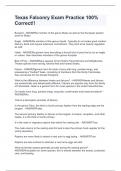
Texas Falconry Exam Practice 100% Correct!!
Buzzard - ANSWERa member of the genus Buteo as well as the European spoken word for Buteo Eagle - ANSWERa member of the genus Aquila. Typically do not make good modern falconry birds and require extensive commitment. They tend to be heavily regulated as well. Hawk - ANSWERa generic term describing a diurnal bird of prey that is not an eagle or vulture. Also describes members of the genus Accipiter. Bird of Prey - ANSWERany species of the Orders Falconiformes and Strigiformes. Theses species have strong, taloned feet and hooked beaks. Falcon - ANSWERgeneric term for birds of prey with long, pointed wings, and possessing a "toothed" beak, consisting of members from the family Falconidae. Also vernacular for the female Peregrine. What is the difference between hawks and falcons? - ANSWERHawks and falcons are anatomically and behaviorally different. Falcons are species only from the family of Falconidae. Hawk is a generic term for most species in the order Falconiformes. Do hawks have long, pointed wings, long tails, small heads and broad shoulders? - ANSWERNo. That is a description primarily of falcons. In the genus Falco, the third or fourth primary feather from the leading edge are the longest. - ANSWERFalse. The second primary feather in falcons is the longest. In buteos, accipiters, and other hawks, it is the third or fourth primary. It is the male in migratory raptors that select the nesting site. - ANSWERTrue. The male returns to the nesting site first and is also the primary food supplier for the young (eyasses). Raptors are more likely to desert a nest prior to egg laying. - ANSWERTrue. Raptors are less inclined to abandon a nest once eggs are laid. What do female raptors generally provide during the nesting period? - ANSWERIncubation (in some species, this is shared between the sexes), protection, care, and feeding.
Información del documento
- Subido en
- 21 de junio de 2024
- Número de páginas
- 39
- Escrito en
- 2023/2024
- Tipo
- Examen
- Contiene
- Preguntas y respuestas

