24/25
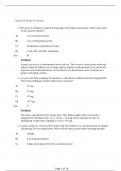
Question 1
1.A neuropsychological assessment is most likely to be used in which of the following situations?
a.In diagnosing a student for a learning disability
b.For a client who may have suffered a traumatic brain injury
c.In assessing a student for a gifted program
d.In assessing a patient recently diagnosed with schizophrenia
e.All of these are potential situations.
1 points
Question 2
1.Match the law or act with the most appropriate description.
2.
Asserts that any test used for employment or
promotion must be shown to be suitable and valid
for the job in question. D
Upheld the right that licensed professionals would not need to reveal information in their case
notes. F This law assures the right of individuals to access their federal records, including test records.
Most states have similar laws that assure the right to access state records. A
This act applies to all federally-funded programs receiving financial assistance and was established to create a "level playing field." Any instrument used to measure appropriateness for
a program or service must be measuring the individual's ability, not be a reflection of his or her disability. I
Assures proper test administration, the accommodations be made for individuals with disabilities who are taking tests for employment, and that testing be shown to be relevant to the job in question. H
Assures the privacy of client records, including testing records, and the sharing of such
information. G
Assures that a number of disenfranchised groups (e.g., economically disadvantaged, single
parents, incarcerated, disabled) have access to vocational assessment, counseling, and placement. E
Affirms the right of all individuals to their school records, including test records.
C
Assures the confidentiality of a conversation conducted with someone that the state or federal
law has identified as having the legal right to confidentiality (iattorney-client, doctor-patient, therapist-patient, clergy-penitent, etc.). B
Asserts that if a student is found to have a disability, schools must assure that the student is given accommodations for his or her disability and taught within the "least restrictive environment," which often is a regular classroom. JA.Freedom of Information Act
B.Privileged communication laws
C.The Buckley Amendment (FERPA)
Question 1
1.A neuropsychological assessment is most likely to be used in which of the following situations?
a.In diagnosing a student for a learning disability
b.For a client who may have suffered a traumatic brain injury
c.In assessing a student for a gifted program
d.In assessing a patient recently diagnosed with schizophrenia
e.All of these are potential situations.
1 points
Question 2
1.Match the law or act with the most appropriate description.
2.
Asserts that any test used for employment or
promotion must be shown to be suitable and valid
for the job in question. D
Upheld the right that licensed professionals would not need to reveal information in their case
notes. F This law assures the right of individuals to access their federal records, including test records.
Most states have similar laws that assure the right to access state records. A
This act applies to all federally-funded programs receiving financial assistance and was established to create a "level playing field." Any instrument used to measure appropriateness for
a program or service must be measuring the individual's ability, not be a reflection of his or her disability. I
Assures proper test administration, the accommodations be made for individuals with disabilities who are taking tests for employment, and that testing be shown to be relevant to the job in question. H
Assures the privacy of client records, including testing records, and the sharing of such
information. G
Assures that a number of disenfranchised groups (e.g., economically disadvantaged, single
parents, incarcerated, disabled) have access to vocational assessment, counseling, and placement. E
Affirms the right of all individuals to their school records, including test records.
C
Assures the confidentiality of a conversation conducted with someone that the state or federal
law has identified as having the legal right to confidentiality (iattorney-client, doctor-patient, therapist-patient, clergy-penitent, etc.). B
Asserts that if a student is found to have a disability, schools must assure that the student is given accommodations for his or her disability and taught within the "least restrictive environment," which often is a regular classroom. JA.Freedom of Information Act
B.Privileged communication laws
C.The Buckley Amendment (FERPA)