Auditing Research
Articles and lectures
1
,Contents
Chandler & Edwards (1996).................................................................................................................................................. 3
Sikka (2009) ........................................................................................................................................................................... 6
Bazerman, Loewenstein & Moore (2002) ............................................................................................................................ 8
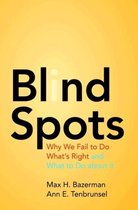
Bazerman & Tenbrunsel (2011) ......................................................................................................................................... 10
DeAngelo (1981) ................................................................................................................................................................. 16
Francis (2004) ...................................................................................................................................................................... 18
Beattie, Fearnley & Hines (2013) ....................................................................................................................................... 20
Knechel, Krishnan, Pevzner, Shefchik & Velury (2013) ..................................................................................................... 22
Libby & Luft (1993) .............................................................................................................................................................. 25
Greenwood, Li & Deephouse (2005) .................................................................................................................................. 27
Cohen, Gaynor, Krishnamoorthy & Wright (2011) ............................................................................................................ 29
Bouwens (2016) .................................................................................................................................................................. 30
An, Davey & Eggleton (2011) .............................................................................................................................................. 31
Deegan (2002) ..................................................................................................................................................................... 33
DiMaggio & Powell (1983) .................................................................................................................................................. 34
Porter & Kramer (2011) ...................................................................................................................................................... 35
Pflugrath, Roebuck & Simnett (2011) ................................................................................................................................ 36
Gul, Wu & Yang (2013) ....................................................................................................................................................... 38
Francis, Michas & Seavey (2013) ........................................................................................................................................ 40
Svanström (2016) ................................................................................................................................................................ 41
Lectures ............................................................................................................................................................................... 43
2
,Chandler & Edwards (1996)
Recurring issues in auditing: back to the future?
Purpose
This paper has multiple purposes:
1. Draw attention to the complexity of auditing;
2. Pursue the present-day relevance of historical investigation;
3. Demonstrate that complex socio-economic relationships have no easy and permanent resolution;
4. Show that the problems that troubled the auditing profession at its birth remain unresolved and recur
through its maturity.
Context: place
This paper is focused on Great-Britain, because:
- This was the first country to develop a corporate capital market (> stimulating the growth of financial
reporting and the professional external audit);
- British practitioners played an important part in the development of the accounting profession in the US.
Context: time
This paper focuses on issues that became a concern to the profession after 1900. By then, the foundations of the
modern accounting profession had been established. For instance, the Companies Act 1900 introduced an audit
requirement for all limited companies and defined auditors’ methods of appointment and remuneration, auditors’
rights of investigation, and auditors’ duties. The year 1900 is therefore the beginning of a new era in the UK. Open
debate had enabled understanding of the nature and limitations of auditing.
Theory
As many issues have no permanent solution, we can only produce answers that serve businesses in the present
environment. A century ago, solutions for many issues were already found because accountants were willing to
debate matters on a platform where their views were criticized and analyzed by peers. However, the situation today
is that much of the discussion occurs at the institutional level. This is a dichotomy.
The way the profession responses to certain issues is no different now than it was in the last century:
- Litigation: accountants and their methods became subject to negligence suits in the 1890s. This reinforced
the debate about the role of auditors in business and society. In the latter part of the nineteenth century,
litigation was plentiful. Also, a massive upsurge has been visible since 1983. The increase in litigation did
not promote higher auditing standards. Rather, it was an impediment to progress resulting in:
Defensive auditing (afraid to give an opinion or start discussions);
New organizational forms (limited liability partnerships, secure money in case of a bankruptcy).
- Achieving professional status: in the latter part of the nineteenth century the accounting profession was
struggling to achieve a position among the new professions (engineering, architecture, pharmacy,
veterinary surgery, dentistry and actuarial science), while competing with the first of the three senior
professions (law, medicine and the church). There was still a lack of public recognition in 1890. They only
proved their worth in the First World War. Despite the lack of public recognition, accountants strived to
develop workable solutions to the problems in their profession. The accounting profession failed in profit
calculations because: they failed to emphasize forecasts and estimates, and they focused almost exclusively
on the historical cost nature of accounting calculations. This led to the fact that fundamental accounting
problems were deferred to the later generations for resolution.
- Professional versus individual judgment: governing bodies were reluctant in issuing guidance for
accountants, encouraging personal responsibility for devising solutions for the problems faced in the
accounting profession. The Counsels’ opinion was that it would tie the hands of the Council in dealing with
subsequent cases, it might place individual members in invidious positions and it would be difficult to
extract general principles from the particular facts and findings in a single individual judicial judgment. In
1940, however, the ICAEW accepted the formal responsibility to lead the development of financial
3
, reporting practices and published its Recommendations on Accounting Principles. In the 1970s, decision
usefulness of accounting information was given a higher profile and twenty years later we might conclude
that the most radical development has been the emergence of the expectations gap. The profession has
failed to educate the general public about what they can and cannot expect from the financial statements.
Also, the profession developed a commercial mindset rather than a professional mindset.
Timeline:
1875/1890 - 1900: turbulence, plentiful litigation
1900 - 1975: relative calm
1983 - 1996: upsurge in litigation
1930: reluctance to issue guidance
1940: publication of the Recommendations on Accounting Principles
1970: attention for decision usefulness
The main issues at the heart of the nineteenth century debate on auditing are summarized in the following table.
Issue Explanation
The role and scope Concern: the uncertain nature of auditors’ responsibilities.
of the audit - Is the primary objective of an audit fraud detection or verification of the financial statements?
- Legislation should define the auditor’s position, duties and responsibilities.
- The audit certificate is “a delusion and a snare” (= raises hope only to dash it).
- Confusion about the respective responsibilities of auditors and directors: “directors need not
concern themselves with accounts certified to by auditors”.
- Some believed an audit consisted only of certifying to the agreement of the balance sheet and
the ledgers, while others expected the auditor to check every entry in the books with supporting
documentation.
- Three kinds of expectation gaps:
Between auditors performance and the public’s expectations;
About the extent of the audit in relation to asset values;
Within the profession about the proper conduct of an audit.
Auditor Concern: auditors are not sufficiently independent, which devalues the service they provide.
independence - Independence extends to freedom from management’s influence on the scope of audit work.
- Those outside the profession also recognized the need for auditor independence.
- Concern about the lack of statutory provision for ensuring auditors’ independence.
- The idea that professional bodies should be active in upholding professional ethics was given
some attention later on.
- Auditors are effectively appointed by directors;
- Few auditors are really independent, nor will they be until they are irremovable.
The audit report Concern: auditors do not give the information they were expected to give.
- Accountants should communicate information in direct and express terms if appropriate. This
would have prevented the need for legal action against auditors.
- The most common certifications include ‘audited and certified’, ‘audited and found correct’ and
‘audited’.
- The signature of a reputable accountant was sufficient to attest to the reliability of the
accounts.
- Different firms may use distinctive standard audit reports as a marketing ploy to gain a
competitive edge.
Competition Concern: the adequacy of fees that clients are prepared to pay for the audit service.
between auditors - Concern about the damage to the image of the profession.
- The phenomenon known as ‘lowballing’ has a long history.
- A small fee paid is accepted on the footing that services of corresponding value are expected.
- The duty of an auditor is to fully perform his work, whatever amount of fees he receives.
- The work should not be tailored to the fee.
- It is not enough for the auditor to say that his examination of the accounts has been more or
less limited wen giving his certificate.
4
Articles and lectures
1
,Contents
Chandler & Edwards (1996).................................................................................................................................................. 3
Sikka (2009) ........................................................................................................................................................................... 6
Bazerman, Loewenstein & Moore (2002) ............................................................................................................................ 8
Bazerman & Tenbrunsel (2011) ......................................................................................................................................... 10
DeAngelo (1981) ................................................................................................................................................................. 16
Francis (2004) ...................................................................................................................................................................... 18
Beattie, Fearnley & Hines (2013) ....................................................................................................................................... 20
Knechel, Krishnan, Pevzner, Shefchik & Velury (2013) ..................................................................................................... 22
Libby & Luft (1993) .............................................................................................................................................................. 25
Greenwood, Li & Deephouse (2005) .................................................................................................................................. 27
Cohen, Gaynor, Krishnamoorthy & Wright (2011) ............................................................................................................ 29
Bouwens (2016) .................................................................................................................................................................. 30
An, Davey & Eggleton (2011) .............................................................................................................................................. 31
Deegan (2002) ..................................................................................................................................................................... 33
DiMaggio & Powell (1983) .................................................................................................................................................. 34
Porter & Kramer (2011) ...................................................................................................................................................... 35
Pflugrath, Roebuck & Simnett (2011) ................................................................................................................................ 36
Gul, Wu & Yang (2013) ....................................................................................................................................................... 38
Francis, Michas & Seavey (2013) ........................................................................................................................................ 40
Svanström (2016) ................................................................................................................................................................ 41
Lectures ............................................................................................................................................................................... 43
2
,Chandler & Edwards (1996)
Recurring issues in auditing: back to the future?
Purpose
This paper has multiple purposes:
1. Draw attention to the complexity of auditing;
2. Pursue the present-day relevance of historical investigation;
3. Demonstrate that complex socio-economic relationships have no easy and permanent resolution;
4. Show that the problems that troubled the auditing profession at its birth remain unresolved and recur
through its maturity.
Context: place
This paper is focused on Great-Britain, because:
- This was the first country to develop a corporate capital market (> stimulating the growth of financial
reporting and the professional external audit);
- British practitioners played an important part in the development of the accounting profession in the US.
Context: time
This paper focuses on issues that became a concern to the profession after 1900. By then, the foundations of the
modern accounting profession had been established. For instance, the Companies Act 1900 introduced an audit
requirement for all limited companies and defined auditors’ methods of appointment and remuneration, auditors’
rights of investigation, and auditors’ duties. The year 1900 is therefore the beginning of a new era in the UK. Open
debate had enabled understanding of the nature and limitations of auditing.
Theory
As many issues have no permanent solution, we can only produce answers that serve businesses in the present
environment. A century ago, solutions for many issues were already found because accountants were willing to
debate matters on a platform where their views were criticized and analyzed by peers. However, the situation today
is that much of the discussion occurs at the institutional level. This is a dichotomy.
The way the profession responses to certain issues is no different now than it was in the last century:
- Litigation: accountants and their methods became subject to negligence suits in the 1890s. This reinforced
the debate about the role of auditors in business and society. In the latter part of the nineteenth century,
litigation was plentiful. Also, a massive upsurge has been visible since 1983. The increase in litigation did
not promote higher auditing standards. Rather, it was an impediment to progress resulting in:
Defensive auditing (afraid to give an opinion or start discussions);
New organizational forms (limited liability partnerships, secure money in case of a bankruptcy).
- Achieving professional status: in the latter part of the nineteenth century the accounting profession was
struggling to achieve a position among the new professions (engineering, architecture, pharmacy,
veterinary surgery, dentistry and actuarial science), while competing with the first of the three senior
professions (law, medicine and the church). There was still a lack of public recognition in 1890. They only
proved their worth in the First World War. Despite the lack of public recognition, accountants strived to
develop workable solutions to the problems in their profession. The accounting profession failed in profit
calculations because: they failed to emphasize forecasts and estimates, and they focused almost exclusively
on the historical cost nature of accounting calculations. This led to the fact that fundamental accounting
problems were deferred to the later generations for resolution.
- Professional versus individual judgment: governing bodies were reluctant in issuing guidance for
accountants, encouraging personal responsibility for devising solutions for the problems faced in the
accounting profession. The Counsels’ opinion was that it would tie the hands of the Council in dealing with
subsequent cases, it might place individual members in invidious positions and it would be difficult to
extract general principles from the particular facts and findings in a single individual judicial judgment. In
1940, however, the ICAEW accepted the formal responsibility to lead the development of financial
3
, reporting practices and published its Recommendations on Accounting Principles. In the 1970s, decision
usefulness of accounting information was given a higher profile and twenty years later we might conclude
that the most radical development has been the emergence of the expectations gap. The profession has
failed to educate the general public about what they can and cannot expect from the financial statements.
Also, the profession developed a commercial mindset rather than a professional mindset.
Timeline:
1875/1890 - 1900: turbulence, plentiful litigation
1900 - 1975: relative calm
1983 - 1996: upsurge in litigation
1930: reluctance to issue guidance
1940: publication of the Recommendations on Accounting Principles
1970: attention for decision usefulness
The main issues at the heart of the nineteenth century debate on auditing are summarized in the following table.
Issue Explanation
The role and scope Concern: the uncertain nature of auditors’ responsibilities.
of the audit - Is the primary objective of an audit fraud detection or verification of the financial statements?
- Legislation should define the auditor’s position, duties and responsibilities.
- The audit certificate is “a delusion and a snare” (= raises hope only to dash it).
- Confusion about the respective responsibilities of auditors and directors: “directors need not
concern themselves with accounts certified to by auditors”.
- Some believed an audit consisted only of certifying to the agreement of the balance sheet and
the ledgers, while others expected the auditor to check every entry in the books with supporting
documentation.
- Three kinds of expectation gaps:
Between auditors performance and the public’s expectations;
About the extent of the audit in relation to asset values;
Within the profession about the proper conduct of an audit.
Auditor Concern: auditors are not sufficiently independent, which devalues the service they provide.
independence - Independence extends to freedom from management’s influence on the scope of audit work.
- Those outside the profession also recognized the need for auditor independence.
- Concern about the lack of statutory provision for ensuring auditors’ independence.
- The idea that professional bodies should be active in upholding professional ethics was given
some attention later on.
- Auditors are effectively appointed by directors;
- Few auditors are really independent, nor will they be until they are irremovable.
The audit report Concern: auditors do not give the information they were expected to give.
- Accountants should communicate information in direct and express terms if appropriate. This
would have prevented the need for legal action against auditors.
- The most common certifications include ‘audited and certified’, ‘audited and found correct’ and
‘audited’.
- The signature of a reputable accountant was sufficient to attest to the reliability of the
accounts.
- Different firms may use distinctive standard audit reports as a marketing ploy to gain a
competitive edge.
Competition Concern: the adequacy of fees that clients are prepared to pay for the audit service.
between auditors - Concern about the damage to the image of the profession.
- The phenomenon known as ‘lowballing’ has a long history.
- A small fee paid is accepted on the footing that services of corresponding value are expected.
- The duty of an auditor is to fully perform his work, whatever amount of fees he receives.
- The work should not be tailored to the fee.
- It is not enough for the auditor to say that his examination of the accounts has been more or
less limited wen giving his certificate.
4