ATLS® Written Pretest #1 10th Edition
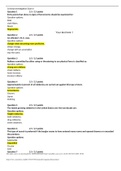
ATLS® Written Pretest #1 10th Edition Disclaimer: Note: It is understood that medical practices vary with institutional policies and individual preferences. This test is designed in conjunction with the material presented in the 10th edition of the ATLS® Course. Please answer the questions accordingly. 1-1. A 22-year-old man is hypotensive and tachycardic after a shotgun wound to the left shoulder. His blood pressure is initially 80/40 mm Hg. After initial fluid resuscitation, his blood pressure increases to 122/84 mm Hg. His heart rate is now 100 beats per minute and his respiratory rate is 28 breaths per minute. A tube thoracostomy is performed for decreased left chest breath sounds with the return of a small amount of blood and no air leak. After chest tube insertion, the most appropriate next step is: a. reexamine the chest. b. perform an aortogram. c. obtain a computed tomography (CT) scan of the chest. d. obtain arterial blood gas analyses. e. perform transesophageal echocardiography. 1-2. A construction worker falls two stories from a building and sustains bilateral calcaneal fractures. In the emergency department (ED), he is alert, his vital signs are normal, and he is complaining of severe pain in both heels and his lower back. Lower extremity pulses are strong and there is no other deformity. The suspected diagnosis is most likely to be confirmed by: a. angiography. b. compartment pressures. c. retrograde urethrogram. d. Doppler ultrasound studies. e. complete spine x-ray series. 1-3. Which of the following is true regarding the initial resuscitation of a trauma patient? a. A patient with a torso gunshot wound and hypotension should receive crystalloid fluid resuscitation until the blood pressure is normal. b. Evidence of improved perfusion after fluid resuscitation could include improvement in Glasgow Coma Scale (GCS) score on reevaluation. c. Massive transfusion is defined as transfusion of more than 10 units of packed red blood cells and plasma within 24 hours. d. When tranexamic acid is administered by prehospital providers, a second dose is required within 24 hours. e. Fluid resuscitation is far more important than bleeding control in trauma patients. 1-4. In managing a patient with a severe traumatic brain injury, the most important initial step is to: a. secure the airway. b. obtain a c-spine film. c. support the circulation. d. control scalp hemorrhage. e. determine the GCS score. 1-5. A previously healthy, 70-kg (154-pound) man suffers an estimated acute blood loss of 2 liters. Which statement applies to this patient? a. His pulse pressure will be widened. b. His urinary output will be at the lower limits of normal. c. He will have tachycardia but no change in his systolic blood pressure. d. An arterial blood gas would demonstrate a base deficit between –6 and –10 mEq/L. e. His systolic blood pressure will be maintained with an elevated diastolic pressure. 1-6. The physiological hypervolemia of pregnancy has clinical significance in the management of the severely injured, gravid woman by: a. reducing the need for blood transfusion. b. resulting in an elevated hematocrit. c. complicating the management of closed head injury. d. reducing the volume of crystalloid required for resuscitation. e. increasing the volume of blood loss to produce maternal hypotension. 1-7. The best assessment of fluid resuscitation of the adult burn patient is: a. urinary output of 0.5 mL/kg/hr. b. normalization of blood pressure. c. normalization of the heart rate. d. measuring a normal central venous pressure. e. providing 4 mL/kg/percent body burned/24 hours of crystalloid fluid. 1-8. The diagnosis of shock must include: a. hypoxemia. b. acidosis. c. hypotension. d. increased vascular resistance. e. evidence of inadequate organ perfusion. 1-9. A 7-year-old boy is brought to the ED by his parents several minutes after he fell through a window. He is bleeding profusely from a 6-cm wound in his medial right thigh. Immediate management of the wound should consist of: a. applying a tourniquet. b. applying direct pressure on the wound. c. packing the wound with gauze. d. applying direct pressure on the femoral artery at the groin. e. debriding devitalized tissue. 1-10. For the patient with severe traumatic brain injury, profound hypocarbia should be avoided to prevent: a. respiratory acidosis. b. metabolic acidosis. c. cerebral vasoconstriction with diminished perfusion. d. neurogenic pulmonary edema. e. shift of the oxyhemoglobin dissociation curve. 1-11. After being involved in a motor vehicle crash, a 25-year-old man is brought to a hospital that has surgery capabilities available. CT of the chest and abdomen shows an aortic injury and splenic laceration with free abdominal fluid. His blood pressure falls to 70 mm Hg after CT. The next step is to: a. obtain contrast angiography. b. transfer him to a higher-level trauma center. c. perform an exploratory laparotomy. d. infuse additional crystalloid fluids. e. obtain transesophageal echocardiography. 1-12. Which statement regarding abdominal trauma in the pregnant patient is TRUE? a. The fetus is in jeopardy only with major abdominal trauma. b. Leakage of amniotic fluid is an indication for hospital admission. c. Indications for peritoneal lavage are different from those in the nonpregnant patient. d. With penetrating trauma, injury to the mother’s abdominal hollow viscus is more common in late than in early pregnancy. e. The secondary survey follows a different pattern from that of the nonpregnant patient. 1-13. The first maneuver to improve oxygenation after chest injury is: a. intubate the patient. b. assess arterial blood gases. c. administer supplemental oxygen. d. ascertain the need for a chest tube. e. obtain a chest x-ray. 1-14. A 25-year-old man, injured in a motor vehicle crash, is admitted to the ED. His pupils react sluggishly and his eyes open to pressure. He does not follow commands, but he does moan periodically. His right arm is deformed and does not respond to pressure; however, his left hand reaches purposefully toward the stimulus. Both legs are stiffly extended. His GCS score is: a. 2. b. 4. c. 6. d. 9. e. 12. 1-15. A 20-year-old female who is at 32 weeks gestation is stabbed in the upper right chest. In the ED, her blood pressure is 80/60 mm Hg. She is gasping for breath, extremely anxious, and yelling for help. Breath sounds are diminished in the right chest. The most appropriate first step is to: a. perform tracheal intubation. b. insert an oropharyngeal airway. c. perform needle or finger decompression of the right chest. d. manually displace the gravid uterus to the left side of the abdomen. e. initiate two large-caliber peripheral IV lines and crystalloid infusion.
Escuela, estudio y materia
- Institución
- ATLS PRETEST
- Grado
- ATLS PRETEST
Información del documento
- Subido en
- 15 de abril de 2024
- Número de páginas
- 9
- Escrito en
- 2023/2024
- Tipo
- Examen
- Contiene
- Preguntas y respuestas
Temas
-
atls written pretest 1 10th edition disclaimer