NURS 232 PEDS EXAM 4 REAL EXAM 2024 LATEST UPDATED QUESTIONS AND CORRECTLY HIGHLIGHTED ANSWERS WITH 100% QUALIFIED RATIONALES ALREADY RANKED A+…
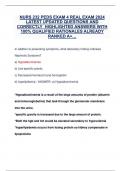
NURS 232 PEDS EXAM 4 REAL EXAM 2024 LATEST UPDATED QUESTIONS AND CORRECTLY HIGHLIGHTED ANSWERS WITH 100% QUALIFIED RATIONALES ALREADY RANKED A+… In addition to presenting symptoms, what laboratory finding indicates Nephrotic Syndome? a) Hypoalbuminemia b) Low specific gravity c) Decreased hematocrit and hemoglobin d) hypolipidemia - ANSWER- a) Hypoalbuminemia *Hypoalbuminemia is a result of the large amounts of protein (albumin and immunoglobulins) that leak through the glomerular membrane into the urine. *specific gravity is increased due to the large amount of protein. *Both the hgb and hct would be elevated secondary to hypovolemia *hyperlipedemia occurs from losing protein so kidney compensate w lipoproteins Parent of a child hospitalized with acute postinfectious glomerulonephritis (APIGN) asks the nurse why blood pressure readings are being taken so often. Based on the nurse's knowledge, the most appropriate response by the nurse is: a) blood pressure fluctuations are a common side effect of antibiotic therapy b) blood pressure fluctuations are a sign that the condition has become chronic c) acute hypertension must be anticipated and identified. d) hypotension leading to sudden shock can develop at any time - ANSWER- c) acute hypertension must be anticipated and identified. *HTN is more likely; VS like BP provide info about the severity and early signs of complications. *Acute HTN is anticipated and requires frequent monitoring for early intervention. *ATB will be given to treat previous infection but does not causefluctuations in BP *Most children with fully recover The parents of a 4 yr old recently diagnosed with duchenne muscular dystrophy are asking questions about the course of their child's disease. The nurse should tell them which of the following? a) Muscular dystrophies are disorders associated with progressive degeneration of muscles, resulting in relentless and increasing weakness b) The weakness that the child is currently experiencing will probably not increase c) The child will be able to function normally and require no special accommodations d) The extent of degeneration depends on performing daily physical therapy - ANSWER- a) Muscular dystrophies are disorders associated with progressive degeneration of muscles, resulting in relentless and increasing weakness *Muscular dystrophies are progressive degenerative disorders. The most common is Duchenne muscular dystrophy,which is an X-linked recessive disorder The nurse is teaching the parents of a child with Duchenne muscular dystrophy. The nurse should tell them that some of the progressive complications include which of the following? a) Dry skin and hair, hirsutism, protruding tongue, and mental retardation b) Anorexia, gingival hyperplasia, and dry skin and hair c) Contractures, obesity, and pulmonary infections d) Trembling, frequent loss of consciousness, and slurred speech. - ANSWER- c) Contractures, obesity, and pulmonary infections *major complications include contractures, disuse atrophy, infections, obesity, respiratory complications, and cardiopulmonary problems attributable to the loss of muscle function The Gower sign for assessing Duchenne muscular dystrophy can be elicited by having a pt do which of the following? a) Close the eyes and touch the nose with alternating index fingers b) Hop on one foot and then the other c) Bend from the waist to touch the toes d) Walk like a duck and rise from a squatting position - ANSWER- d) Walk like a duck and rise from a squatting position *Children with muscular dystrophy display the Gower sign, which is great difficulty rising and standing from a squatting position due to the lack of muscle strength. *they will use the Gower's maneuver when trying to get up by pushing up off the floor w hands and climbing up their body until upright bc BLE so weak
Información del documento
- Subido en
- 28 de marzo de 2024
- Número de páginas
- 147
- Escrito en
- 2023/2024
- Tipo
- Examen
- Contiene
- Preguntas y respuestas