
NBDHE-Practice Questions Rated A+
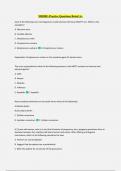
NBDHE-Practice Questions Rated A+ Each of the following oral microorganisms could colonize soft tissue EXCEPT one. Which is the exception? A. Neisseria sicca B. Candida albicans C. Streptococcus mitis D. Streptococcus mutans E. Streptococcus salivaris D. Streptococcus mutans Explanation: Streptococcus mutans is the causative agent for dental caries The virus responsible for which of the following diseases is the MOST resistant to chemical and physical agents? A. AIDS B. Herpes C. Measles D. Influenza E. Hepatitis E. Hepatitis Root sensitivity diminishes as the tooth forms which of the following? A.Mantle dentin B.Secondary dentin C. Cellular cementum D. Acellular cementum C. Cellular cementum A 21-year-old women, who is in her third trimester of pregnancy, has a pyogenic granuloma 3mm in diameter between her maxillary left lateral incisor and canine. After offering oral hygiene instructions, which of the following should be the next A. Perform an oral prophylaxis B. Suggest that the patient see a periodontist C. Refer the patient for an excision of the granuloma D. Allow hormonal influences to subside, and then reappoint the patient for a prophylaxis after childbirth E. Reappoint the patient for a prophylaxis one month later A. Perform an oral prophylaxis Which of the following nerves supplies the intrinsic muscles of the tongue? A. Vagus B. Facial C. Lingual D. Hypoglossal E. Glossopharyngeal D. Hypoglossal Which of the following tissues and organs is/are the MOST radioresistant? A.Nerves B. Glands C. Skin D. Bone marrow E. Reproductive organs A. Nerves Superficial lymphatic vessels of the breast drain primarily into which of the following nodes?
Información del documento
- Subido en
- 12 de marzo de 2024
- Número de páginas
- 2
- Escrito en
- 2023/2024
- Tipo
- Examen
- Contiene
- Preguntas y respuestas

