
NRCME Test Bank Questions
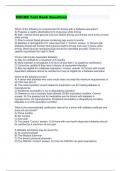
Which of the following is a requirement for drivers with a diabetes exemption? A) Possess a rapidly absorbable form of glucose while driving B) Self—monitor blood glucose one hour before driving and at least once every 2 hours while driving C) Plan to submit blood glucose monitoring logs every 6 months D) Maintain a Hemoglobin A1C value less than 7 Correct answer A. Drivers with diabetes should self monitor blood glucose before driving and every 4 hours while driving. Blood glucose monitoring logs should be submitted annually. There is no specific requirement for HgA1C level. Drivers with insulin dependent diabetes: A) May be certified for a maximum of 6 months B) Must maintain a hemoglobin A1C level of less than 7 to qualify for certification C) Cannot be certified if they have a history of myocardial infarction D) May be eligible for a diabetes exemption Correct answer D) Drivers with insulin dependent diabetes cannot be certified but may be eligible for a diabetes exemption Which of the following is true? A) A driver with diabetes who uses insulin does not meet the minimum requirements of 49 CFR Part 391.41 B) The most important concert related to medication use for treating diabetes is hyperglycemia C) Peripheral neuropathy is not a disqualifying condition D) Diabetes is not a coronary heart disease (CHD) equivalent condition Correct answer A) The greatest risk for medication use for drivers with diabetes in hypoglycemia, not hyperglycemia. Peripheral neuropathy is disqualifying condition. Diabetes is a CHD equivalent condition. What is the recommended certification interval for a driver with diabetes mellituse who does not use insulin? A) Three months B) Six months C) One year D) Two years Correct answer C) Drivers with non-insulin dependent diabetes should be certified for a maximum of one year A diabetes exemption may be issued by: A) An endocrinologist B) The Medical Examiner C) The driver's personal physician D) The FMCSA Correct answer D) Only the FMCSA can grant exemptions A driver with diabetes mellliktus who uses insulin is determined to be otherwise medically qualified. The medical examiner must indicate that a diabetes exemption is required on the : A) Medical Examination Report status section and Medical Examiners Certificate B) Letter to the FMCSA C) Employer authorization form D) Endocrinology consultation form Correct answer A) Exemption requirements must be noted on the Medical Examination Report status section and the Medical Examiners Certificate If glucose is detected on urinalysis in a driver with no history of diabetes, an appropriate next step is: A) Endocrinology consultation B) One year clearance and recommendation to see personal physician C) Fingerstick or blood glucose determination D) Temporary disqualification Correct answer C) The medical examiner should first determine blood glucose and then make an appropriate certification determination and referral Drivers with a history of _____________ severe hypoglycemic reactions in the past year or _____________ severe hypoglycemic reactions in the past five years should not be certifed. A) one, three B) one, two C) two, three D) two, five Correct answer B) A driver should not be certified if the driver has had one hypoglycemic reaction in the past year or two in the past five years. Which of the following is not a criteria that the FMCSA uses to define a severe hypoglycemic reaction? A) Seizure B) Dizziness C) Need of assistance from another person D) Period of impaired cognitive function that occurred without warning Correct answer B) FMCSA defines severe hypoglycemia as reactions that result in seizure, loss of consciousness, need of assistance from another person, and a period of impaired congitive function that occurred without warning Which diabetes mellitus risk poses the greatest threat to public safety A) Hyperglycemia B) Peripheral neuropathy
Información del documento
- Subido en
- 11 de marzo de 2024
- Número de páginas
- 38
- Escrito en
- 2023/2024
- Tipo
- Examen
- Contiene
- Preguntas y respuestas

