

Chapter 2: Drug discovery and design
I Introduction
We need to go through some kind of a phase 0: the management:
The strategic question: Is it desirable to do? This is related to the fact that there might be
unment medical need for medication against a disease (think about Alzheimer’s) in the
present or in the future. We need to think about the market-analysis: the opportunities, the
risk assessment, etc.
The scientific or technic question: Can it be done? Is there a model that models the disease
that is present in humans? Are those models or targets validated? Are you sure that when
you hit the target, that you know this will lead to a decrease of the disease? Are there
patents issues? Is this a first-in-class compound (= a target which was not used before, so a
new target)? Or is this a fast follower?
An example is Pfizer and their Drug Research for Alzheimer’s and Parkinson’s. They ended
their neuroscience discovery, because the animal model shows a clearly effect of treatment,
but the humans didn’t show a decrease of the disease! The models were there, but they
were not good models. So, the models did not mimic the human disease well!
The operational question: Can we do it? Do we have the expertise and a qualified staff to do
it? Do we have the facilities? Do we have the money?
Objective Drug Discovery and Design
The goal of the first phase of Drug Discovery and Design is to identify pharmacologically active
molecules, for which there are clear indications that they will reach the pharmacological target in the
body in sufficient amounts such that they can exert their desired effect without toxicity. So, you don’t
need full scientific proof, but you need clear indications that the compound will reach the
pharmacological target.
II Biology: target-based or phenotypic discovery
Discovery and Design: Research antitumoral compounds – In vitro antiproliferation assay (cells)
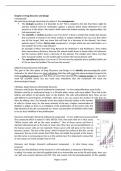
Stelletin could be an antitumoral drug. In a 96-wells plate, tumor cells were added. They sink to the
bottom and adhere to the plastic layer on the bottom. The cells will proliferate here. Now, we can
add different concentrations of Stelletin. After day 3, you can assess the number of cells that are
there by adding a dye. The intensity of the dye (optical density) relates to the number
of cells (in a linear way). So, the lower intensity of the dye, a higher concentration of
Stelletin is added so there is an inhibition of the proliferation of the tumor cells; the
high intensity of the dye corresponds to a lower concentration of Stelletin which leads
to no (or less) inhibition of the proliferation.
Discovery and Design: Research antitumoral compounds – In vivo antitumoral assay (animal)
The compound which is tested is Y2H2 (6OTD). First, they start with an in vitro assay:
“Which cancer cells will be the most sensitive?”. One of those cancer cell lines is
injected subcutaneously in the back of nude mice (the mice are immunodeficient, so
the human cancer cells are not rejected). Those cancer cells will grow in the mice to
become a tumor. The size of the tumor, which is below the surface of the skin, can be
measured. We see in the results that Y2H2 does not inhibit the growth of the tumor,
but the tumor is not growing as fast as in the vehicle mice! It is important to know that
in vitro assays are much cheaper than in vivo.
Discovery and Design: Research antitumoral compounds – In vitro kinase assay
(enzyme)
How do you find inhibitors of the enzyme? In a 96-wells plate, a substrate of the kinase
is added. You make sure that this peptide binds in an irreversible way to the 96-wells plate. Now, you
can add your enzyme (kinase) and ATP. This will resolve into the phosphorylation of this peptide.
Pagina 1 van 8
I Introduction
We need to go through some kind of a phase 0: the management:
The strategic question: Is it desirable to do? This is related to the fact that there might be
unment medical need for medication against a disease (think about Alzheimer’s) in the
present or in the future. We need to think about the market-analysis: the opportunities, the
risk assessment, etc.
The scientific or technic question: Can it be done? Is there a model that models the disease
that is present in humans? Are those models or targets validated? Are you sure that when
you hit the target, that you know this will lead to a decrease of the disease? Are there
patents issues? Is this a first-in-class compound (= a target which was not used before, so a
new target)? Or is this a fast follower?
An example is Pfizer and their Drug Research for Alzheimer’s and Parkinson’s. They ended
their neuroscience discovery, because the animal model shows a clearly effect of treatment,
but the humans didn’t show a decrease of the disease! The models were there, but they
were not good models. So, the models did not mimic the human disease well!
The operational question: Can we do it? Do we have the expertise and a qualified staff to do
it? Do we have the facilities? Do we have the money?
Objective Drug Discovery and Design
The goal of the first phase of Drug Discovery and Design is to identify pharmacologically active
molecules, for which there are clear indications that they will reach the pharmacological target in the
body in sufficient amounts such that they can exert their desired effect without toxicity. So, you don’t
need full scientific proof, but you need clear indications that the compound will reach the
pharmacological target.
II Biology: target-based or phenotypic discovery
Discovery and Design: Research antitumoral compounds – In vitro antiproliferation assay (cells)
Stelletin could be an antitumoral drug. In a 96-wells plate, tumor cells were added. They sink to the
bottom and adhere to the plastic layer on the bottom. The cells will proliferate here. Now, we can
add different concentrations of Stelletin. After day 3, you can assess the number of cells that are
there by adding a dye. The intensity of the dye (optical density) relates to the number
of cells (in a linear way). So, the lower intensity of the dye, a higher concentration of
Stelletin is added so there is an inhibition of the proliferation of the tumor cells; the
high intensity of the dye corresponds to a lower concentration of Stelletin which leads
to no (or less) inhibition of the proliferation.
Discovery and Design: Research antitumoral compounds – In vivo antitumoral assay (animal)
The compound which is tested is Y2H2 (6OTD). First, they start with an in vitro assay:
“Which cancer cells will be the most sensitive?”. One of those cancer cell lines is
injected subcutaneously in the back of nude mice (the mice are immunodeficient, so
the human cancer cells are not rejected). Those cancer cells will grow in the mice to
become a tumor. The size of the tumor, which is below the surface of the skin, can be
measured. We see in the results that Y2H2 does not inhibit the growth of the tumor,
but the tumor is not growing as fast as in the vehicle mice! It is important to know that
in vitro assays are much cheaper than in vivo.
Discovery and Design: Research antitumoral compounds – In vitro kinase assay
(enzyme)
How do you find inhibitors of the enzyme? In a 96-wells plate, a substrate of the kinase
is added. You make sure that this peptide binds in an irreversible way to the 96-wells plate. Now, you
can add your enzyme (kinase) and ATP. This will resolve into the phosphorylation of this peptide.
Pagina 1 van 8

