NR 511 WEEK 2 STUDY GUIDE, DEFINITIONS AND ANSWERS
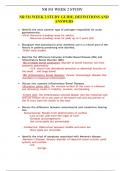
NR 511 WEEK 2 STUDY GUIDE, DEFINITIONS AND ANSWERS ● Identify the most common type of pathogen responsible for acute gastroenteritis. -Viral: Norovirus (Leading cause for adults) -Rotovirus (Leading cause for peds up to 2 years old) ● Recognize that assessing for prior antibiotic use is a critical part of the history in patients presenting with diarrhea. -Order stool studies ● Describe the difference between Irritable Bowel Disease (IBS) and Inflammatory Bowel Disorder (IBD). -IBS (Irritable bowel syndrome): disorder of bowel function not from anatomic abnormality +S/S: result from disordered sensation or abnormal function of the small and large bowel -IBD (Inflammatory bowel disease): chronic immunologic disease that manifests in intestinal inflammation ● Discuss two common Inflammatory Bowel Diseases. -Ulcerative colitis (UC): the mucosal surface of the colon is inflamed and ultimately results in friability, erosions, and bleeding. -Crohns (CD): the inflammation extends deeper into the intestinal wall and can involve all or any layer of the bowel wall and any portion of the GI tract from the mouth to the anus. ● Discuss the difference between sensorineural and conductive hearing loss. - Sensorineural: Results from deterioration of cochlea -Loss of hair cells form the organ of Corti -Gradual and progressive -Not correctable but preventable - Conductive: Obstruction between middle and outer ear -Most types are reversible ● Identify the triad of symptoms associated with Meniere's disease. -Meniere’s Disease: Sensory disorder of labyrinth (semi-circular canal system) and cochlea -S/S: -Vertigo -Hearing loss -Tinnitus ● Identify the symptoms associated with peritonsilar abcess. -increasing unilateral ear and throat pain ipsilateral to the affected tonsil -dysphagia -drooling -trismus -erythema -edema of the soft palate with fluctuance on palpation ● Identify the most common cause of viral pharyngitis. -adenovirus: MOST common -RSV -Influenza A&B -Epstein-Barr -coxsackie -enteroviruses -herpes simplex ● Identify the most common cause of acute nausea & vomiting. -Gastroenteritis: AGE ● Describe the differences between medical billing and medical coding. -Medical coding: is the use of codes to communicate with payers about which procedures were performed and why. -Medical billing: is the process of submitting and following up on claims made to a payer in order to receive payment for medical services rendered by a healthcare provider. ● Compare and contrast the two coding classification systems that are currently used in the U.S. healthcare system. -The CPT system offers the official procedural coding rules and guidelines required when reporting medical services and procedures performed by physician and non-physician providers. -CPT codes are recognized universally and also provide a logical means to be able to track healthcare data, trends, and outcomes. -ICD-10 codes are shorthand for the patient’s diagnoses, which are used to provide the payer information on the necessity of the visit or procedure performed. ● Accurately describe why every procedure code must have a corresponding diagnosis code. -Every procedure code needs a diagnosis to explain the necessity whether the code represents an actual procedure performed or a nonprocedural encounter like an office visit.
Información del documento
- Subido en
- 24 de enero de 2024
- Número de páginas
- 6
- Escrito en
- 2023/2024
- Tipo
- Examen
- Contiene
- Preguntas y respuestas