
• ¿Documento equivocado? Cámbialo gratis
  • Escrito por estudiantes que aprobaron
  • Inmediatamente disponible después del pago
  • Leer en línea o como PDF
Vender
¿Dónde estudias?
Tu idioma
Document preview thumbnail
Vista previa 2 fuera de 6 páginas
Resumen

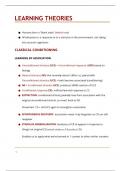
Summary classical conditioning theory, research & evaluation

Document preview thumbnail
Vista previa 2 fuera de 6 páginas

a diagram of how classical conditioning works, Aims, Porcedure, Results & Conclusion of research for classical conditioning Evaluation (SCOUT) psychological terminology highlighted

Vista previa del contenido

LEARNING THEORIES

● Humans born a “blank state” (tabula rasa)

● All behaviour is a response to to a stimulus in the environment, not taking

into account cognitions


CLASSICAL CONDITIONING

LEARNING BY ASSOCIATION

● Unconditioned stimulus (UCS) = Unconditioned response (UCR) based on

biology

● Neutral stimulus (NS) that normally doesn’t affect us, paired with

Unconditioned stimulus (UCS) = both become associated (conditioning)

● NS = Conditioned stimulus (UCS): produces SAME reaction of UCS

● Conditioned response (CR): artificial learned response to CS

● EXTINCTION: conditioned stimuli gradually lose their association with the

original unconditioned stimuli, so revert back to NS

Prevented : CS + old UCS again to strengthen association

● SPONTANEOUS RECOVERY: association never truly forgotten so CR can still

reappear

● STIMULUS GENERALISATION: tendency of CR to appear in response to

things not original CS (stimuli similar to CS produce CR)

Enables us to apply what we’ve learned in 1 context to other similar contexts


1

, Strengths

Theory only looks at behaviors : every step in conditioning process is observable

=scientific credibility

Challenging evidence

Generalising conclusions from animal research to humans learning isn’t so clear b/C

animals different anatomy + physiology and day-to-day experiences

Difficult to tell whether one learning theory is largely responsible when something

is learned

E.g. even when associations are formed, person is being rewarded / punished at

the same time

Reductionist: reduces ALL behavior to learning through association


2

Información del documento

Nivel de Estudio
Tema
Subido en
4 de enero de 2024
Número de páginas
6
Escrito en
2022/2023
Tipo
Resumen
$4.70

¿Documento equivocado? Cámbialo gratis Dentro de los 14 días posteriores a la compra y antes de descargarlo, puedes elegir otro documento. Puedes gastar el importe de nuevo.
Escrito por estudiantes que aprobaron
Inmediatamente disponible después del pago
Leer en línea o como PDF

Seller avatar
erikakumar
5.0
(1)
Vendido
8
Seguidores
4
Artículos
200
Última venta
7 meses hace


Por qué los estudiantes eligen Stuvia

Creado por compañeros estudiantes, verificado por reseñas

Calidad en la que puedes confiar: escrito por estudiantes que aprobaron y evaluado por otros que han usado estos resúmenes.

¿No estás satisfecho? Elige otro documento

¡No te preocupes! Puedes elegir directamente otro documento que se ajuste mejor a lo que buscas.

Paga como quieras, empieza a estudiar al instante

Sin suscripción, sin compromisos. Paga como estés acostumbrado con tarjeta de crédito y descarga tu documento PDF inmediatamente.

Student with book image

“Comprado, descargado y aprobado. Así de fácil puede ser.”

Alisha Student

Preguntas frecuentes
