Pathophysiology Chapter 17
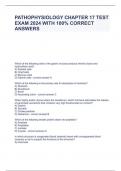
PATHOPHYSIOLOGY CHAPTER 17 TEST EXAM 2024 WITH 100% CORRECT ANSWERS Which of the following cells in the gastric mucosa produce intrinsic factor and hydrochloric acid? A) Parietal cells B) Chief cells C) Mucous cells D) Gastrin cells - correct answer A Which of the following is the primary site for absorption of nutrients? A) Stomach B) Duodenum C) Ileum D) Ascending colon - correct answer C When highly acidic chyme enters the duodenum, which hormone stimulates the release of pancreatic secretions that contains very high bicarbonate ion content? A) Gastrin B) Secretin C) Cholecystokinin D) Histamine - correct answer B Which of the following breaks protein down into peptides? A) Amylase B) Peptidase C) Lactase D) Trypsin - correct answer D In which structure is oxygenated blood (arterial) mixed with unoxygenated blood (venous) so as to support the functions of the structure? A) Pancreas B) Liver C) Small intestine D) Spleen - correct answer B Which of the following stimulates increased peristalsis and secretions in the digestive tract? A) Sympathetic nervous system B) Vagus nerve C) Increased saliva D) Absence of food in the system - correct answer B Which of the following is contained in pancreatic exocrine secretions? A) Bicarbonate ion B) Hydrochloric acid C) Activated digestive enzymes D) Insulin - correct answer A The presence of food in the intestine stimulates intestinal activity but inhibits gastric activity through the: A) defecation reflex. B) enterogastric reflex. C) vomiting reflex. D) autodigestive reflex. - correct answer B Which of the following processes is likely to occur in the body immediately after a meal? A) Lipolysis B) Ketogenesis C) Gluconeogenesis D) Glycogenesis - correct answer D Which of the following statements applies to bile salts? A) They give feces the characteristic brown color. B) They are enzymes used to break down fats into free fatty acids. C) They emulsify lipids and lipid-soluble vitamins. D) They are excreted in the feces. - correct answer C The visceral peritoneum: A) lines the abdominal wall. B) hangs from the stomach over the loops of small intestine. C) contains many pain receptors. D) forms the outer covering of the stomach. - correct answer D The early stage of vomiting causes: A) metabolic alkalosis. B) metabolic acidosis. C) increased respirations. D) increased excretion of hydrogen ions. - correct answer A Yellow or greenish stained vomitus usually indicates the presence of: A) bile. B) blood. C) protein. D) bacteria. - correct answer A Small, hidden amounts of blood in stool are referred to as: A) melena. B) occult blood. C) frank blood. D) hematemesis. - correct answer B Severe vomiting can lead to metabolic acidosis because of increased: A) ketones produced. B) CO2 retained in the lungs and kidneys. C) hypovolemia and lactic acid production. D) metabolic rate. - correct answer C What is the definition of dysphagia? A) A herniation of the gastric mucosa through a segment of weakened muscle B) Recurrent reflux of chyme into the esophagus C) Absence of a connection of the esophagus to the stomach D) Difficulty in swallowing - correct answer D What is a common cause of hiatal hernia? A) An abnormally long esophagus B) Increased intra-abdominal pressure C) Stenosis of the hiatus in the diaphragm D) A small fundus in the stomach - correct answer B What is a common sign of acute gastritis? A) Colicky right upper quadrant pain B) Vomiting and anorexia C) Projectile vomiting after eating D) Diarrhea with abdominal distention - correct answer B What does the pathophysiology of chronic gastritis include? A) Atrophy of the gastric mucosa with decreased secretions B) Hyperchlorhydria and chronic peptic ulcers C) Frequent vomiting and diarrhea D) Episodes of acute inflammation and edema of the mucosa - correct answer A What is a common cause of gastroenteritis due to Salmonella? A) Unrefrigerated custards or salad dressings B) Poorly canned foods C) Raw or undercooked poultry or eggs D) Contaminated water - correct answer C
Información del documento
- Subido en
- 2 de enero de 2024
- Número de páginas
- 12
- Escrito en
- 2023/2024
- Tipo
- Examen
- Contiene
- Preguntas y respuestas