PRINTED PDF | ORIGINAL DIRECTLY FROM THE PUBLISHER | 100%
VERIFIED ANSW ERS | DOW NLOAD IM M EDIATELY AFTER THE ORDER
For more Test banks, ATI, HESI exams, and more contact us.
FULL TEST BANK
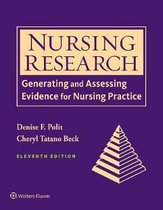
Nursing Research 11th Edition
Complete Test bank, All Chapters are included. Table of content
Chapter 1 Introduction to Nursing Research in an Evidence- Based Practice Environment
Chapter 2 Evidence- Based Nursing: Translating Research Evidence into Practice
Chapter 3 Key Concepts and Steps in Qualitative and Quantitative Research
Chapter 4 Research Problems, Research Questions, and Hypotheses
Chapter 5 Literature Reviews: Finding and Critically Appraising Evidence
Chapter 6 Theoretical Frameworks
Chapter 7 Ethics in Nursing Research
Chapter 8 Planning a Nursing Study
Chapter 9 Quantitative Research Design
Chapter 10 Rigor and Validity in Quantitative Research
Chapter 11 Specific Types of Quantitative Research
Chapter 12 Quality Improvement and Improvement Science
Chapter 13 Sampling in Quantitative Research
Chapter 14 Data Collection in Quantitative Research
Chapter 15 Measurement and Data Quality
Chapter 16 Developing and Testing Self- Report Scales
Chapter 17 Descriptive Statistics
Chapter 18 Inferential Statistics
Chapter 19 Multivariate Statistics
Chapter 20 Processes of Quantitative Data Analysis
Chapter 21 Clinical Significance and Interpretation of Quantitative Results
Chapter 22 Qualitative Research Design and Approaches
Chapter 23 Sampling in Qualitative Research
Chapter 24 Data Collection in Qualitative Research
Chapter 25 Qualitative Data Analysis
Chapter 26 Trustworthiness and Rigor in Qualitative Research
Chapter 27 Basics of Mixed Methods Research
Chapter 28 Developing Complex Nursing Interventions Using Mixed Methods Research
Chapter 29 Feasibility and Pilot Studies of Interventions Using Mixed Methods
Chapter 30 Systematic Reviews of Research Evidence
Chapter 31 Applicability, Generalizability, and Relevance: Toward Practice- Based Evidence
Chapter 32 Disseminating Evidence: Reporting Research Findings
Chapter 33 Writing Proposals to Generate Evidence Nursing Research Generating and Assessing Evidence for Nursing Practice 11th Edition Polit Beck Test Bank Chapter 1 Introduction to Nursing Research in an Evidence-Based Practice Environment 1.What is the highest priority for the importance of research in the nursing profession?
A)Research findings provide evidence for informing nurses' decisions and actions.
B)Conduct research to better understand the context of nursing practice.
C)Document the role that nurses serve in society.
D) Establish nursing research areas of study.
2.Which group would be best served by clinical nursing research?
A) Nursing administrators
B) Practicing nurses
C) Nurses' clients
D) Healthcare policymakers
3.In the United States, in what area does research play an important role in nursing?
A) Chronic illness
B) Credentialing and status
C) Nurses' personalities
D) Nurses' education 4.What is the role of a consumer of nursing research?
A)Read research reports for relevant findings.
B)Participate in generating evidence by doing research.
C)Participate in journal club in a practice setting.
D)Solve clinical problems and make clinical decisions.
5.What was the concern of most nursing studies in the early 1900s?
A) Client satisfaction
B) Clinical problems
C) Health promotion
D) Nursing education
6.Which topic most closely conforms to the priorities that have been suggested for future nursing research?
A)Attitudes of nursing students toward smoking.
B)Promotion of excellence in nursing science.
C) Nursing staff morale and turnover.
D)Number of doctorate prepared nurses in various clinical specialties. 7.What is the process of deductive reasoning?
A)Verifying assumptions that are part of our heritage.
B)Developing specific predictions from general principles.
C)Empirically testing observations that are made known through our senses.
D)Forming generalizations from specific observations.
8.What is the ontological assumption of those espousing a naturalistic paradigm?
A)Objective reality and those natural phenomena are regular and orderly.
B)Phenomena are not haphazard and result from prior causes.
C)Reality is multiply constructed and multiply interpreted by humans.
D)Reality is not fixed, but is rather a construction of human minds.
9.What is the epistemological assumption of those espousing a positivist paradigm?
A)The researcher is objective and independent of those being studied.
B)Phenomena are not haphazard, but rather have antecedent causes.
C)The researcher instructs those being studied to be objective in providing information. D)Reality is not fixed, but is rather a construction of human minds.
10.Which is not a characteristic of traditional scientific method?
A) Control over external factors.
B)Systematic measurement and observation of natural phenomena.
C) Deductive reasoning.
D)Emphasis on a holistic view of a phenomenon, studied in a rich context.
11. What is empiricism?
A)Making generalizations from specific observations.
B)Deducing specific predictions from generalizations.
C) Gathering evidence rooted in reality.
D)Verifying the assumptions on which the study was based.
12.What is a hallmark of the scientific method?
A) Infallible
B) Holistic
C) Systematic
D) Flexible 13.Which of the following limits the power of the scientific method to answer questions about human life?
A)The necessity of departing from traditional beliefs.
B)The difficulty of accurately measuring complex human traits.
C) The inability to control potential biases.
D)The shortage of theories about human behavior.
14.What is a criticism of the scientific method?
A) Deductive
B) Deterministic
C) Empirical
D) Reductionist
15.What is involved in naturalistic qualitative research?
A) Involves deductive processes
B) Takes places in the field.
C)Focuses on the idiosyncrasies of those being studied.
D)Attempts to control the research context to better understand the phenomenon being studied. 16.A researcher wants to investigate the effect of patients' body position on blood pressure. This is an example of what type of study?
A) Qualitative
B) Constructivist inquiry
C) Quantitative
D)Researcher preference of either quantitative or qualitative
17.A researcher is studying the effect of massage on the alleviation of pain in cancer patients. This is an example of what type of study?
A) Descriptive
B) Exploratory
C) Applied
D) Basic
18.A researcher wants to study the process by which people make decisions about seeking treatment for infertility. What is the researcher's paradigmatic orientation?
A) Positivism
B) Determinism
C) Empiricism
D) Naturalism
19.What is the continuum of participation on research? A) Academics to practitioners
B) Consumers to producers
C) Journalists to educators
D) Mentors to novice nurses
20. What is the goal of explanatory research?
A)Understand the underpinnings of natural phenomena and to explain systematic relationships among them.
B)Begins with the phenomenon of interest, but rather than simply observing and describing it, exploratory research investigates the full nature of the phenomenon, the manner in which it is manifested, and the other factors to which it is related.
C)Study phenomena about which little is known.
D)Make predictions and to control phenomena based on research findings. Answer Key Chapter 2 Evidence-Based Nursing: Translating Research Evidence into Practice 1.A
2.C
3.B
4.A
5.D
6.B
7.B
8.C
9.A
10. D
11. C
12. C
13. B
14. D
15. B
16. B
17. C
18. D
19. B
20. A
1.Research utilization begins with empirical findings for consideration in practice settings. Where does evidence-based practice begin?