
CCRN tricky practice questions
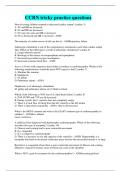
How do young children respond to decreased cardiac output? (cardiac 3) A. SV and HR are increased B. SV and HR are decreased C. SV stays the same and HR is increased D. SV is decreased and HR is increased - ANSC The majority of cardiac arrests in kids are due to - ANSRespiratory failure Adrenergic stimulation is one of the compensatory mechanisms used when cardiac output fails. Which of the following is a result of adrenergic stimulation? (cardiac 6) A. Longer diastolic period B. Blockage of the release of norepinephrine and epinephrine C. Increased myocardial oxygen consumption D. Increased systemic blood flow - ANSC Jose is a 19 m/o with congestive heart failure secondary to cardiomyopathy. Which of the following manifestations would the nurse NOT expect to find? (cardiac 7) A. Machine like murmur B. Diaphoresis C. S3 gallop D. Pulmonary edema - ANSA Diaphoresis is r/t adrenergic stimulation S3 gallop and pulmonary edema are r/t fluid overload Which of the following is NOT true r/t L sided heart failure? (cardiac 8) A. PAP, PCWP and CVP are all decreased B. During systole, the L ventricle does not completely empty C. There is a back flow of blood from the left ventricle to the left atrium D. There is decreased contractility - ANSA- they're all increased What is the MOST common and what is the LEAST common type of cardiomyopathy in children? - ANSMost- dilated Least- restrictive A child has been diagnosed with hypertrophic cardiomyopathy. Which of the following describes this type of myopathy? (cardiac 10) A. Fibrosis and scarring lead to poor contractile movement B. It is congenital C. It is a congestive cardiomyopathy D. There is a decrease in size and capacity of the ventricles - ANSD. Hypertrophic is a myopathy that leads to decreased ventricular space because the myocardial muscle is so large Restrictive is congenital where there is poor contractile movement r/t fibrosis and scarring Dilated is congestive because stasis of blood can occur in the chambers What is NOT a goal for treatment for the cardiomyopathies? - ANSIncreasing preload
Información del documento
- Subido en
- 27 de noviembre de 2023
- Número de páginas
- 33
- Escrito en
- 2023/2024
- Tipo
- Examen
- Contiene
- Preguntas y respuestas

