Chapter 1: introduction, acquiring knowledge and the
scientific method
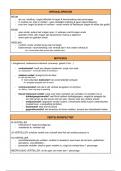
Section 1 methods of Knowing and acquiring knowledge
● 2 methods to acquire information
○ Non-scientific approach
■ Tenacity
■ Intuition
■ Authority
■ Rational Method
■ Empiricism
○ Scientific method
● Tenacity- True cause always believed to be, or superstition supports it
○ Limits: potential inaccuracy, no method for correcting erroneous ideas (wrong
ideas)
● Intuition- accepted based on a hunch or feeling
○ Limits: No methods separating right and wrong knowledge
● Authority/ method of faith- Info and answers come from experts
○ Limits: not always accurate; not all “experts” are experts
○ A good place to start with research
● Rational method: Logical reasoning
○ Limits: only valid if original statements are true; people are not good with logic
● Empirical- observation or personal experience
○ Limits: observations are often misinterpreted, experiences swayed by beliefs,
time-consuming, and can be dangerous
Method Find Answer
Tenacity Habit/superstition
Intuition Hunch/feeling
Authority Experts
Rationalism Reasoning/ Logic
Empiricism Observation
,Book Notes
Premis Statements- facts or assumptions that are known (or assumed) to be true
Argument- a set of premise statements that are logically combined to yield a conclusion
Vertical-horizontal illusion- an example of how direct sensory experience can deceive us (people
interpret things differently)
Section 2 Scientific Method
● Scientific Method- Acquire knowledge using observation, hypothesis, and testing
○ Steps
■ Observation
■ Develop hypothesis
■ Make predictions
■ Evaluate predictions by testing/ observing
■ Support, refute, and refine the original hypothesis
● Inductive and deductive reasoning
○ Induction- specific observation basis for forming a general statement for larger
populations
■ Induction = increase
○ Deduction- General statement basis for reaching a conclusion about specific
examples
■ Deduction = decrease
● Variables and hypothesis
○ Variable- Characteristics or conditions that change or have different values
○ Hypothesis- Statement that describes or explains a relationship between
variables
● 3 important principles of science
○ Empirical, public, objective
■ Empirical- structured or systematic observations that clearly support or
refute a hypothesis
■ Public- Observations are evaluated by others
■ Objective- cannot be biased
● Process of scientific inquiry
○ Observation
○ Hypothesis
○ Prediction
○ Planned observations
○ New hypothesis
● Science vs. pseudoscience
○ Science- careful, systematic, and objective observations
○ Pseudoscience- lacks key components to scientific research
,Book Notes
Hypothesis and prediction (rational method) -> observations (empirical method)
The process is circular, not linear (spiral)
Science Vs Pseudoscience
1. Science has testable and refutable hypotheses. pseudoscience discounts it
2. Science is objective and unbias evaluations. Pseudoscience subjected evidence
3. Science tests and challenges theories. Pseudoscience sees it as a personal attack.
4. Science is grounded in past science. Pseudoscience creates new not related to
established information.
Section 3 Research process
● Qualitative and quantitative research
○ Quantitative- numbers/scores
○ Qualitative- observations
● Research Process steps
○ Research idea
○ Form hypothesis
○ Determine definitions and measures
○ Identify subjects
○ Research strategy
○ Research design
○ Conduct the study
○ Evaluate data
○ Report results
○ Refine or reformulate the idea
● Participants- humans
● Subjects- non-human
Chapter 2: Research Ideas and Hypothesis
Section 1: Getting Started
● First steps of the research process
○ Find idea
■ Identify general topics of interest
, ■ Explore previous research
○ Form hypothesis
● Common sources (possible)
○ Personal interests and curiosity
○ Observation
○ Reports
○ Practical problems or questions
○ Behavioral theories
Book Notes
● Applied Research- answer practical questions or solve practical problems
● Basic Research- theoretical or knowledge for knowledge sake
● Personal interests- a topic you want to learn about
● Observation- behaviors you witness in others
● Reports- seen online or news about topics
● Practical problem- comes from daily life
● Behavioral theories- testing as part of a theory
Section 2: the Search
● Literature: mass of published info worldwide
● Tips for literature review
○ Do your homework: collect background
■ Read enough to get a grasp of the information
○ Keep mind open
■ Begin general, let reading refine
○ Focus
● Primary and secondary sources
○ Primary Source- First-hand reports in which authors describe their observations
■ Examples: Empirical journal articles
○ Secondary Source- Second-hand reports
■ Examples: Textbooks
● Purpose of literature study
○ Gain familiarity with the topic
○ Gain basis for topic
○ Identify gaps in research
● Conduct literature search
○ Narrow the idea to a specific question
○ Start with secondary sources
○ Make a note of the subject words
■ These words identify and describe variables in the study and describe
participants.
scientific method
Section 1 methods of Knowing and acquiring knowledge
● 2 methods to acquire information
○ Non-scientific approach
■ Tenacity
■ Intuition
■ Authority
■ Rational Method
■ Empiricism
○ Scientific method
● Tenacity- True cause always believed to be, or superstition supports it
○ Limits: potential inaccuracy, no method for correcting erroneous ideas (wrong
ideas)
● Intuition- accepted based on a hunch or feeling
○ Limits: No methods separating right and wrong knowledge
● Authority/ method of faith- Info and answers come from experts
○ Limits: not always accurate; not all “experts” are experts
○ A good place to start with research
● Rational method: Logical reasoning
○ Limits: only valid if original statements are true; people are not good with logic
● Empirical- observation or personal experience
○ Limits: observations are often misinterpreted, experiences swayed by beliefs,
time-consuming, and can be dangerous
Method Find Answer
Tenacity Habit/superstition
Intuition Hunch/feeling
Authority Experts
Rationalism Reasoning/ Logic
Empiricism Observation
,Book Notes
Premis Statements- facts or assumptions that are known (or assumed) to be true
Argument- a set of premise statements that are logically combined to yield a conclusion
Vertical-horizontal illusion- an example of how direct sensory experience can deceive us (people
interpret things differently)
Section 2 Scientific Method
● Scientific Method- Acquire knowledge using observation, hypothesis, and testing
○ Steps
■ Observation
■ Develop hypothesis
■ Make predictions
■ Evaluate predictions by testing/ observing
■ Support, refute, and refine the original hypothesis
● Inductive and deductive reasoning
○ Induction- specific observation basis for forming a general statement for larger
populations
■ Induction = increase
○ Deduction- General statement basis for reaching a conclusion about specific
examples
■ Deduction = decrease
● Variables and hypothesis
○ Variable- Characteristics or conditions that change or have different values
○ Hypothesis- Statement that describes or explains a relationship between
variables
● 3 important principles of science
○ Empirical, public, objective
■ Empirical- structured or systematic observations that clearly support or
refute a hypothesis
■ Public- Observations are evaluated by others
■ Objective- cannot be biased
● Process of scientific inquiry
○ Observation
○ Hypothesis
○ Prediction
○ Planned observations
○ New hypothesis
● Science vs. pseudoscience
○ Science- careful, systematic, and objective observations
○ Pseudoscience- lacks key components to scientific research
,Book Notes
Hypothesis and prediction (rational method) -> observations (empirical method)
The process is circular, not linear (spiral)
Science Vs Pseudoscience
1. Science has testable and refutable hypotheses. pseudoscience discounts it
2. Science is objective and unbias evaluations. Pseudoscience subjected evidence
3. Science tests and challenges theories. Pseudoscience sees it as a personal attack.
4. Science is grounded in past science. Pseudoscience creates new not related to
established information.
Section 3 Research process
● Qualitative and quantitative research
○ Quantitative- numbers/scores
○ Qualitative- observations
● Research Process steps
○ Research idea
○ Form hypothesis
○ Determine definitions and measures
○ Identify subjects
○ Research strategy
○ Research design
○ Conduct the study
○ Evaluate data
○ Report results
○ Refine or reformulate the idea
● Participants- humans
● Subjects- non-human
Chapter 2: Research Ideas and Hypothesis
Section 1: Getting Started
● First steps of the research process
○ Find idea
■ Identify general topics of interest
, ■ Explore previous research
○ Form hypothesis
● Common sources (possible)
○ Personal interests and curiosity
○ Observation
○ Reports
○ Practical problems or questions
○ Behavioral theories
Book Notes
● Applied Research- answer practical questions or solve practical problems
● Basic Research- theoretical or knowledge for knowledge sake
● Personal interests- a topic you want to learn about
● Observation- behaviors you witness in others
● Reports- seen online or news about topics
● Practical problem- comes from daily life
● Behavioral theories- testing as part of a theory
Section 2: the Search
● Literature: mass of published info worldwide
● Tips for literature review
○ Do your homework: collect background
■ Read enough to get a grasp of the information
○ Keep mind open
■ Begin general, let reading refine
○ Focus
● Primary and secondary sources
○ Primary Source- First-hand reports in which authors describe their observations
■ Examples: Empirical journal articles
○ Secondary Source- Second-hand reports
■ Examples: Textbooks
● Purpose of literature study
○ Gain familiarity with the topic
○ Gain basis for topic
○ Identify gaps in research
● Conduct literature search
○ Narrow the idea to a specific question
○ Start with secondary sources
○ Make a note of the subject words
■ These words identify and describe variables in the study and describe
participants.