
Chapter 6 Methodological Control in Experimental Research
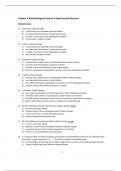
1) A between-subjects design a) is also known as a repeated-measures design b) must deal with the problem of equivalent groups c) includes a minimum of two independent variables d) must include a subject variable 2) A within-subjects design a) is also known as a repeated-measures design b) must deal with the problem of equivalent groups c) includes a minimum of two independent variables d) must include a subject variable 3) A between-subjects design a) requires fewer subjects than a comparable within-subjects design b) must deal with the problem of sequence effects c) includes at least two different groups of participants d) tests the same group of participants at each level of the independent variable 4) A within-subjects design a) requires more subjects than a comparable between-subjects design b) must deal with the problem of order effects c) tests different groups of participants at each level of the independent variable d) includes at least three different groups of subjects 5) In between-subject designs, a) each subject participates in at least two levels of the independent variable b) relatively small numbers of participants usually need to be recruited c) blocked random assignment can be used as a way for forming equivalent groups d) block randomization can be used as a method of counterbalancing 6) All of the following characterize between-subjects designs except a) concern over order effects b) requires larger N than comparable within-subjects designs c) concern over how to create equivalent groups d) random assignment frequently used 7) All of the following characterize within-subjects designs except a) concern over order effects b) requires smaller N than comparable between-subjects designs c) researcher will use either random assignment or matching d) some form of counterbalancing will be used 8) In a study by Sigall and Ostrove (1975), participants recommended jail sentences for “Barbara Helm.” The study is a good example of a) the use of complete counterbalancing b) the advantages of matching over random assignment as a means of creating equivalent groups c) a type of study requiring a between-subjects design - 1
Información del documento
- Subido en
- 19 de septiembre de 2023
- Número de páginas
- 20
- Escrito en
- 2023/2024
- Tipo
- Examen
- Contiene
- Preguntas y respuestas

