3.2.4 Cell recognition and the immune system – AQA A Level Biology Summary Notes
Infectious diseases caused by pathogens are a constant threat to our health. Fit and healthy adults
rarely die of infections, but they can be unpleasant. The very young, ill and elderly however, are
more vulnerable as their body defences are less able to deal with the pathogens.
The body has two major types of defence against pathogens: non-specific and specific
Each type of cell has specific molecules on its surface that identify it. These molecules include
proteins and enable the immune system to identify
1) Pathogens
2) Cells from other organisms of the same species (transplanted cells)
3) Abnormal body cells
4) Toxins
An antigen is any part of an organism recognised as non self/foregin by the immune system and
stimulates an immune response (production of antibody)
All cells are covered in cell surface proteins and other markers. In non self cells, many of these
protiens will act as antigens. Toxins are harmful proteins made by pathogens which also act as
antigens.
The effect of antigen variability on disease and disease prevention
No two organisms have the same set of cell-surface markers. As such, this variability of cell surface
markers, and therefore antigens, allows our body to recognise self cells from non self cells. If foreign
cells or toxins are found inside the body an organism’s immune system can destroy it, thus
preventing disease.
HOWEVER, some pathogens DNA regularly mutates causing the antigens they produce to have a
different specific tertiary structure SO lymphocytes that have previously responded to this particular
antigen may no longer recognise it
The common cold/Influenza is caused by a virus, and has high antigen variability. This means that
any immune response to one cold will not form any useful memory cells for future colds, hence we
can get several colds per year.
To summarise:
- Some pathogens can have high antigen variability
- Antigens produced have different tertiary structure
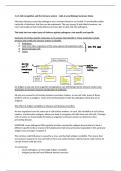
, Phagocytosis of pathogens. The subsequent destruction of ingested pathogens by lysozymes
Non specific defence = Phagocytosis
Most pathogens are unable to enter the body, as it has highly developed barriers to entry
- Skin: tough, physical barrier and waterproof and chemcial barrier due to low pH, salt in
swear and antimicrobials
- Mucous membranes: secrete mucus that trap pathogens, antimicrobial enzymes
- Stomach HCl: low pH to denature pathogens enzymes
- Expulsive reflex (sneezing and coughing)
Phagocytes
HOWEVER, if a pathogen does enter, the first line of defence are PHAGOCYTES – a broad category of
white blood cells which carry out phagocytosis
Examples of phagocytes include macrophages/dendritic cells and neutrophils (monocytes and
granulocytes)
Many phagocytes travel in the blood, while others squeeze out of the capillaries and are found in the
tissue fluid
Phagocytes are attracted to chemical signals such as toxins or chemicals released by dead/damaged
cells and will accumulate in an area around the infection
Non specific immunity: Steps of phagocytosis
1) Phagocyte is attracted to pathogen by chemicals/toxins and moves along concentration
gradient towards to
2) Phagocyte will bind to the pathogen and engulf it via endocytosis
3) Pathogen is hel inside a membrane-bound vesicle called a phagosome
4) Phagosome fuses with lysosome which is a membrane-bound structure that releases
lysozymes (a hydrolytic enzyme)
5) Lysozymes digest and destroy the pathogen
6) The soluble products of the pathogen are absorbed into the cytoplasm of the phagocyte
7) Now, antigens present on phagocyte — so APC
APCs (antigen presenting cells) take antigen from the digested pathogen and display the antigen
on their cell surface membrane
THIS IS IMPORTANT IN THE SPECIFIC IMMUNE RESPONSE (cell mediated response) because it
enhances recognition by T cells which cannot directly interfere with pathogens
Infectious diseases caused by pathogens are a constant threat to our health. Fit and healthy adults
rarely die of infections, but they can be unpleasant. The very young, ill and elderly however, are
more vulnerable as their body defences are less able to deal with the pathogens.
The body has two major types of defence against pathogens: non-specific and specific
Each type of cell has specific molecules on its surface that identify it. These molecules include
proteins and enable the immune system to identify
1) Pathogens
2) Cells from other organisms of the same species (transplanted cells)
3) Abnormal body cells
4) Toxins
An antigen is any part of an organism recognised as non self/foregin by the immune system and
stimulates an immune response (production of antibody)
All cells are covered in cell surface proteins and other markers. In non self cells, many of these
protiens will act as antigens. Toxins are harmful proteins made by pathogens which also act as
antigens.
The effect of antigen variability on disease and disease prevention
No two organisms have the same set of cell-surface markers. As such, this variability of cell surface
markers, and therefore antigens, allows our body to recognise self cells from non self cells. If foreign
cells or toxins are found inside the body an organism’s immune system can destroy it, thus
preventing disease.
HOWEVER, some pathogens DNA regularly mutates causing the antigens they produce to have a
different specific tertiary structure SO lymphocytes that have previously responded to this particular
antigen may no longer recognise it
The common cold/Influenza is caused by a virus, and has high antigen variability. This means that
any immune response to one cold will not form any useful memory cells for future colds, hence we
can get several colds per year.
To summarise:
- Some pathogens can have high antigen variability
- Antigens produced have different tertiary structure
, Phagocytosis of pathogens. The subsequent destruction of ingested pathogens by lysozymes
Non specific defence = Phagocytosis
Most pathogens are unable to enter the body, as it has highly developed barriers to entry
- Skin: tough, physical barrier and waterproof and chemcial barrier due to low pH, salt in
swear and antimicrobials
- Mucous membranes: secrete mucus that trap pathogens, antimicrobial enzymes
- Stomach HCl: low pH to denature pathogens enzymes
- Expulsive reflex (sneezing and coughing)
Phagocytes
HOWEVER, if a pathogen does enter, the first line of defence are PHAGOCYTES – a broad category of
white blood cells which carry out phagocytosis
Examples of phagocytes include macrophages/dendritic cells and neutrophils (monocytes and
granulocytes)
Many phagocytes travel in the blood, while others squeeze out of the capillaries and are found in the
tissue fluid
Phagocytes are attracted to chemical signals such as toxins or chemicals released by dead/damaged
cells and will accumulate in an area around the infection
Non specific immunity: Steps of phagocytosis
1) Phagocyte is attracted to pathogen by chemicals/toxins and moves along concentration
gradient towards to
2) Phagocyte will bind to the pathogen and engulf it via endocytosis
3) Pathogen is hel inside a membrane-bound vesicle called a phagosome
4) Phagosome fuses with lysosome which is a membrane-bound structure that releases
lysozymes (a hydrolytic enzyme)
5) Lysozymes digest and destroy the pathogen
6) The soluble products of the pathogen are absorbed into the cytoplasm of the phagocyte
7) Now, antigens present on phagocyte — so APC
APCs (antigen presenting cells) take antigen from the digested pathogen and display the antigen
on their cell surface membrane
THIS IS IMPORTANT IN THE SPECIFIC IMMUNE RESPONSE (cell mediated response) because it
enhances recognition by T cells which cannot directly interfere with pathogens