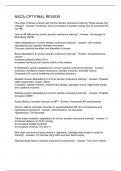
NSCA-CPT Final Review
How does VO2max change with chronic aerobic endurance training? What causes this change? - Answer- Increases, due to increased Q (cardiac output; due to increased SV, not HR) How is HR affected by chronic aerobic endurance training? - Answer- Unchanged or decreased slightly Heart adaptations to chronic aerobic endurance training? - Answer- Left ventricle hypertrophy and chamber diameter increases Coronary arteriole densities and diameters increase Blood adaptations to chronic aerobic endurance training? - Answer- Increased blood volume Increased plasma (within 24 h) Increased red blood cell volume (within a few weeks) 5 Respiratory system adaptations to chronic aerobic endurance training? - Answer- Increased ventilatory muscle endurance, aerobic enzymes, and tidal volume Decreased O2 cost of breathing and breathing frequency Skeletal muscle adaptations to chronic aerobic endurance training? - Answer- Possible slight hypertrophy of type I fibers Increased: capillary density, mitochondria density, glycogen stores, triglyceride stores, and oxidative enzymes Skeletal system adaptations to chronic aerobic endurance training? - Answer- Possible increase of BMD Acute effects of aerobic exercise on BP? - Answer- Decreased BP post-exercise Chronic effects of aerobic exercise on systolic/diastolic BP (for normotensive and hypertensive trainees)? - Answer- Normotensive: 3/2 decrease Hypertensive: 7/6 decrease Three major metabolic adaptations to chronic aerobic endurance training? - Answer- 1) Increased reliance on fat for energy 2) Increased lactate threshold 3) Increased VO2max (10-30%+) Why does connective tissue (tendons, ligaments, cartilage) take longer to adapt to training? - Answer- CT has few living cells and poor blood supply What primarily leads to aerobic endurance overtraining? - Answer- Too much volume
Información del documento
- Subido en
- 6 de septiembre de 2023
- Número de páginas
- 50
- Escrito en
- 2023/2024
- Tipo
- Examen
- Contiene
- Preguntas y respuestas