
Module 7 EXAM
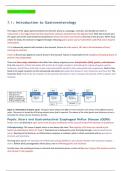
Module 7 EXAM 7.1 : Introduction to Gastroenterology The organs of the upper gastrointestinal tract (mouth, pharynx, esophagus, stomach, and duodenum) work in conjunction to first digest food and then absorb the nutrients obtained from the digested food. Both the stomach and the upper part of the small intestines (duodenum) release hormones and enzymes that help in this process. When food enters the body, the stomach is triggered to begin releasing gastric juices such as hydrochloric acid (HCl) and an enzyme called pepsin. HCl is released by parietal cells located in the stomach. Due to its acidic nature, HCl aids in the breakdown of food entering the stomach. Pepsin is the primary digestive enzyme found in the stomach. Pepsin is responsible for the catabolism (breaking down) of proteins into polypeptides. There are three major stimulators that affect the release of gastric juices: Acetylcholine (ACh), gastrin, and histamine. First, the ingestion of food stimulates ACh to bind to its target receptors, stimulating the release of pepsin, gastrin, histamine, and HCl from chief cells, G cells, enterochromaffin like (ECL) cells, and parietal cells respectively. Gastrin then binds to its target receptors on ECL and parietal cells which stimulates the release of more histamine and more HCl. The histamine then binds to the H2 receptors on the parietal cells which, in turn, increases the amount of HCl or gastric acid released. Figure 7.1 Stimulation of Gastric Juices. The figure above depicts the different cells involved in the release of the different gastric juices. The process is started by ACH being released when food is ingested. The release of the initial gastrin and histamine go on to stimulate the release of more histamine and HCL. Peptic Ulcers and Gastrointestinal Esophageal Reflux Disease (GERD) Peptic ulcers are defined as open sores in the mucous membranes of the mucosal lining of the stomach or duodenum. Pathophysiology: The cause of peptic ulcers is not always the same. The majority of GI ulcers are caused by the bacterium Helicobacter Pylori (H. Pylori). The bacterium is believed to enter the body through contaminated food or water. Reacting to the bacteria, an inflammatory response is initiated, which is often associated with an increase in stomach acid secretions. The long-term use of non-steroidal anti-inflammatory drugs (NSAIDs) is also closely related to the incidence of peptic ulcers. NSAIDs block prostaglandins which play a role in inhibiting gastric acid secretion. In both cases, the resulting increase in stomach acid secretions places a strain on the inner lining of the stomach until an ulcer (break or tear) appears. Symptoms of a peptic ulcer include pain, nausea, and loss of appetite. The pain is typically described as a dull, gnawing, burning sensation similar to heartburn. Interestingly, if the ulcer is in the duodenum, food often relieves the pain, whereas if the ulcer is in the stomach, food often worsens the pain. GERD stands for gastrointestinal esophageal reflux disease and is characterized primarily by the presence of heartburn. Heartburn (acid indigestion) is defined as a painful burning feeling behind the sternum that occurs when stomach acid backs up into the esophagus. Pathophysiology of GERD involves the lower esophageal sphincter (LES) or valve at the bottom of the esophagus going into the stomach. This valve loosens such that the gastric acid is able to go back up (reflux) into the esophagus. Symptoms of GERD go beyond occasional heartburn. In GERD, heartburn is part of an ongoing problem, often occurring after meals and upon lying down. In severe cases, there can even be blood loss from chronic injury to the esophagus.
Información del documento
- Subido en
- 6 de septiembre de 2023
- Número de páginas
- 13
- Escrito en
- 2023/2024
- Tipo
- Examen
- Contiene
- Preguntas y respuestas

