

NURS 226 PATHOPHYSIOLOGY AND PHARMACOLOGY
EXAM:DRUG CARD EXAM GUIDE 2023 UPDATE A+
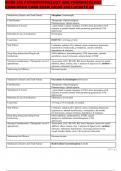
Medication (Generic and Trade Name) Morphine (Astramorph)
Classification Therapeutic: Opioid analgesic
Pharmacologic: Opioid agonist
Mechanism of Action ↓ pain (binds to opiate receptors in CNS; alters perception of &
response to painful stimuli while producing generalized CNS
depression)
Rationale for use of medication Severe pain
Usual dose IM/IV/SC: 4-10 mg q 3-4 hr
Side Effects Confusion, sedation, HA, blurred vision, respiratory depression,
hypotension, bradycardia, constipation, urinary retention,
dependence & tolerance
Drug-Drug Interactions/Drug-Food MAO inhibitors, benzodiazepines, CNS depressants, opioids,
Interactions anesthetics, muscle relaxants, antipsychotics, ETOH
Nursing Considerations: (Therapeutic Level if Assess pain, LOC, BP, HR, RR, bowel function, assess for opioid
appropriate) addition, abuse, misuse, may ↑ amylase & lipase levels, antidote =
naloxone, orthostatic hypotension
Monitoring for Efficacy: Decrease in pain
Medication (Generic and Trade Name) Oxycodone/Acetaminophen (Percocet)
Classification Therapeutic: Opioid analgesic
Pharmacologic: Opioid agonist
Mechanism of Action ↓ pain (binds to opiate receptors in CNS; alters perception of &
response to painful stimuli while producing generalized CNS
depression)
Rationale for use of medication Moderate to severe pain
Usual dose 5-10 mg q 3-4 hr initially, as needed
Side Effects Confusion, sedation, HA, blurred vision, respiratory depression,
hypotension, adrenal insufficiency, constipation, dry mouth,
GI obstruction, urinary retention, dependence & tolerance
Drug-Drug Interactions/Drug-Food MAO inhibitors, antihistamines, ETOH, opioid
Interactions analgesics, barbiturates, benzodiazepines, CNS
depressants
Nursing Considerations: (Therapeutic Level if Assess pain, LOC, BP, HR, RR, bowel function, assess for opioid
appropriate) addition, abuse, misuse, may ↑ amylase & lipase levels, antidote =
naloxone, orthostatic hypotension, encourage patient to turn,
cough, breathe deeply every 2 hr to prevent atelectasis
Monitoring for Efficacy: Decrease in pain
Medication (Generic and Trade Name) Hydrocodone/Acetaminophen (Lortab)
1|Page
,NURS 226 PATHOPHYSIOLOGY AND PHARMACOLOGY
EXAM:DRUG CARD EXAM GUIDE 2023 UPDATE A+
Classification Therapeutic: Opioid analgesic
Pharmacologic: Opioid agonist
Mechanism of Action ↓ pain (binds to opiate receptors in CNS; alters perception of &
response to painful stimuli while producing generalized CNS
depression)
Rationale for use of medication Moderate to severe pain
Usual dose 2.5-10 mg q 3-6 hr as needed
Acetaminophen should not exceed 4 g/day
Side Effects Confusion, dizziness, sedation, blurred vision, respiratory depression,
hypotension, bradycardia, prolonged QT interval, constipation,
dyspepsia, nausea, urinary retention, adrenal insufficiency,
dependence & tolerance
Drug-Drug Interactions/Drug-Food MAO inhibitors, barbiturates, benzodiazepines, CNS
Interactions depressants, opioids, anesthetics, antipsychotics, anticholinergics
Nursing Considerations: (Therapeutic Level if Assess pain, LOC, BP, HR, RR, bowel function, assess for opioid
appropriate) addition, abuse, misuse, may ↑ amylase & lipase levels, antidote =
naloxone, orthostatic hypotension
Monitoring for Efficacy: Decrease in pain
Medication (Generic and Trade Name) Nalbuphine
Classification Therapeutic: Opioid analgesic
Pharmacologic: Opioid agonist
Mechanism of Action ↓ pain (binds to opiate receptors in CNS; alters perception of &
response to painful stimuli while producing generalized CNS
depression)
Rationale for use of medication Moderate to severe pain
Usual dose IM/SC/IV: 10 mg q 3-6 hr (max = 20 mg/dose or 160 mg/day)
Side Effects Dizziness, HA, sedation, blurred vision, respiratory depression,
palpitations, HTN, hypotension, dry mouth, N/V, urinary
urgency, clammy feeling, sweating, dependence & tolerance
Drug-Drug Interactions/Drug-Food MAO inhibitors, benzodiazepines, CNS depressants, opioids,
Interactions anesthetics, antipsychotics, ETOH
Nursing Considerations: (Therapeutic Level if Assess pain, LOC, BP, HR, RR, bowel function, assess for opioid
appropriate) addition, abuse, misuse, may ↑ amylase & lipase levels, antidote =
naloxone, orthostatic hypotension, encourage patient to turn,
cough, breathe deeply every 2 hr to prevent atelectasis, mouth
hygiene
Monitoring for Efficacy: Decrease in pain
2|Page
, NURS 226 PATHOPHYSIOLOGY AND PHARMACOLOGY
EXAM:DRUG CARD EXAM GUIDE 2023 UPDATE A+
Medication (Generic and Trade Name) Naloxone (Narcan)
Classification Therapeutic: Antidote for opioids
Pharmacologic: Opioid antagonist
Mechanism of Action Reverse CNS/respiratory depression (blocks opioid effects)
Rationale for use of medication Opioid overdose
Usual dose IV/IM/SC: 0.4 mg may repeat q 2-3 min
Side Effects Ventricular arrhythmias, HTN, hypotension, N/V
Drug-Drug Interactions/Drug-Food Opioid analgesics
Interactions
Nursing Considerations: (Therapeutic Level if Monitor pain, RR, HR, BP, LOC, ECG, assess for opioid
appropriate) withdrawal (vomiting, restlessness, abdominal cramps, increased
BP, temp)
Monitoring for Efficacy: Adequate ventilation
Medication (Generic and Trade Name) Acetylsalicylic Acid (Aspirin)
Classification Therapeutic: Antipyretic, nonopioid analgesic
Pharmacologic: Salicylate
Mechanism of Action ↓ pain (inhibit production of prostaglandins)
Rationale for use of medication Mild to moderate pain
Usual dose 325-1000 mg q 4-6 hr (max = 4 g/day)
Side Effects GI bleeding, dyspepsia, epigastric distress, nausea, abdominal
pain, anemia, hemolysis, rash, allergic reaction
Drug-Drug Interactions/Drug-Food Warfarin, heparin, thrombolytic agents, penicillins, antacids, diuretics,
Interactions ACE inhibitors, NSAIDs, foods acidifying urine
Nursing Considerations: (Therapeutic Level if Assess pain, monitor hepatic function, serum AST, ALT, salicylate
appropriate) levels, PT time, hematocrit, use lowest effective dose for shortest pd
of time, admin with water after meals or with food/antacid
Monitoring for Efficacy: Relief of pain
3|Page
EXAM:DRUG CARD EXAM GUIDE 2023 UPDATE A+
Medication (Generic and Trade Name) Morphine (Astramorph)
Classification Therapeutic: Opioid analgesic
Pharmacologic: Opioid agonist
Mechanism of Action ↓ pain (binds to opiate receptors in CNS; alters perception of &
response to painful stimuli while producing generalized CNS
depression)
Rationale for use of medication Severe pain
Usual dose IM/IV/SC: 4-10 mg q 3-4 hr
Side Effects Confusion, sedation, HA, blurred vision, respiratory depression,
hypotension, bradycardia, constipation, urinary retention,
dependence & tolerance
Drug-Drug Interactions/Drug-Food MAO inhibitors, benzodiazepines, CNS depressants, opioids,
Interactions anesthetics, muscle relaxants, antipsychotics, ETOH
Nursing Considerations: (Therapeutic Level if Assess pain, LOC, BP, HR, RR, bowel function, assess for opioid
appropriate) addition, abuse, misuse, may ↑ amylase & lipase levels, antidote =
naloxone, orthostatic hypotension
Monitoring for Efficacy: Decrease in pain
Medication (Generic and Trade Name) Oxycodone/Acetaminophen (Percocet)
Classification Therapeutic: Opioid analgesic
Pharmacologic: Opioid agonist
Mechanism of Action ↓ pain (binds to opiate receptors in CNS; alters perception of &
response to painful stimuli while producing generalized CNS
depression)
Rationale for use of medication Moderate to severe pain
Usual dose 5-10 mg q 3-4 hr initially, as needed
Side Effects Confusion, sedation, HA, blurred vision, respiratory depression,
hypotension, adrenal insufficiency, constipation, dry mouth,
GI obstruction, urinary retention, dependence & tolerance
Drug-Drug Interactions/Drug-Food MAO inhibitors, antihistamines, ETOH, opioid
Interactions analgesics, barbiturates, benzodiazepines, CNS
depressants
Nursing Considerations: (Therapeutic Level if Assess pain, LOC, BP, HR, RR, bowel function, assess for opioid
appropriate) addition, abuse, misuse, may ↑ amylase & lipase levels, antidote =
naloxone, orthostatic hypotension, encourage patient to turn,
cough, breathe deeply every 2 hr to prevent atelectasis
Monitoring for Efficacy: Decrease in pain
Medication (Generic and Trade Name) Hydrocodone/Acetaminophen (Lortab)
1|Page
,NURS 226 PATHOPHYSIOLOGY AND PHARMACOLOGY
EXAM:DRUG CARD EXAM GUIDE 2023 UPDATE A+
Classification Therapeutic: Opioid analgesic
Pharmacologic: Opioid agonist
Mechanism of Action ↓ pain (binds to opiate receptors in CNS; alters perception of &
response to painful stimuli while producing generalized CNS
depression)
Rationale for use of medication Moderate to severe pain
Usual dose 2.5-10 mg q 3-6 hr as needed
Acetaminophen should not exceed 4 g/day
Side Effects Confusion, dizziness, sedation, blurred vision, respiratory depression,
hypotension, bradycardia, prolonged QT interval, constipation,
dyspepsia, nausea, urinary retention, adrenal insufficiency,
dependence & tolerance
Drug-Drug Interactions/Drug-Food MAO inhibitors, barbiturates, benzodiazepines, CNS
Interactions depressants, opioids, anesthetics, antipsychotics, anticholinergics
Nursing Considerations: (Therapeutic Level if Assess pain, LOC, BP, HR, RR, bowel function, assess for opioid
appropriate) addition, abuse, misuse, may ↑ amylase & lipase levels, antidote =
naloxone, orthostatic hypotension
Monitoring for Efficacy: Decrease in pain
Medication (Generic and Trade Name) Nalbuphine
Classification Therapeutic: Opioid analgesic
Pharmacologic: Opioid agonist
Mechanism of Action ↓ pain (binds to opiate receptors in CNS; alters perception of &
response to painful stimuli while producing generalized CNS
depression)
Rationale for use of medication Moderate to severe pain
Usual dose IM/SC/IV: 10 mg q 3-6 hr (max = 20 mg/dose or 160 mg/day)
Side Effects Dizziness, HA, sedation, blurred vision, respiratory depression,
palpitations, HTN, hypotension, dry mouth, N/V, urinary
urgency, clammy feeling, sweating, dependence & tolerance
Drug-Drug Interactions/Drug-Food MAO inhibitors, benzodiazepines, CNS depressants, opioids,
Interactions anesthetics, antipsychotics, ETOH
Nursing Considerations: (Therapeutic Level if Assess pain, LOC, BP, HR, RR, bowel function, assess for opioid
appropriate) addition, abuse, misuse, may ↑ amylase & lipase levels, antidote =
naloxone, orthostatic hypotension, encourage patient to turn,
cough, breathe deeply every 2 hr to prevent atelectasis, mouth
hygiene
Monitoring for Efficacy: Decrease in pain
2|Page
, NURS 226 PATHOPHYSIOLOGY AND PHARMACOLOGY
EXAM:DRUG CARD EXAM GUIDE 2023 UPDATE A+
Medication (Generic and Trade Name) Naloxone (Narcan)
Classification Therapeutic: Antidote for opioids
Pharmacologic: Opioid antagonist
Mechanism of Action Reverse CNS/respiratory depression (blocks opioid effects)
Rationale for use of medication Opioid overdose
Usual dose IV/IM/SC: 0.4 mg may repeat q 2-3 min
Side Effects Ventricular arrhythmias, HTN, hypotension, N/V
Drug-Drug Interactions/Drug-Food Opioid analgesics
Interactions
Nursing Considerations: (Therapeutic Level if Monitor pain, RR, HR, BP, LOC, ECG, assess for opioid
appropriate) withdrawal (vomiting, restlessness, abdominal cramps, increased
BP, temp)
Monitoring for Efficacy: Adequate ventilation
Medication (Generic and Trade Name) Acetylsalicylic Acid (Aspirin)
Classification Therapeutic: Antipyretic, nonopioid analgesic
Pharmacologic: Salicylate
Mechanism of Action ↓ pain (inhibit production of prostaglandins)
Rationale for use of medication Mild to moderate pain
Usual dose 325-1000 mg q 4-6 hr (max = 4 g/day)
Side Effects GI bleeding, dyspepsia, epigastric distress, nausea, abdominal
pain, anemia, hemolysis, rash, allergic reaction
Drug-Drug Interactions/Drug-Food Warfarin, heparin, thrombolytic agents, penicillins, antacids, diuretics,
Interactions ACE inhibitors, NSAIDs, foods acidifying urine
Nursing Considerations: (Therapeutic Level if Assess pain, monitor hepatic function, serum AST, ALT, salicylate
appropriate) levels, PT time, hematocrit, use lowest effective dose for shortest pd
of time, admin with water after meals or with food/antacid
Monitoring for Efficacy: Relief of pain
3|Page

