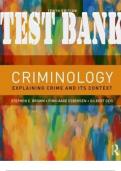
, Criminology Explaining Crime and Its Context 10TH Edition. TEST BANK
CHAPTER 1: Crime and Criminology
1. This refers to the techniques that criminologists use as they attempt to determine the “whys” of crime.
a. theory
b. empirical evidence
*c. methods
d. processes
2. This represents an effort to explain or make sense of the world, thus revolving around the “why” of
crime, criminalization, and similar concerns.
a. methodology
b. scientific method
c. positivism
*d. theory
3. The two essential components of a science are its:
*a. theoretical and methodological branches
b. asking questions and forming solutions
c. hypothesizing and theory testing
d. criminology and criminal justice
4. Which of the following is not a criminological paradigm:
a. rational choice
b. positivism
c. interactionism
*d. all of the above are paradigms
5. The media tends to sensationalize crime perpetuating fear and misunderstanding and often ignores the
in which the crime takes place.
*a. context
b. time of day
c. location
d. day of the week
6. The definition of crime that identifies crime as violations of conduct norms and general antisocial
behavior is known as the definition of crime.
a. legalistic
b. modified legalistic
*c. normative
d. new/critical
, Criminology Explaining Crime and Its Context 10TH Edition. TEST BANK
7. The definition of crime that states that crime is an intentional act in violation of the criminal law,
committed without defense or excuse, and penalized by the state as a felony or misdemeanor is the
definition of crime.
*a. legalistic
b. modified legalistic
c. normative
d. new/critical
8. When crime is defined as the violation of human rights, this is known as which definition of crime?
a. legalistic
b. modified legalistic
c. normative
*d. new/critical
9. The definition of crime that says that the essential characteristic of crime is that it is a behavior that is
prohibited by the State as an injury to the State and against which the State may react by punishment is
known as the definition of crime.
a. legalistic
*b. modified legalistic
c. normative
d. new/critical
10. Under which criminological paradigm does the deterrence doctrine fall?
*a. rational choice
b. positivism
c. interactionism
d. critical criminology
11. The model of criminal justice that says that criminal law reflects the interest of members of the
society at large is the
a. conflict model
b. criminology model
*c. consensus model
d. none of the above
12. The model of criminal justice that presumes that the state serves the interests of the powerful and elite
minority is known as the
*a. conflict model
b. criminology model
c. consensus model
d. none of the above
13. The study of the process of making laws, breaking laws, and reacting toward the breaking of laws is
known as
a. criminal justice
*b. criminology
, Criminology Explaining Crime and Its Context 10TH Edition. TEST BANK
c. sociology
d. the relativity of crime
CHAPTER 1: Crime and Criminology
1. This refers to the techniques that criminologists use as they attempt to determine the “whys” of crime.
a. theory
b. empirical evidence
*c. methods
d. processes
2. This represents an effort to explain or make sense of the world, thus revolving around the “why” of
crime, criminalization, and similar concerns.
a. methodology
b. scientific method
c. positivism
*d. theory
3. The two essential components of a science are its:
*a. theoretical and methodological branches
b. asking questions and forming solutions
c. hypothesizing and theory testing
d. criminology and criminal justice
4. Which of the following is not a criminological paradigm:
a. rational choice
b. positivism
c. interactionism
*d. all of the above are paradigms
5. The media tends to sensationalize crime perpetuating fear and misunderstanding and often ignores the
in which the crime takes place.
*a. context
b. time of day
c. location
d. day of the week
6. The definition of crime that identifies crime as violations of conduct norms and general antisocial
behavior is known as the definition of crime.
a. legalistic
b. modified legalistic
*c. normative
d. new/critical
, Criminology Explaining Crime and Its Context 10TH Edition. TEST BANK
7. The definition of crime that states that crime is an intentional act in violation of the criminal law,
committed without defense or excuse, and penalized by the state as a felony or misdemeanor is the
definition of crime.
*a. legalistic
b. modified legalistic
c. normative
d. new/critical
8. When crime is defined as the violation of human rights, this is known as which definition of crime?
a. legalistic
b. modified legalistic
c. normative
*d. new/critical
9. The definition of crime that says that the essential characteristic of crime is that it is a behavior that is
prohibited by the State as an injury to the State and against which the State may react by punishment is
known as the definition of crime.
a. legalistic
*b. modified legalistic
c. normative
d. new/critical
10. Under which criminological paradigm does the deterrence doctrine fall?
*a. rational choice
b. positivism
c. interactionism
d. critical criminology
11. The model of criminal justice that says that criminal law reflects the interest of members of the
society at large is the
a. conflict model
b. criminology model
*c. consensus model
d. none of the above
12. The model of criminal justice that presumes that the state serves the interests of the powerful and elite
minority is known as the
*a. conflict model
b. criminology model
c. consensus model
d. none of the above
13. The study of the process of making laws, breaking laws, and reacting toward the breaking of laws is
known as
a. criminal justice
*b. criminology
, Criminology Explaining Crime and Its Context 10TH Edition. TEST BANK
c. sociology
d. the relativity of crime