
Unit 8: Physiology of human body systems
The Digestive System
Task 1
Introduction
The function of the digestive system is to break down food molecules into nutrients such as fats, and
then absorb them into the bloodstream to allow the body to use them for energy to carry out
different processes as well as growth and repair.
Structure & Function of the Digestive System
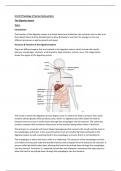
There are different organs that are involved in the digestive system, which include the mouth,
pharynx, oesophagus, stomach, small intestine, large intestine, rectum, anus. The image below
shows the organs of the digestive system:
[1]
The mouth is where the digestion process begins since it is where the food is chewed. The mouth
contains salivary glands which produce saliva, which is a digestive juice that allows the food to
become moist to ensure it easily moves through the oesophagus into the stomach. The saliva also
contains enzymes that commence the process of the starches being broken down in the food.
The pharynx is a muscular and funnel shaped passageway that connects the mouth and the nose to
the oesophagus and larynx. It has several functions such as transferring food and liquids to the
digestive system as well as pushing food to the oesophagus to ensure that it is not breathed in.
The oesophagus is where the food is after it is swallowed. The structure of the oesophagus consists
of a hollow and muscular tube that transfers food as well as liquids from the throat to the stomach. A
process called peristalsis takes place allowing the food to be pushed down through the oesophagus
into the stomach. Peristalsis is a repeated constriction and relaxation movement that takes place to
allow the food to be pushed down through the oesophagus into the stomach.

