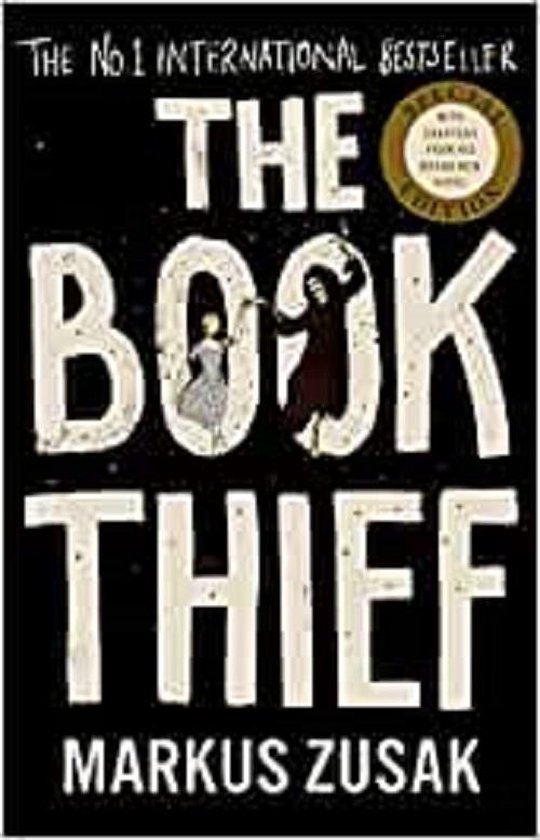
“In The Book Thief, Marcus Zusak creates an unreliable narrator who is a
‘quintessential outsider’ and fails to engage with the human condition.”
Using ideas from the critical anthology, to what extent do you think this statement is true?
The unusual composition of The Book Thief combines several types of narrators as well as
a large number of literary techniques whose mutual connection forms a coherent
bildungsroman narrative. Naturally, by choosing Death to narrate The Book Thief, it would
be assumed that Zusak has created an unreliable narrator who fails to engage with the
human condition and one would be inclined to agree with this statement as Zusak’s
alternative approach to crafting narrative in The Book Thief provokes the emergence of
stereotypes that are commonly associated with a ‘quintessential outsider,’ (which in this
novel, takes the form of Death). In contrast, this statement can equally be challenged; as
Zusak subverts the archetypal prejudice that is often bound to a ‘quintessential outsider,’
by illustrating Death as a being with emotion, enabling them to engage with the human
condition and therefore produce a reliable narration of The Book Thief’s memoirs.
The distinct contrasts between Death and the human condition that are explored by Zusak
in the novel surpass the emotion that death possesses and entrenches them as a
‘quintessential outsider’; which ultimately prevents them from fully engaging with the
human condition. At the end of part nine, where Rudy and Liesel have found the enemy
fighter pilot in his crashed plane, Death notes that: “The human heart is a line, whereas my
own is a circle, and I have the endless ability to be in the right place at the right time. The
consequence of this is that I'm always finding humans at their best and worst. I see their
ugly and their beauty, and I wonder how the same thing can be both.” Though some
empathy is portrayed, Death is evidently establishing themselves as disparate to the
human condition. “The human heart is a line” suggests how human mortality has a
beginning and an end, and is also a stark contrast to the “circle” that Death possesses;
implying their immortality, but more importantly how this distinguishes them from the
human condition and therefore establishes them as a ‘quintessential outsider,’ whom
although has empathy, will never be able to fully engage with the human condition as a
result of their lack of understanding of the human form. Their omniscience (which is one of
many traits that distinguishes them from the human condition) is illustrated here as Death
arrives in Molching to carry the pilot’s soul, structurally placed just after carrying the soul of
Reinhold Zucker, who was serving in the army with Hans in Essen. These two
geographically distant places have the common factor of a dying person, where Death is
required to be present; this explores their unique ability to be in multiple places at once.
The idea that Death fails to engage with the human condition as a consequence of such
differences is again reinforced when they state that they cannot comprehend the lack of
reconciliation with the “best” and the “worst” of humans, as they are left wondering “how
the same thing can be both.” Whilst the “best” of humanity has been displayed here
through Rudy’s gesture of giving the enemy pilot his teddy bear as he dies, the “worst” is
conveyed through the corruption of human-kind, as the fallen soldier is presented as a
victim of the Nazi regime whilst attempting to defy it. Similarly, by evoking the binary
opposites of “line” with “circle”, “best” with “worse” and “ugly” with “beauty”; such
dichotomies are used by Zusak to reinforce the differences between Death and the human
condition. Death is left wondering “how the same thing can be both,” which ultimately
increases the credibility of this statement because Death will never be able to entirely
engage with the human condition due to their role as a ‘quintessential outsider’ to society.
Though there are evident distinctions between Death and the human condition, Zusak
implies that these distinctions are to be celebrated rather than condemned. Despite the
declaration of not knowing “how the same thing can be both” which portrays Death as
‘quintessential outsider’ and fails to engage with the human condition.”
Using ideas from the critical anthology, to what extent do you think this statement is true?
The unusual composition of The Book Thief combines several types of narrators as well as
a large number of literary techniques whose mutual connection forms a coherent
bildungsroman narrative. Naturally, by choosing Death to narrate The Book Thief, it would
be assumed that Zusak has created an unreliable narrator who fails to engage with the
human condition and one would be inclined to agree with this statement as Zusak’s
alternative approach to crafting narrative in The Book Thief provokes the emergence of
stereotypes that are commonly associated with a ‘quintessential outsider,’ (which in this
novel, takes the form of Death). In contrast, this statement can equally be challenged; as
Zusak subverts the archetypal prejudice that is often bound to a ‘quintessential outsider,’
by illustrating Death as a being with emotion, enabling them to engage with the human
condition and therefore produce a reliable narration of The Book Thief’s memoirs.
The distinct contrasts between Death and the human condition that are explored by Zusak
in the novel surpass the emotion that death possesses and entrenches them as a
‘quintessential outsider’; which ultimately prevents them from fully engaging with the
human condition. At the end of part nine, where Rudy and Liesel have found the enemy
fighter pilot in his crashed plane, Death notes that: “The human heart is a line, whereas my
own is a circle, and I have the endless ability to be in the right place at the right time. The
consequence of this is that I'm always finding humans at their best and worst. I see their
ugly and their beauty, and I wonder how the same thing can be both.” Though some
empathy is portrayed, Death is evidently establishing themselves as disparate to the
human condition. “The human heart is a line” suggests how human mortality has a
beginning and an end, and is also a stark contrast to the “circle” that Death possesses;
implying their immortality, but more importantly how this distinguishes them from the
human condition and therefore establishes them as a ‘quintessential outsider,’ whom
although has empathy, will never be able to fully engage with the human condition as a
result of their lack of understanding of the human form. Their omniscience (which is one of
many traits that distinguishes them from the human condition) is illustrated here as Death
arrives in Molching to carry the pilot’s soul, structurally placed just after carrying the soul of
Reinhold Zucker, who was serving in the army with Hans in Essen. These two
geographically distant places have the common factor of a dying person, where Death is
required to be present; this explores their unique ability to be in multiple places at once.
The idea that Death fails to engage with the human condition as a consequence of such
differences is again reinforced when they state that they cannot comprehend the lack of
reconciliation with the “best” and the “worst” of humans, as they are left wondering “how
the same thing can be both.” Whilst the “best” of humanity has been displayed here
through Rudy’s gesture of giving the enemy pilot his teddy bear as he dies, the “worst” is
conveyed through the corruption of human-kind, as the fallen soldier is presented as a
victim of the Nazi regime whilst attempting to defy it. Similarly, by evoking the binary
opposites of “line” with “circle”, “best” with “worse” and “ugly” with “beauty”; such
dichotomies are used by Zusak to reinforce the differences between Death and the human
condition. Death is left wondering “how the same thing can be both,” which ultimately
increases the credibility of this statement because Death will never be able to entirely
engage with the human condition due to their role as a ‘quintessential outsider’ to society.
Though there are evident distinctions between Death and the human condition, Zusak
implies that these distinctions are to be celebrated rather than condemned. Despite the
declaration of not knowing “how the same thing can be both” which portrays Death as