GENOME ENGINEERING
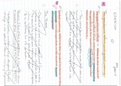
* Genome engineering refers to the strategies and techniques
developed in recent years for the targeted, specific
modification of the genetic information (or genome) of
living organisms.
* Most common targeting methods:
- Zinc finger nucleases
- TALENs
- CRISPR-Cas9
* They combine DNA binding capability, with an
endonuclease activity to create double stranded breaks.
* They do exact or random mutations.
* If there is a DNA double strand breakage, the cell will
repair it very quickly.
* Non-homologous end joining is an error prone mechanism.
Knock-out a gene to model disease.
* If you want to introduce a specific mutation, donor template
is presented. It can. Be used to repair the broken double
strand. Fills the gap of the double strand. Used to knock-in a gene to model over-expression. Use a
wild-type DNA template to repair a mutation.
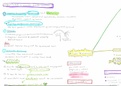
TALENs- Transcription Activator-Like
Effector Nucleases
Plant pathogens Xanthomonas use TAL
(transcription activator-like) effectors.
These are transcription activators, which bind
DNA in the plant nucleus to direct expression of
certain genes.
34 amino acid conserved motif, except for
positions 12 & 13 (repeat variable di-residues),
which determines the DNA base specificity.
Since it is a transcription factor, it is not going to
make a double break. So another method is
added.
TALEN clones generate double stranded breaks
by combining (targeted/specific) DNA binding
capability with FOKI endonuclease activity. For
it to work, it needs to dimerize.
A second
method is
CRISPR-Cas9
(Clustered
Regular Interspaced Short Palindromic Repeats). Adaptive
immunity encoded by most archaea and some bacteria (single
cellular organisms) against invading genetic elements such as
viruses or plasmids.
PAM- protospacer adjacent motif is crucial for the binding of
CRISPR to the plasmid.
It will cleave the invaded DNA into smaller parts.
CRISPR-Cas9 reagents for the lab:
- Protospacer-targeted sequence
- crRNA-CRISPR RNA
, - tracrRNA-trans-activating crispr RNA
-
Cas9-
protein, endonuclease
- gRNA-guide RNA
(protospacer/tracrRNA)
If you make a CRISPR RNA which is complementary to the sequence, and you introduce it to the cell
together with the tracker RNA and Cas9, it will form a complex and it will make a double stranded
break.
crRNA and tracrRNA can be combined into to gRNA. gRNA contains
protospacer (which has complementary strand).
With lipid transfection,
TALEN/CRISPR-Cas9 reagents get
into the cell. If you want to do a
TALEN experiment, you have to
introduce TALEN construct. For
CRISPR-Cas9, you can add two
things; gRNA (RNA or DNA) ,
Cas9 construct.
Advantages and Disadvantages of Genome Engineering
Methods
1) TALENs
- In principle all DNA sequences can be targeted.
- The construction of DNA molecules with TALE repeats is more cumbersome (and requires the
use of non-standard molecular biology cloning methods).
- Highly repetitive nature of TALEN-coding sequences also creates barriers to their delivery using
certain viral vectors, such as lentiviruses.
- Sensitivity to 5-methylcytosine has been reported.
- Off-target effects.
2) CRISPR-Cas9
- The DNA sequence has to be N20NGG, so not every DNA sequence can be targeted.
- Construction of CRISPR-Cas9 constructs is relatively easy.
- Off target events can be a major problem (although recent improvements are very encouraging).
Transfection of the reprogramming reagents (TALEN or CRISPR-Cas9) results in a % of cells having
their genome changed. Mutations in different cells are likely to be different, and therefore clones of
cells need to be isolated (start growing 1 cell/ tissue culture well for clonal expansion.
* Genome engineering refers to the strategies and techniques
developed in recent years for the targeted, specific
modification of the genetic information (or genome) of
living organisms.
* Most common targeting methods:
- Zinc finger nucleases
- TALENs
- CRISPR-Cas9
* They combine DNA binding capability, with an
endonuclease activity to create double stranded breaks.
* They do exact or random mutations.
* If there is a DNA double strand breakage, the cell will
repair it very quickly.
* Non-homologous end joining is an error prone mechanism.
Knock-out a gene to model disease.
* If you want to introduce a specific mutation, donor template
is presented. It can. Be used to repair the broken double
strand. Fills the gap of the double strand. Used to knock-in a gene to model over-expression. Use a
wild-type DNA template to repair a mutation.
TALENs- Transcription Activator-Like
Effector Nucleases
Plant pathogens Xanthomonas use TAL
(transcription activator-like) effectors.
These are transcription activators, which bind
DNA in the plant nucleus to direct expression of
certain genes.
34 amino acid conserved motif, except for
positions 12 & 13 (repeat variable di-residues),
which determines the DNA base specificity.
Since it is a transcription factor, it is not going to
make a double break. So another method is
added.
TALEN clones generate double stranded breaks
by combining (targeted/specific) DNA binding
capability with FOKI endonuclease activity. For
it to work, it needs to dimerize.
A second
method is
CRISPR-Cas9
(Clustered
Regular Interspaced Short Palindromic Repeats). Adaptive
immunity encoded by most archaea and some bacteria (single
cellular organisms) against invading genetic elements such as
viruses or plasmids.
PAM- protospacer adjacent motif is crucial for the binding of
CRISPR to the plasmid.
It will cleave the invaded DNA into smaller parts.
CRISPR-Cas9 reagents for the lab:
- Protospacer-targeted sequence
- crRNA-CRISPR RNA
, - tracrRNA-trans-activating crispr RNA
-
Cas9-
protein, endonuclease
- gRNA-guide RNA
(protospacer/tracrRNA)
If you make a CRISPR RNA which is complementary to the sequence, and you introduce it to the cell
together with the tracker RNA and Cas9, it will form a complex and it will make a double stranded
break.
crRNA and tracrRNA can be combined into to gRNA. gRNA contains
protospacer (which has complementary strand).
With lipid transfection,
TALEN/CRISPR-Cas9 reagents get
into the cell. If you want to do a
TALEN experiment, you have to
introduce TALEN construct. For
CRISPR-Cas9, you can add two
things; gRNA (RNA or DNA) ,
Cas9 construct.
Advantages and Disadvantages of Genome Engineering
Methods
1) TALENs
- In principle all DNA sequences can be targeted.
- The construction of DNA molecules with TALE repeats is more cumbersome (and requires the
use of non-standard molecular biology cloning methods).
- Highly repetitive nature of TALEN-coding sequences also creates barriers to their delivery using
certain viral vectors, such as lentiviruses.
- Sensitivity to 5-methylcytosine has been reported.
- Off-target effects.
2) CRISPR-Cas9
- The DNA sequence has to be N20NGG, so not every DNA sequence can be targeted.
- Construction of CRISPR-Cas9 constructs is relatively easy.
- Off target events can be a major problem (although recent improvements are very encouraging).
Transfection of the reprogramming reagents (TALEN or CRISPR-Cas9) results in a % of cells having
their genome changed. Mutations in different cells are likely to be different, and therefore clones of
cells need to be isolated (start growing 1 cell/ tissue culture well for clonal expansion.