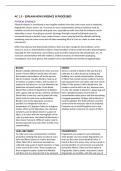
AC 1.3 – EXPLAIN HOW EVIDENCE IS PROCESSED
PHYSICAL EVIDENCE;
Physical evidence is considered as any tangible evidence from the crime scene such as footprints,
fingerprints, blood, semen, etc. To ensure no cross contamination, physical evidence must be
handled correctly and securely with great care, especially to make sure that the evidence can be
admissible in court. According to Locard’s Exchange Principle created by Edmond Locard (a
renowned forensic scientist), every contact leaves a trace, meaning that the offender will bring
something onto the crime scene and will take something off of it (such as a knife or other sharp
instrument).
Other than physical and testimonial evidence, there are other categories that evidence can be
classes as such as: demonstrative evidence (representation of what could have taken place designed
especially for the courtroom), real evidence (such as bullet casings from the perpetrator), etc. To
avoid any contamination with the evidence, evidence must be air dried before packaging,
investigators must wear gloves, and samples have to be labelled and transferred appropriately.
BLOOD: SEMEN:
Blood is initially collected at the crime scene by Semen is similar to blood in the way that it is
Scene of Crime Officers (SCOS) who will send collected. It is often found on clothing and
the samples and evidence off to the forensic bedding, so to avoid contamination, all pieces
labs for analysis. Usually, blood is made to air of fabric that contain semen evidence must be
dry before a sample is taken, and if a piece of kept separate from each other and must not be
material is has blood on, it is not allowed to be folded. If the semen is still in liquid form, the
folded due to blood transfer. Fresh blood evidence must be left to air dry, however once
(blood that is still in its liquid form) is dabbed it is dry, the sample is placed in a paper bag and
with a gauze and sent to dry, whereas old blood then a polythene bag to ensure that no
(blood that is now dry) can be picked off using contamination takes places and that everything
sterile tools to avoid cross contamination. is bagged separately. All bags with evidence in
Blood is sent to the laboratory as soon as must be labelled. The SCOS will then send the
possible in a refrigerator that has a semen off to the forensics labs to be analysed.
temperature of 2 degrees Celsius to 6 degrees Forensics use an Acid Phosphate test to test
Celsius. When at the laboratory, the chemical whether semen is present on a piece of fabric.
luminol is used to detect blood on a piece of
fabric as it reacts with the haemoglobin of the
cells. In a dark room, the blood will illuminate a
blue colour if present. Different stains need to
be kept separate from each other to limit cross
contamination.
HAIR AND FIBRES: FINGERPRINTS:
To make sure cross contamination is limited, Fingerprints are unique to every individual,
protective clothing that does not shed is worn. while people can have similar fingerprints, no
Hairs and fibres (pieces of a fabric that have ones are the same (even identical twins). If
either fallen off or have been touched) are found at the crime scene, they can be crucial to
collected using a pair of sterile tweezers or tape proving whether or not someone was present
at the scene of the crime. These samples are during the offense. There are three types of
then wrapped in paper, sealed and labelled, fingerprints; latent, plastic, and patent. Latent
and then sent to a forensics lab to be analysed. fingerprints are invisible, with the only way of
PHYSICAL EVIDENCE;
Physical evidence is considered as any tangible evidence from the crime scene such as footprints,
fingerprints, blood, semen, etc. To ensure no cross contamination, physical evidence must be
handled correctly and securely with great care, especially to make sure that the evidence can be
admissible in court. According to Locard’s Exchange Principle created by Edmond Locard (a
renowned forensic scientist), every contact leaves a trace, meaning that the offender will bring
something onto the crime scene and will take something off of it (such as a knife or other sharp
instrument).
Other than physical and testimonial evidence, there are other categories that evidence can be
classes as such as: demonstrative evidence (representation of what could have taken place designed
especially for the courtroom), real evidence (such as bullet casings from the perpetrator), etc. To
avoid any contamination with the evidence, evidence must be air dried before packaging,
investigators must wear gloves, and samples have to be labelled and transferred appropriately.
BLOOD: SEMEN:
Blood is initially collected at the crime scene by Semen is similar to blood in the way that it is
Scene of Crime Officers (SCOS) who will send collected. It is often found on clothing and
the samples and evidence off to the forensic bedding, so to avoid contamination, all pieces
labs for analysis. Usually, blood is made to air of fabric that contain semen evidence must be
dry before a sample is taken, and if a piece of kept separate from each other and must not be
material is has blood on, it is not allowed to be folded. If the semen is still in liquid form, the
folded due to blood transfer. Fresh blood evidence must be left to air dry, however once
(blood that is still in its liquid form) is dabbed it is dry, the sample is placed in a paper bag and
with a gauze and sent to dry, whereas old blood then a polythene bag to ensure that no
(blood that is now dry) can be picked off using contamination takes places and that everything
sterile tools to avoid cross contamination. is bagged separately. All bags with evidence in
Blood is sent to the laboratory as soon as must be labelled. The SCOS will then send the
possible in a refrigerator that has a semen off to the forensics labs to be analysed.
temperature of 2 degrees Celsius to 6 degrees Forensics use an Acid Phosphate test to test
Celsius. When at the laboratory, the chemical whether semen is present on a piece of fabric.
luminol is used to detect blood on a piece of
fabric as it reacts with the haemoglobin of the
cells. In a dark room, the blood will illuminate a
blue colour if present. Different stains need to
be kept separate from each other to limit cross
contamination.
HAIR AND FIBRES: FINGERPRINTS:
To make sure cross contamination is limited, Fingerprints are unique to every individual,
protective clothing that does not shed is worn. while people can have similar fingerprints, no
Hairs and fibres (pieces of a fabric that have ones are the same (even identical twins). If
either fallen off or have been touched) are found at the crime scene, they can be crucial to
collected using a pair of sterile tweezers or tape proving whether or not someone was present
at the scene of the crime. These samples are during the offense. There are three types of
then wrapped in paper, sealed and labelled, fingerprints; latent, plastic, and patent. Latent
and then sent to a forensics lab to be analysed. fingerprints are invisible, with the only way of