3.10 – Coastal Processes on the Holderness coast
Factors affecting coastal system:
Geology: chalk (relatively resistant) forms a broad arc in the region
- the eastern edge of the chalk outcrop defines the preglacial coastline
- this is the result of sediment carried and dumped by ice sheets
Wind: blows from the north-east and drives powerful waves towards Holderness coast
- as a result of powerful north-east waves longshore drift happens along H coast
- when an area of extremely low pressure moves down the North Sea, the low
pressure causes funnelling of the water and creates storm surges (leads to erosion
and flooding)
Response hard engineering: used as settlement and infrastructure threatened by the
rapid rate of erosion
- only helps protect specific localities (Hornsea and Mappleton)
- deprived areas are more vulnerable to undercutting and collapse
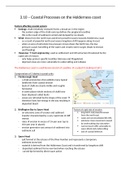
The Holderness coast is a well-known stretch of coastline a subcell in Sediment Cell 2
Compromises of 3 distinct coastal units:
1. Flamborough Head
- a chalk promontory that exhibits many typical
landforms from coastal erosion
- beds of chalk are clearly visible and roughly
horizontal
- in some places whole sections of chalk have
been displaced called faults
- waves are refracted by the shape of the coast
therefore have low energy in the bay resulting in
deposited beach
2. Bridlington Bay to Spurn Head Factors of rapid rate of erosion:
- an extensive zone of erosion and sediment long fetch and powerful waves
transfer characterised by a very rapid rate of cliff from the north-east
retreat weak and unconsolidated till cliffs
- rates of erosion in excess of 1m per year (up to extensive mass movement caused
by undercutting clay saturation
10m per year in places)
narrow beach cliffs vulnerable to
- erosion generates vast amount of sediment into
wave attack and undercutting
sediment cell lack of coastal defences
3. Spurn Head
- spit formed at the estuary of the River Humber and represents a temporary
sediment store/sink
- material is derived from the Holderness Coast and is transferred by longshore drift
- deposited sediment forms new land when reaching the estuary
- curved tip formed by direct wave action
Factors affecting coastal system:
Geology: chalk (relatively resistant) forms a broad arc in the region
- the eastern edge of the chalk outcrop defines the preglacial coastline
- this is the result of sediment carried and dumped by ice sheets
Wind: blows from the north-east and drives powerful waves towards Holderness coast
- as a result of powerful north-east waves longshore drift happens along H coast
- when an area of extremely low pressure moves down the North Sea, the low
pressure causes funnelling of the water and creates storm surges (leads to erosion
and flooding)
Response hard engineering: used as settlement and infrastructure threatened by the
rapid rate of erosion
- only helps protect specific localities (Hornsea and Mappleton)
- deprived areas are more vulnerable to undercutting and collapse
The Holderness coast is a well-known stretch of coastline a subcell in Sediment Cell 2
Compromises of 3 distinct coastal units:
1. Flamborough Head
- a chalk promontory that exhibits many typical
landforms from coastal erosion
- beds of chalk are clearly visible and roughly
horizontal
- in some places whole sections of chalk have
been displaced called faults
- waves are refracted by the shape of the coast
therefore have low energy in the bay resulting in
deposited beach
2. Bridlington Bay to Spurn Head Factors of rapid rate of erosion:
- an extensive zone of erosion and sediment long fetch and powerful waves
transfer characterised by a very rapid rate of cliff from the north-east
retreat weak and unconsolidated till cliffs
- rates of erosion in excess of 1m per year (up to extensive mass movement caused
by undercutting clay saturation
10m per year in places)
narrow beach cliffs vulnerable to
- erosion generates vast amount of sediment into
wave attack and undercutting
sediment cell lack of coastal defences
3. Spurn Head
- spit formed at the estuary of the River Humber and represents a temporary
sediment store/sink
- material is derived from the Holderness Coast and is transferred by longshore drift
- deposited sediment forms new land when reaching the estuary
- curved tip formed by direct wave action