
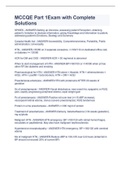
MCCQE Part 1Exam with Complete Solutions
SPIKES - ANSWER-Setting up interview, assessing patient Perception, obtaining patient's Invitation to disclose information, giving Knowldege and information to patient, addressing patient's Emotions, Strategy and Summary Canada Health Act - ANSWER-Accessibility, Comprehensiveness, Portability, Public administration, Universality HTN - ANSWER-135/85 on 3 separate occasions, =180/110 on dedicated office visit, or diabetes = 130/80 ACR for DM and CKD - ANSWER-ACR 30 mg/mmol is abnormal When to start management of HTN - ANSWER-BP160/100 or 140/90 when pt has other RF like diabetes and smoking Pharmacological for HTN - ANSWER-HTN alone = thiazide, HTN + atherosclerosis = ACEI, HTN + postMI = beta blockers, HTN + DM = ACEI Preeclampsia-eclampsia - ANSWER-HTN with proteinuria AFTER 20 weeks of gestation Sx of preeclapmpsia - ANSWER-Visual disturbance, new onset h/a, epigastric or RUQ pain, rapidly progressing peripheral edema, rapid weight gain Px of preeclampsia - ANSWER-Positive roll over test (=15 dBP increase), vasospasm/retinal edema, clonus (severe preeclampsia), RUQ tenderness Protein in urine preeclampsia - ANSWER-=300 mg/d of protein Treatment of preeclampsia - ANSWER-Delivery, betamethasone (34 weeks gestation), mg sulphate Malignant HTN - ANSWER-HTN emergency: BP 180/120 with retinal hemorrhages, excudates or papilledema. May also have malignant nephrosclerosis Hypertensive encephalopathy - ANSWER-HTN emergency: BP 180/120 with cerebral edema Mx of malignant HTN - ANSWER-Reduce dBP to 100-105 over 2-6 hours (initial fall in BP should not exceed 25% of current BP) Hypovolemic shock Mx - ANSWER-Crystalloids 1-2L IV bolius. Maintain MAP of 60 or maintain sBP90, urine output 0.5ml/kg/h. If hemorrhagic, transfuse in addition to crystalloid. Maintain Hct 30-35% Distributive shock Mx - ANSWER-Rapid fluid repletion (4-6 L N/S) +/- dopamine if no response Distributive shock Mx (sepsis) - ANSWER-Third generation cephalosporin + aminoglycoside OR imipenem alone. Gram positive = add vancomycin or naficillin. Anaerobes suspected = clindamycin or metronidazole. Legionella = erythromycin. Fungemia = amphotericine B Distributive shock (neurogenic) - ANSWER-Methylprednisone Distributive shock (anaphylaxis) - ANSWER-ABCs, IM epinephrine every 3-5 min, 100% O2, rapid infusion of N/S, cetirizine (or diphenhydramine if IV), consider corticosteroid. IV epi if needed Cardiogenic shock - ANSWER-ACLS, dopamine, IV furosemide and morphine to treat pulmonary edema if applicable Physiologic variables of shock (PCWP, CO, SVR, mixed venous O2 saturation) - ANSWER-Hypovolemic - PCWP decrease, CO decrease, SVR increase, Mixed venous O2 decreased. Cardiogenic - PCWP increase, CO decrease, SVR increase, mixed venous O2 decrease. Distributive - preload decrease or normal, CO increase, SVR decrease, mixed venous O2 increase HR for exercise stress test - ANSWER-HR must achieve =85% maximial predicted HR (220-age) for exercise stress test to be diagnostic 5 deadly causes of chest pain - ANSWER-Angina (30 min), MI (30 min), aortic dissection (MRI gold standard, CT and TEE good too), tension pneumo, pulonary embolism Stable angina Mx - ANSWER-Morphine, O2, nitroglycrin, ASA, betablocker UA/NSTEMI management - ANSWER-Morphine, O2, nitroglycerin, ASA, betablocker, clopidogrel, heparin, GpIIb/IIIa inhibitors. Early cardiac cath vs. initial medical rx. Determine using TIMI score STEMI Mx - ANSWER-Morphine, O2, nitroglcerin, ASA, PCI (if 90 min on arrival to ED) or fibrinolytics (60 min), + betablockers, ACEIs, statins TIMI score for UA/NSTEMI - ANSWER-Age 65 or older, use of ASA in last week, severe anginal sx, 3 or greater RF for CAD, known coronary stenosis of 50% of greater, serum cardiac markers, ST deviation on ECG. For score of 3-7, consider IV GPIIb/IIIa agents, heparin, early cardiac cath Hs and Ts for cardiac arrest - ANSWER-Hypoxia, hypo/hyper K, hypo/hyperglycemia, hypovolemia, hypothermia, hydrogen ions (acidosis), tension pneumo, tamponade, toxins, thromboembolism (PE), thrombosis (MI) Hypertrophic cardiomyopathy Mx - ANSWER-Beta blocker or CCB Thiazide side effects - ANSWER-Hypokalemia, hyponatremia, metabolic alkalosis, hypercalcemia, hyperglycemia, hyperuricemia, hyperlipidemia, sulfonamide allergy. Good for kidney stones though Furosemide side effects - ANSWER-Hyponatremia, hypokalmeia, hypomagnesemia, ototoxicity Takayasu arteritis - ANSWER-fever, weight loss, myalgia, erythema nodosum, intermittent HTN, ASYMMETRIC BP (20-30) and pulses, aortic/subclavian bruits, retinal/vitreous hemorrhage, cotton wool spots Pulsus paradoxus - ANSWER-exaggerated inspiratory increase in arterial pulse (10) Pericardial tamponande - ANSWER-Pulsus paradoxus with Beck triad (JVD, muffled heart sound, hypotension) ABI - ANSWER-Abnormal = 1. Claudication at 0.3-0.9. Rest pain at 0.5. Ischemic/gangrenous extremities at 0.2 AS indication for surgery - ANSWER-Angina, effort syncope, L heart fialure, pressure gradient 50 mmHg, EKG shows LVH with strain Carcinoid syndrome - ANSWER-Diarrhea, flushing, RHF Murmur grading - ANSWER-I = very faint, II = can be identified after stethoscope on chest, III = moderately loud, IV = palpable thrill, V = may be heard with stethoscope partly off chest, VI = heard without steth AF cardioversion warning - ANSWER-If duration 48 hours, cardioversion may lead to CVA Normal EF - ANSWER-55% HF treatment - ANSWER-Patient with LVEF 40% and symptoms -- triple therapy and reassess. NYHA 1= triple therapy (ACEI, BB, spironlactone). If higher NYHA and 70bpm, add ivabradine and switch ACEI to ARNI (sacubitril/valsartan, aka entresto). If 70bpm/AF/pacemaker, just switche ACEI to ARNI. Reassess again. If EF 35% or NYHAI, continue. If NYHA 2-3, ICD. If NYHA 4, hydralazine/nitrates, referral, palliative CHF exacerbation treatment - ANSWER-LMNOP = lasix, morphine, nitrates, O2, position Constrictive pericarditis - ANSWER-Pericardial knock, pericardiectomy as treatment MAP - ANSWER-SVR x CO Orthostatic - ANSWER-Sys change of 20, diastolic change of 10, HR change of 15 Statin effects - ANSWER-Decrease LDL and triglycerides - causes myositis and increase LFTs Fibrates effects - ANSWER-Second line to statins. Decrease triglycerides, increase HDL - causes myositis and increase LFTs Ezetimibe effects - ANSWER-Decrease LDL. Diarrhea** Niacin effects - ANSWER-Increase HDL, decrease LDL - causes flushing, tx: ASA Lipid screening - ANSWER-All men and women = 40. If commorbidities related to CVD, any age Statin indicated conditions - ANSWER-Clinical atherosclerosis, AAA, diabetics (-40 yo, = 30 + 15 y duration, microvascular disease), CKD, genetic dyslipidemia (=5mmol/L LDL) Statin indicated primary prevention conditions - ANSWER-Immediate or high risk FRS (=10%), LDL =3.5, non-HDL =4.3, Apo B =1.2 g/L or men =50, women =60 with risk factors (obesity, HTN, smoker) Statin target - ANSWER-LDL 2.0 or 50% reduction, or apoB 0.8g/L or non-HDL 2.6 ACEI and ARB side effects - ANSWER-Increase creatinine (don't use in stage 4 renal dz), cough/angioedema in ACEI only CCB for HTN - ANSWER-Amlodipine, nifedipine, nicardipine CCB for angina and arrythmia - ANSWER-Verapamil and diltiazem Spronolactone and eplereone (aldosterone receptor blcokers) side effects - ANSWER-Hyperkalemia, gynecomastia SVT management - ANSWER-Adenosine or cardioversion Torsades management - ANSWER-Give Mg, or shock Vtach management - ANSWER-Amioderone, or cardioversion Old afib mx - ANSWER-TTE to determine vavlular or nonvalvular, anticoagulation with warfarin for 3 weeks, TEE, cardioversion, continue anticoatuion for 4 weeks CHADS2 - ANSWER-CHF, HTN, age ?75, DM, stroke, x2. 0 = ASA, 1 = ASA or anticoagulation, 2+ = anticoagulation (warfarin or NOAC) Valvular Afib management details - ANSWER-Must use warfarin and use LMWH to bridge Mx for first and second degree (mobitz I) AV block - ANSWER-Atropine Afib + CHF exacerbation management - ANSWER-Digoxin and amiodirone instead of BB and CCB Vfib/VT ACLS Mx - ANSWER-2 min CPR with rhythm check, shock, alternating epi and amioderone in between Aortic regurgitation Mx - ANSWER-Key clinical sign = bounding pulses. ACEI or CCB, NOT beta blocker as it would worsen AR Cardiomyopathies - ANSWER-Dilated = secondary to acute viral myocarditis (Coxacie B), restrictive = caused by infiltrative disease (sarchoidosis, amyloidosis), hemochromatosis, fibrsis or idiopathic. Symmetric thickening of ventricles as opposed to intercentricular septum thickening (as seen in HOCM). Hemochromatosis is the only treatable condition MI blood supply - ANSWER-Inferior = RCA, anterior = LAD, lateral = L circumflex WPW - ANSWER-Short PR interval and a delta wave. Tx: procainamide or DC cardioversion. Do not use adenosine because risk of VF Prinzmetal angina Mx - ANSWER-Diltiazem Post MI ventricular aneurysm - ANSWER-Persistent ST elevation, mitral regurg, dyskinetic wall on echo Post MI papillary muscle rupture - ANSWER-holosystolic mumur, mitral regurg Post MI free wall rupture - ANSWER-Pericardial tamponade, rapid onset of PEA Digoxin toxicity - ANSWER-N/v/d, blurry yellw vision, atrial tach with AV block
Información del documento
- Subido en
- 10 de abril de 2023
- Número de páginas
- 11
- Escrito en
- 2022/2023
- Tipo
- Examen
- Contiene
- Preguntas y respuestas

