
Rn Comprehensive Predictor 2019 Form B Questions With Correct Answers
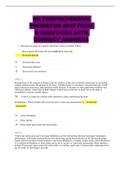
RN COMPREHENSIVE PREDICTOR 2019 FORM B QUESTIONS WITH CORRECT ANSWERS 1. The nurse is caring for a patient with fluid volume overload. Which physiological effect does the nurse most likely expect? a. Increased preload b. Increased heart rate c. Decreased afterload d. Decreased tissue perfusion ANS: A Preload refers to the amount of blood in the left ventricle at the end of diastole; an increase in circulating volume would increase the preload of the heart. Afterload refers to resistance; increased pressure would lead to increased resistance, and afterload would increase. A decrease in tissue perfusion would be seen with hypovolemia. A decrease in fluid volume would cause an increase in heart rate as the body is attempting to increase cardiac output. 26. A nurse is caring for a patient with continuous cardiac monitoring for heart dysrhythmias. Which rhythm will cause the nurse to intervene immediately? a. Ventricular tachycardia b. Atrial fibrillation c. Sinus rhythm d. Paroxysmal supraventricular tachycardia ANS: A Ventricular tachycardia and ventricular fibrillation are life-threatening rhythms that require immediate intervention. Ventricular tachycardia is a life-threatening dysrhythmia because of the decreased cardiac output and the potential to deteriorate into ventricular fibrillation or sudden cardiac death. Atrial fibrillation is a common dysrhythmia in older adults and is not as serious as ventricular tachycardia. Sinus rhythm is normal. Paroxysmal supraventricular tachycardia is a sudden, rapid onset of tachycardia originating above the AV node. It often begins and ends
Información del documento
- Subido en
- 4 de abril de 2023
- Número de páginas
- 25
- Escrito en
- 2022/2023
- Tipo
- Examen
- Contiene
- Preguntas y respuestas

