
7.3 • Unit Circle 717
Real-World Applications
52. A 33-ft ladder leans against 53. A 23-ft ladder leans against 54. The angle of elevation to
a building so that the angle a building so that the angle the top of a building in
between the ground and between the ground and Charlotte is found to be 9
the ladder is How high the ladder is How high degrees from the ground
does the ladder reach up does the ladder reach up at a distance of 1 mile from
the side of the building? the side of the building? the base of the building.
Using this information, find
the height of the building.
55. The angle of elevation to 56. Assuming that a 370-foot
the top of a building in tall giant redwood grows
Seattle is found to be 2 vertically, if I walk a certain
degrees from the ground distance from the tree and
at a distance of 2 miles measure the angle of
from the base of the elevation to the top of the
building. Using this tree to be how far
information, find the from the base of the tree
height of the building. am I?
7.3 Unit Circle
Learning Objectives
In this section you will:
Find function values for the sine and cosine of and
Identify the domain and range of sine and cosine functions.
Find reference angles.
Use reference angles to evaluate trigonometric functions.
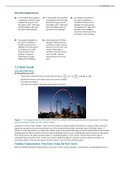
Figure 1 The Singapore Flyer was the world’s tallest Ferris wheel until being overtaken by the High Roller in Las Vegas
and the Ain Dubai in Dubai. (credit: ʺVibin JKʺ/Flickr)
Looking for a thrill? Then consider a ride on the Ain Dubai, the world's tallest Ferris wheel. Located in Dubai, the most
populous city and the financial and tourism hub of the United Arab Emirates, the wheel soars to 820 feet, about 1.5
tenths of a mile. Described as an observation wheel, riders enjoy spectacular views of the Burj Khalifa (the world's tallest
building) and the Palm Jumeirah (a human-made archipelago home to over 10,000 people and 20 resorts) as they travel
from the ground to the peak and down again in a repeating pattern. In this section, we will examine this type of
revolving motion around a circle. To do so, we need to define the type of circle first, and then place that circle on a
coordinate system. Then we can discuss circular motion in terms of the coordinate pairs.
Finding Trigonometric Functions Using the Unit Circle
We have already defined the trigonometric functions in terms of right triangles. In this section, we will redefine them in
,718 7 • The Unit Circle: Sine and Cosine Functions
terms of the unit circle. Recall that a unit circle is a circle centered at the origin with radius 1, as shown in Figure 2. The
angle (in radians) that intercepts forms an arc of length Using the formula and knowing that we see
that for a unit circle,
The x- and y-axes divide the coordinate plane into four quarters called quadrants. We label these quadrants to mimic the
direction a positive angle would sweep. The four quadrants are labeled I, II, III, and IV.
For any angle we can label the intersection of the terminal side and the unit circle as by its coordinates, The
coordinates and will be the outputs of the trigonometric functions and respectively. This
means and
Figure 2 Unit circle where the central angle is radians
Unit Circle
A unit circle has a center at and radius In a unit circle, the length of the intercepted arc is equal to the radian
measure of the central angle
Let be the endpoint on the unit circle of an arc of arc length The coordinates of this point can be
described as functions of the angle.
Defining Sine and Cosine Functions from the Unit Circle
The sine function relates a real number to the y-coordinate of the point where the corresponding angle intercepts the
unit circle. More precisely, the sine of an angle equals the y-value of the endpoint on the unit circle of an arc of length
In Figure 2, the sine is equal to Like all functions, the sine function has an input and an output. Its input is the
measure of the angle; its output is the y-coordinate of the corresponding point on the unit circle.
The cosine function of an angle equals the x-value of the endpoint on the unit circle of an arc of length In Figure 3,
the cosine is equal to
Figure 3
Because it is understood that sine and cosine are functions, we do not always need to write them with parentheses:
is the same as and is the same as Likewise, is a commonly used shorthand notation for
Access for free at openstax.org
, 7.3 • Unit Circle 719
Be aware that many calculators and computers do not recognize the shorthand notation. When in doubt, use the extra
parentheses when entering calculations into a calculator or computer.
Sine and Cosine Functions
If is a real number and a point on the unit circle corresponds to a central angle then
...
HOW TO
Given a point P on the unit circle corresponding to an angle of find the sine and cosine.
1. The sine of is equal to the y-coordinate of point
2. The cosine of is equal to the x-coordinate of point
EXAMPLE 1
Finding Function Values for Sine and Cosine
Point is a point on the unit circle corresponding to an angle of as shown in Figure 4. Find and
Figure 4
Solution
We know that is the x-coordinate of the corresponding point on the unit circle and is the y-coordinate of the
corresponding point on the unit circle. So:
TRY IT #1 A certain angle corresponds to a point on the unit circle at as shown in Figure 5.
Find and

