
MPBD: 100+ study
Dementia is a global health problem. There are Though, Hendrikje was not the only one. In the
more than 55 million people with dementia 100+ study, they recruited centenarians across
across the world, and there is about 1 new case The Netherlands that were 100+ years old. 409
every 3 seconds. The prediction is that the centenarians participated of which 70.5% were
cases of dementia will double in western women. The oldest participant was 108 and the
countries, and triple in low-income countries. It mean age was 101.2. 56.9% of these people live
will become one of the most common causes of independently. 361 children participated, 4
death. partners and there were 96 brain donations.
Dementia is a progressive decline in cognitive 1 in 100 people in The Netherlands reaches 100
function where people are no longer capable of years of age of which 1 in 4 is cognitively healthy.
fully living independently. There are different Is the secret of longevity in their genetics? If you
drivers behind dementia, such as genetics, have a sibling that is a centenarian the chance is
environment (contribute to 40% of the risk of bigger that you could live a long life.
dementia), and 12 known modifiable lifestyles
(smoking, obesity, diet, alcohol, etc). They collected biomaterials (gut microbiome,
blood tests) of these 100+-year-old people, and
Alzheimer’s disease did neuropsychological assessments of their
This is a common cause of dementia and has 3 brain function including PET/MRI scans to look
pathological hallmarks: Amyloid plaques and at structural brain changes. They found out that
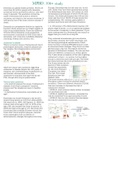
Tau tangles. Neurodegeneration is the third genetics play a big role. This figure shows the
hallmark pathology. genetics of Alzheimer’s disease. You can see that
there are different mutations in certain genes.
The Y-axis shows a measure of the risk of getting
Alzheimer’s where 1 is neutral, but the higher
you go in value the more risk you get. The lower
the value becomes the more protected you are.
The X-axis shows the fre-
Quency of that mutation
There are many open questions regarding Across the population.
Alzheimer’s disease despite the 100 years of So, the more frequent
research, the understanding of Alzheimer’s is The genes, the lower
still limited. Aducanumab is the first The risk. The rarest
Alzheimer’s drug that was approved by the Mutations have the
FDA, though this drug is questionable. Highest risks.
The most common risk allele is the APOE gene.
Various open questions: This gene is also involved in amyloid plaque
• Are amyloid plaques the cause of Alzheimer’s formation. There are different versions of APOE
disease or are they a symptom? Amyloid that can increase or decrease the risk of
plaques and Tau tangles are seen in healthy Alzheimer’s disease.
people. • APOE ε3: most common allele neither increases
• Is Alzheimer’s/dementia unavoidable as we nor decreases the risk
age? • ΑPOE ε4: slightly less common, increases the
risk for Alzheimer’s by approximately 3 times
Hendrikje van Andel-Schipper is the world’s • APOE ε2: this is a rare version that decreases
oldest living person at 115 (from 2004-2005). the risk for Alzheimer’s by 2 times
She was born in 1890, 1600 grams. In 1963 her
mother died at the age of 100. In 1972 at the
age of 82, she donated her body to science. In
2005 she died at the age of 115. Her brain still
functioned like a healthy 60-year-old and her
brain didn’t show amyloid plaques, vascular
brain pathologies such as infarcts or
atherosclerotic changes throughout the body.
Dementia is a global health problem. There are Though, Hendrikje was not the only one. In the
more than 55 million people with dementia 100+ study, they recruited centenarians across
across the world, and there is about 1 new case The Netherlands that were 100+ years old. 409
every 3 seconds. The prediction is that the centenarians participated of which 70.5% were
cases of dementia will double in western women. The oldest participant was 108 and the
countries, and triple in low-income countries. It mean age was 101.2. 56.9% of these people live
will become one of the most common causes of independently. 361 children participated, 4
death. partners and there were 96 brain donations.
Dementia is a progressive decline in cognitive 1 in 100 people in The Netherlands reaches 100
function where people are no longer capable of years of age of which 1 in 4 is cognitively healthy.
fully living independently. There are different Is the secret of longevity in their genetics? If you
drivers behind dementia, such as genetics, have a sibling that is a centenarian the chance is
environment (contribute to 40% of the risk of bigger that you could live a long life.
dementia), and 12 known modifiable lifestyles
(smoking, obesity, diet, alcohol, etc). They collected biomaterials (gut microbiome,
blood tests) of these 100+-year-old people, and
Alzheimer’s disease did neuropsychological assessments of their
This is a common cause of dementia and has 3 brain function including PET/MRI scans to look
pathological hallmarks: Amyloid plaques and at structural brain changes. They found out that
Tau tangles. Neurodegeneration is the third genetics play a big role. This figure shows the
hallmark pathology. genetics of Alzheimer’s disease. You can see that
there are different mutations in certain genes.
The Y-axis shows a measure of the risk of getting
Alzheimer’s where 1 is neutral, but the higher
you go in value the more risk you get. The lower
the value becomes the more protected you are.
The X-axis shows the fre-
Quency of that mutation
There are many open questions regarding Across the population.
Alzheimer’s disease despite the 100 years of So, the more frequent
research, the understanding of Alzheimer’s is The genes, the lower
still limited. Aducanumab is the first The risk. The rarest
Alzheimer’s drug that was approved by the Mutations have the
FDA, though this drug is questionable. Highest risks.
The most common risk allele is the APOE gene.
Various open questions: This gene is also involved in amyloid plaque
• Are amyloid plaques the cause of Alzheimer’s formation. There are different versions of APOE
disease or are they a symptom? Amyloid that can increase or decrease the risk of
plaques and Tau tangles are seen in healthy Alzheimer’s disease.
people. • APOE ε3: most common allele neither increases
• Is Alzheimer’s/dementia unavoidable as we nor decreases the risk
age? • ΑPOE ε4: slightly less common, increases the
risk for Alzheimer’s by approximately 3 times
Hendrikje van Andel-Schipper is the world’s • APOE ε2: this is a rare version that decreases
oldest living person at 115 (from 2004-2005). the risk for Alzheimer’s by 2 times
She was born in 1890, 1600 grams. In 1963 her
mother died at the age of 100. In 1972 at the
age of 82, she donated her body to science. In
2005 she died at the age of 115. Her brain still
functioned like a healthy 60-year-old and her
brain didn’t show amyloid plaques, vascular
brain pathologies such as infarcts or
atherosclerotic changes throughout the body.

