U2 Functional Anatomy Lecture Notes:
Criteria
15.09.2020
AO1 Demonstrate knowledge and understanding of the language, structure, characteristics
and function of each anatomical system
Command words: describe, give, identify, name, state
Marks: range from 1 to 4 marks
AO2 Apply knowledge and understanding of the structure, characteristics and function of the
anatomical systems in context
Command words: describe, explain
Marks: range from 2 to 4 marks
AO3 Analyse the anatomical systems’ effectiveness in producing sport and exercise
movements and evaluate their impact on performing movements successfully
Command words: analyse, assess, evaluate, discuss, to what extent
Marks: range from 8 to 14 marks
AO4 Make connections between anatomical systems and how they interrelate in order to
carry out different exercise and sporting movements in context
Command words: analyse, assess, evaluate, discuss, to what extent
Marks: range from 8 to 14 marks
Summary of assessment
This unit is assessed by a written examination set and marked by Pearson. The examination
will be one hour and 30 minutes in length.
The assessment availability is twice a year in January and May/June.
Level 3 Pass
Learners demonstrate knowledge of functional anatomy and apply it to exercise and sports
performance. They have a sound understanding of the structures, functions and
characteristics of the anatomical systems and are able to apply this to a range of familiar and
unfamiliar contexts. Learners can interpret information related to exercise and sports
performance and make judgements on how the anatomical systems allow for movements to
be carried out.
Level 3 Distinction
Learners demonstrate thorough knowledge and understanding of the anatomical systems in
exercise and sports performance and can apply this to a range of familiar and unfamiliar
contexts. Learners are able to analyse how the body carries out exercise and sporting
movements. Learners will be able to interpret information on exercise and sports
performance and be able to make reasoned judgements on how anatomical systems carry
,out exercise and sporting movements in a range of different contexts. They will demonstrate
understanding of the interrelationships between the anatomical systems.
Anatomical Definitions
16.09.2020
A - Anatomical positions, terms and references
A1 Anatomical language
Learners must understand anatomical language to describe different parts of the body in
reference
to their correct location.
• Anatomical standing position (point of reference).
• Anatomical language:
o anterior
o posterior
o lateral
o medial
o proximal
o distal
o superior
o inferior
o peripheral
o deep
o supine
o prone
Anatomical position - upright standing position with arms at the side, palms facing forward
(supinated position).
Fundamental position - upright standing position with arms at the side, palms face inwards
(pronated position).
Superior - vertically closer to the top of the head.
,Inferior - closer to the bottom of the feet.
Anterior - towards the front of the body.
Posterior - towards the back of the body.
Medial - relative to the middle of the body, to identify something located medially, you would
create a midline division of the body. The body that is closer to the midline is medial to the
structure farther from the midline.
Lateral - body part farther from the midline.
These are used to describe the location of points on a limb relative to the limb’s connection
to the torso.
Proximal site - closer to the limb’s point of attachment.
Distal site - further away from the point of attachment.
Superficial - location towards the surface of a body structure or organ (epidermis to
subcutaneous).
Deep - a location that is towards the center of the body structure or organ (subcutaneous to
epidermis).
Flexion - decrease in the angle around a joint. Forward at the shoulder and hip / bending at
the knee and elbow.
Extension - increase in the angle around a joint. Back at the shoulder and hip / straightening
the knee and elbow.
Hyperextension - when the angle between the articulating bones goes beyond 90 degrees.
Abduction - movement away from the midline of the body, eg surfer abducting his arms at
the shoulder.
Adduction - movement towards the midline of the body, eg kayaker adducting shoulder.
Circumduction - when the lower end of the bone moved in a circle, eg swimmer performing
circumduction at the shoulder.
Rotation - when the bone turns around its longitudinal axis (spins), climbers rotate their neck
as they check their grip.
Horizontal flexion - arm towards the midline of the body in the horizontal plane, eg hugging
action / athletes shoulders are in horizontal flexion on the inward phase of the pec dec
machine.
Horizontal extension - arms away from the midline of the body in the horizontal place, eg
athletes shoulders in the horizontal extension on the outward phase of the pec dec machine.
Lateral flexion - bending the neck or spine to the side, eg dancer’s spin is in lateral flexion as
they stretch at the barre.
Elevation - upward movement of the shoulder girdle, eg tennis players show elevation in the
shoulder as they serve.
, Depression - downward movement of the shoulder girdle, eg shoulder blades lowers during
a lat pulldown.
Pronation - turning the palm of the hand down, eg table tennis player demonstrates
pronation as he puts a top spin on the ball.
Supination - turning the palm of the hand up, eg martial artist is performing supination as
they practise.
Plantarflexion - when you point your toes, eg when climber is plantar flexing their right ankle.
Dorsiflexion - bending your foot up towards your tibia, eg climber is dorsiflexing their ankle
as they boulder.
Inversion - turning the sole of your foot inwards.
Eversion - turning the sole of your foot outwards.
Skeletal System
22.09.2020
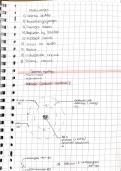
5 Classes of Bones:
● Flat bones
● Irregular bones
● Short bones
● Sesamoid bones
● Long bones
Long Bone (femur) Flat Bone (sternum)
Sesamoid Bones
Criteria
15.09.2020
AO1 Demonstrate knowledge and understanding of the language, structure, characteristics
and function of each anatomical system
Command words: describe, give, identify, name, state
Marks: range from 1 to 4 marks
AO2 Apply knowledge and understanding of the structure, characteristics and function of the
anatomical systems in context
Command words: describe, explain
Marks: range from 2 to 4 marks
AO3 Analyse the anatomical systems’ effectiveness in producing sport and exercise
movements and evaluate their impact on performing movements successfully
Command words: analyse, assess, evaluate, discuss, to what extent
Marks: range from 8 to 14 marks
AO4 Make connections between anatomical systems and how they interrelate in order to
carry out different exercise and sporting movements in context
Command words: analyse, assess, evaluate, discuss, to what extent
Marks: range from 8 to 14 marks
Summary of assessment
This unit is assessed by a written examination set and marked by Pearson. The examination
will be one hour and 30 minutes in length.
The assessment availability is twice a year in January and May/June.
Level 3 Pass
Learners demonstrate knowledge of functional anatomy and apply it to exercise and sports
performance. They have a sound understanding of the structures, functions and
characteristics of the anatomical systems and are able to apply this to a range of familiar and
unfamiliar contexts. Learners can interpret information related to exercise and sports
performance and make judgements on how the anatomical systems allow for movements to
be carried out.
Level 3 Distinction
Learners demonstrate thorough knowledge and understanding of the anatomical systems in
exercise and sports performance and can apply this to a range of familiar and unfamiliar
contexts. Learners are able to analyse how the body carries out exercise and sporting
movements. Learners will be able to interpret information on exercise and sports
performance and be able to make reasoned judgements on how anatomical systems carry
,out exercise and sporting movements in a range of different contexts. They will demonstrate
understanding of the interrelationships between the anatomical systems.
Anatomical Definitions
16.09.2020
A - Anatomical positions, terms and references
A1 Anatomical language
Learners must understand anatomical language to describe different parts of the body in
reference
to their correct location.
• Anatomical standing position (point of reference).
• Anatomical language:
o anterior
o posterior
o lateral
o medial
o proximal
o distal
o superior
o inferior
o peripheral
o deep
o supine
o prone
Anatomical position - upright standing position with arms at the side, palms facing forward
(supinated position).
Fundamental position - upright standing position with arms at the side, palms face inwards
(pronated position).
Superior - vertically closer to the top of the head.
,Inferior - closer to the bottom of the feet.
Anterior - towards the front of the body.
Posterior - towards the back of the body.
Medial - relative to the middle of the body, to identify something located medially, you would
create a midline division of the body. The body that is closer to the midline is medial to the
structure farther from the midline.
Lateral - body part farther from the midline.
These are used to describe the location of points on a limb relative to the limb’s connection
to the torso.
Proximal site - closer to the limb’s point of attachment.
Distal site - further away from the point of attachment.
Superficial - location towards the surface of a body structure or organ (epidermis to
subcutaneous).
Deep - a location that is towards the center of the body structure or organ (subcutaneous to
epidermis).
Flexion - decrease in the angle around a joint. Forward at the shoulder and hip / bending at
the knee and elbow.
Extension - increase in the angle around a joint. Back at the shoulder and hip / straightening
the knee and elbow.
Hyperextension - when the angle between the articulating bones goes beyond 90 degrees.
Abduction - movement away from the midline of the body, eg surfer abducting his arms at
the shoulder.
Adduction - movement towards the midline of the body, eg kayaker adducting shoulder.
Circumduction - when the lower end of the bone moved in a circle, eg swimmer performing
circumduction at the shoulder.
Rotation - when the bone turns around its longitudinal axis (spins), climbers rotate their neck
as they check their grip.
Horizontal flexion - arm towards the midline of the body in the horizontal plane, eg hugging
action / athletes shoulders are in horizontal flexion on the inward phase of the pec dec
machine.
Horizontal extension - arms away from the midline of the body in the horizontal place, eg
athletes shoulders in the horizontal extension on the outward phase of the pec dec machine.
Lateral flexion - bending the neck or spine to the side, eg dancer’s spin is in lateral flexion as
they stretch at the barre.
Elevation - upward movement of the shoulder girdle, eg tennis players show elevation in the
shoulder as they serve.
, Depression - downward movement of the shoulder girdle, eg shoulder blades lowers during
a lat pulldown.
Pronation - turning the palm of the hand down, eg table tennis player demonstrates
pronation as he puts a top spin on the ball.
Supination - turning the palm of the hand up, eg martial artist is performing supination as
they practise.
Plantarflexion - when you point your toes, eg when climber is plantar flexing their right ankle.
Dorsiflexion - bending your foot up towards your tibia, eg climber is dorsiflexing their ankle
as they boulder.
Inversion - turning the sole of your foot inwards.
Eversion - turning the sole of your foot outwards.
Skeletal System
22.09.2020
5 Classes of Bones:
● Flat bones
● Irregular bones
● Short bones
● Sesamoid bones
● Long bones
Long Bone (femur) Flat Bone (sternum)
Sesamoid Bones