Escrito por estudiantes que aprobaron Inmediatamente disponible después del pago Leer en línea o como PDF ¿Documento equivocado? Cámbialo gratis 4,6 TrustPilot
logo-home
Examen

DLAB Study Guide 2022 with complete solutions

Puntuación
-
Vendido
-
Páginas
4
Grado
A+
Subido en
07-07-2022
Escrito en
2021/2022

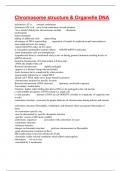
Noun a physical object or an abstract idea and can include a person, animal, place, or thing Pronoun Replaces a noun or another one of itself in a sentence and can be used instead of a noun to refer to the noun. Usually used if a subject of a passage already been established in a previous sentence and discussion on same subject is continuing. Ex- Jack climbed the tree but HE fell off it. Article a type of determiner that comes before a noun. Only two types- indefinite (a/an), and definite (the). Ex- He dropped THE piano Ex- She yelled at A cow Subject Part of the sentence that tells you what the sentence is about. In most cases, it's the "who" or "what" that does the action. Usually a noun, pronoun, or noun phrase. Verb used to give actions, events or states of being to subjects or nouns. Usually come after the subject, BUT the DLAB plays with sentence structure, so do not rely on it. Ex- John SAW her FALL. Adjective word used to describe, identify, or quantify a subject and modifies the noun or pronoun. Usually before a noun, but DLAB will try and trick you. Ex- the BIG bowl is filled with bread. Object a(n) "blank" is that which the subject is acting upon. Can be many different types including direct and indirect. Ex- Athena bought a MOVIE Direct Object a noun phrase denoting a person or thing that is the recipient of the action of a transitive verb SUBJECT+VERB+BLANK Ex- John (subject) ate (verb) bread (blank) Indirect Object a noun phrase referring to someone or something that is, or will be, affected by the action of a verb. This means it is present when someone or something interacts with direct object. For a sentence to have "blank", it needs to have a direct object. Ex- Jeremy gave his sister a sweater. (Direct object is sweater, blank is his sister) 3 parts of the DLAB Personal Survey, Audio, and Visual Part 1 of DLAB 10 question survey about tester and study habits Part 2 of DLAB Audio portion which is separated into 5 sections. Each starts w a new grammar rule(s), used to answer the q's in that section. Last section requires tester to use all the rules given in preceding four sections. Five sections are- 1- Stress syllables 2- Nouns and Adjectives 3-Possessives 4- Verbs and subject/ objects and comprehensive rules 5- Use all of the above Part 3 of DLAB Visual Portion, comprised of images w corresponding translations. Figure out plausible translations using the pics you have to work with. Stress Syllable Section Tips Keep track of syllables, tones, and stresses. DLAB USES ESPERANTO in this section. Use musical point of view to Count out beats and see which option is a "quarter note" as opposed to all the "half notes" if confused. Nouns and Adjective Section Tips Use grammar rules to choose right answer/ translation. Must be memorized. Not written out. Only read aloud one time. Grammar rules (from the test itself)- 1- Adjective comes after its respective noun. 2- Both the adjective and its respective noun will end with the same vowel sound 3- Never include articles in a sentence. Ex- translate "a tiny elephant" answer- Elephanto Tinyo Possessive Section Tips A set of rules is introduced that must be used to choose correct option. Rules vanish. Options only read to you once. Grammar rules (from test itself)- 1- The possessor always comes after the possession 2- That which is being possessed always ends with either a "u" sound (like mute) or an "a" sound(like hay) 3- The possessor always ends with a short "i" sound (like meet) (this is an "i" which sounds like "ee"). Ex- Translate "Jim's Wallet" Answer- Walleta Jimi * Important to quickly establish which word is possessor and which is the possession, bc you can easily eliminate options, rather than focus on endings right away* Verbs and Subjects / Objects section This asks tester to identify verbs, objects, and subjects. Rules shown and then disappear when questions start. Cannot see options, and options only read one time. Grammar rules for this section from the test itself- 1- The subject has an "aa" sound, like "mall", in the middle of the word. 2- The object always ends with a long "a" sound, like "day" 3- Never include articles in a sentence 4- Verbs always begin with a "ya" sound and never end with an "s". Ex- Translate "Kim gave Tony a Card" Answer- Kiaam yagave Tonya Carda *Rules say nothing about the nouns, so kim and Kimo are technically ok*

Mostrar más Leer menos
Institución
Grado

Vista previa del contenido

DLAB Study Guide
Noun - Answer a physical object or an abstract idea and can include a person, animal,
place, or thing

Pronoun - Answer Replaces a noun or another one of itself in a sentence and can be
used instead of a noun to refer to the noun. Usually used if a subject of a passage
already been established in a previous sentence and discussion on same subject is
continuing.
Ex- Jack climbed the tree but HE fell off it.

Article - Answer a type of determiner that comes before a noun. Only two types-
indefinite (a/an), and definite (the).
Ex- He dropped THE piano
Ex- She yelled at A cow

Subject - Answer Part of the sentence that tells you what the sentence is about. In most
cases, it's the "who" or "what" that does the action. Usually a noun, pronoun, or noun
phrase.

Verb - Answer used to give actions, events or states of being to subjects or nouns.
Usually come after the subject, BUT the DLAB plays with sentence structure, so do not
rely on it.
Ex- John SAW her FALL.

Adjective - Answer word used to describe, identify, or quantify a subject and modifies
the noun or pronoun. Usually before a noun, but DLAB will try and trick you.
Ex- the BIG bowl is filled with bread.

Object - Answer a(n) "blank" is that which the subject is acting upon. Can be many
different types including direct and indirect.
Ex- Athena bought a MOVIE

Direct Object - Answer a noun phrase denoting a person or thing that is the recipient of
the action of a transitive verb
SUBJECT+VERB+BLANK
Ex- John (subject) ate (verb) bread (blank)

Indirect Object - Answer a noun phrase referring to someone or something that is, or will
be, affected by the action of a verb. This means it is present when someone or
something interacts with direct object. For a sentence to have "blank", it needs to have
a direct object.
Ex- Jeremy gave his sister a sweater.
(Direct object is sweater, blank is his sister)

3 parts of the DLAB - Answer Personal Survey, Audio, and Visual

Part 1 of DLAB - Answer 10 question survey about tester and study habits
Escuela, estudio y materia

Grado

Información del documento

Subido en
7 de julio de 2022
Número de páginas
4
Escrito en
2021/2022
Tipo
Examen
Contiene
Preguntas y respuestas

Temas

$10.49
Accede al documento completo:

¿Documento equivocado? Cámbialo gratis Dentro de los 14 días posteriores a la compra y antes de descargarlo, puedes elegir otro documento. Puedes gastar el importe de nuevo.
Escrito por estudiantes que aprobaron
Inmediatamente disponible después del pago
Leer en línea o como PDF

Conoce al vendedor

Seller avatar
Los indicadores de reputación están sujetos a la cantidad de artículos vendidos por una tarifa y las reseñas que ha recibido por esos documentos. Hay tres niveles: Bronce, Plata y Oro. Cuanto mayor reputación, más podrás confiar en la calidad del trabajo del vendedor.
EvaTee Phoenix University
Seguir Necesitas iniciar sesión para seguir a otros usuarios o asignaturas
Vendido
5149
Miembro desde
4 año
Número de seguidores
3565
Documentos
54313
Última venta
1 día hace
TIGHT DEADLINE? I CAN HELP

Many students don\'t have the time to work on their academic papers due to balancing with other responsibilities, for example, part-time work. I can relate. kindly don\'t hesitate to contact me, my study guides, notes and exams or test banks, are 100% graded

3.9

939 reseñas

5
448
4
166
3
170
2
47
1
108

Documentos populares

Recientemente visto por ti

Por qué los estudiantes eligen Stuvia

Creado por compañeros estudiantes, verificado por reseñas

Calidad en la que puedes confiar: escrito por estudiantes que aprobaron y evaluado por otros que han usado estos resúmenes.

¿No estás satisfecho? Elige otro documento

¡No te preocupes! Puedes elegir directamente otro documento que se ajuste mejor a lo que buscas.

Paga como quieras, empieza a estudiar al instante

Sin suscripción, sin compromisos. Paga como estés acostumbrado con tarjeta de crédito y descarga tu documento PDF inmediatamente.

Student with book image

“Comprado, descargado y aprobado. Así de fácil puede ser.”

Alisha Student

Preguntas frecuentes